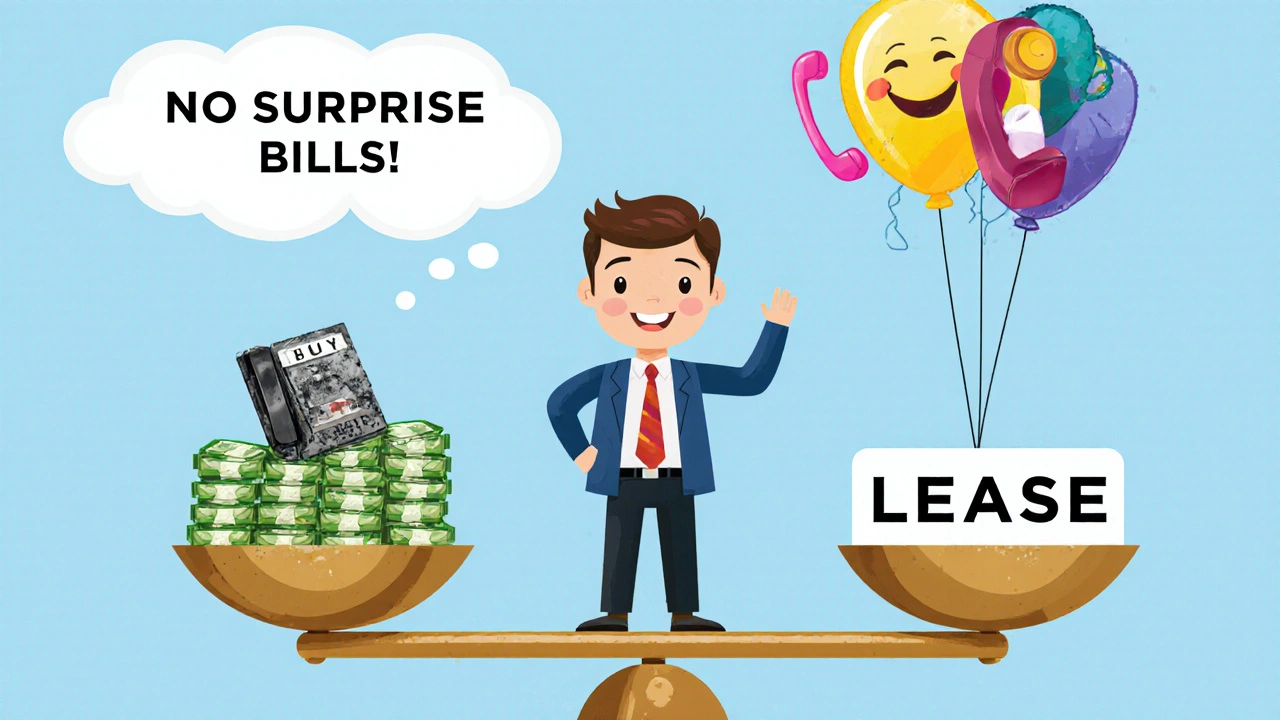
VoIP Hardware Leasing: Save Money Without Buying Equipment
When you think about setting up a VoIP phone system, you probably imagine buying desk phones, SIP gateways, and headsets outright. But what if you could use top-tier VoIP hardware leasing, a model where businesses rent VoIP devices instead of purchasing them. Also known as VoIP equipment rental, it lets you upgrade yearly, avoid big upfront costs, and shift expenses from capital to operational budgets. Many small and mid-sized companies don’t realize they don’t need to own their phones to get great call quality. Leasing gives you access to the latest models—like Yealink T57W or Poly VVX series—without tying up cash or worrying about obsolescence.
Leasing isn’t just for cash-strapped startups. Even profitable teams use it to stay agile. If your call center grows from 10 to 50 agents in six months, buying new phones means waiting for delivery, installing them manually, and dealing with leftover gear when you downsize. With leasing, you swap out devices on demand. Your provider handles maintenance, swaps faulty units overnight, and even takes back old gear when your contract ends. This cuts downtime and reduces IT headaches. It also helps with compliance: if you need to replace devices for HIPAA or PCI security standards, leasing makes it easy to roll out updated hardware across your team.
Related concepts like refurbished VoIP equipment, pre-owned devices tested and certified to work like new and SIP phones, networked handsets that connect directly to your internet instead of traditional phone lines often come up in cost discussions. But leasing sits apart—it’s not about cheap used gear or long-term ownership. It’s about flexibility. You get the reliability of new hardware, the predictability of fixed monthly payments, and the freedom to scale up or down without being stuck with unused equipment. And unlike free VoIP providers that lock you into software-only setups, leasing gives you the physical tools agents actually prefer—especially in call centers where comfort and durability matter.
Some providers bundle leasing with service plans—meaning if a phone stops working, they send a replacement before you even call. Others let you lease only what you need: a few cordless SIP phones for warehouse staff, or wall-mounted intercoms for office entrances. You’re not locked into one vendor’s entire ecosystem. And because most leases run 24 to 36 months, you avoid the shock of replacing all your phones every three years. This model aligns perfectly with how modern teams operate: fast-changing, remote-friendly, and cost-conscious.
What you’ll find in the posts below are real-world examples of how companies use leasing to cut costs, improve reliability, and stay current. From comparing refurbished gear versus leased new units to understanding how VLANs and DSCP markings keep leased phones running smoothly, these guides show you exactly how to make leasing work for your team—no fluff, no sales pitch, just what actually happens on the ground.