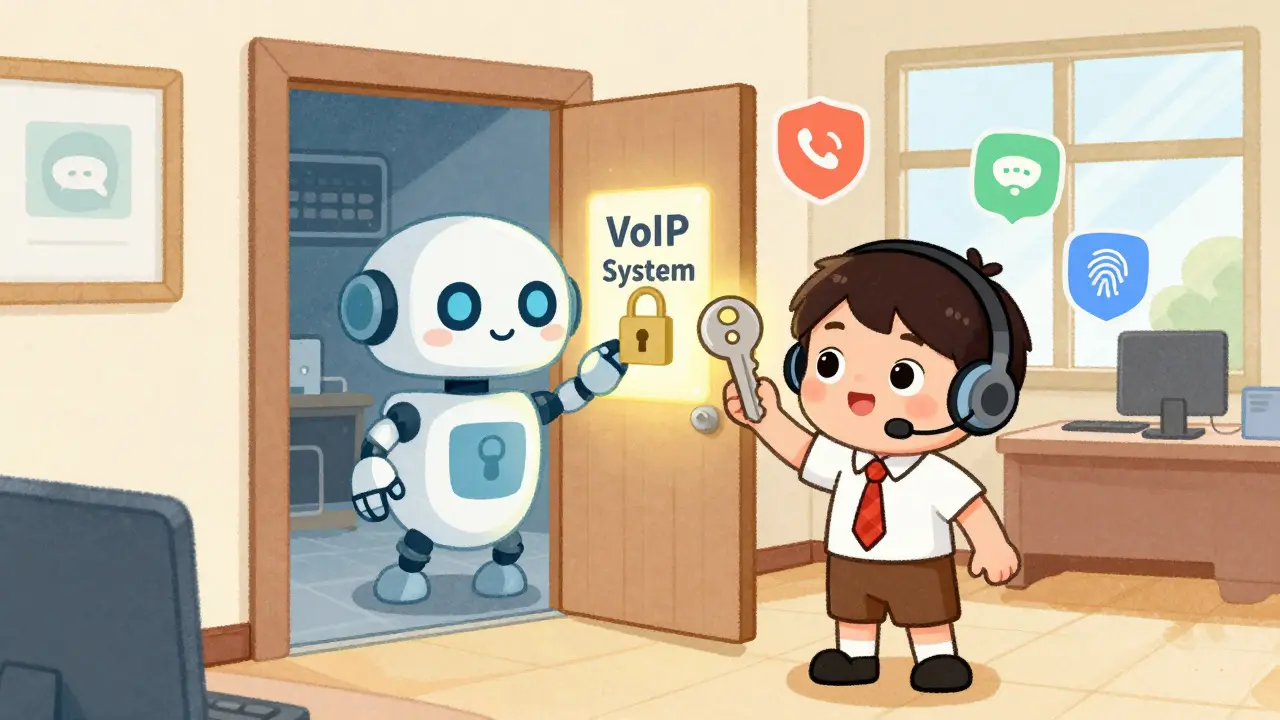
VoIP Authentication: Secure Your Calls with Strong Login Protocols and SIP Security
When you use Voice over IP, a technology that turns your voice into digital data sent over the internet. Also known as IP telephony, it’s cheap, flexible, and works anywhere—but only if it’s secure. Without proper VoIP authentication, the process that verifies who can access your phone system, your system becomes an open door for hackers to make free international calls, steal data, or shut down your business communications.
Think of VoIP authentication like a door lock for your phone system. If you’re using default passwords, weak SIP credentials, or no access controls, you’re leaving the key under the mat. Real attacks don’t need fancy tools—they just guess passwords until they get in. A single unsecured SIP endpoint can cost you thousands in toll fraud within hours. That’s why systems using RBAC for VoIP, Role-Based Access Control that limits what users can do based on their job cut attack risk by over 80%. It’s not about having the fanciest hardware—it’s about who gets access and how they’re verified. Strong authentication means unique, complex passwords, two-factor login where possible, and automatic lockouts after failed attempts. Tools like Fail2ban, a system that blocks IPs after repeated login failures work alongside authentication to stop brute-force attacks before they start.
VoIP authentication isn’t just about passwords. It’s also about how your system talks to other servers. SIP, the protocol that sets up calls, can be hijacked if it’s not encrypted or if devices aren’t properly registered. That’s why modern setups use TLS for signaling and SRTP for voice encryption. But even the best encryption fails if a user’s account is compromised. That’s why businesses that combine strong authentication with access segmentation, splitting the network so attackers can’t move freely between systems stop 9 out of 10 common VoIP breaches. You don’t need a security team to do this—you just need to turn off default settings, enforce unique logins, and limit access to only what’s needed.
What you’ll find below are real, tested ways to lock down your VoIP system. From setting up SIP authentication on your router to configuring role-based access so your receptionist can’t change your billing plan, these posts give you the exact steps to stop hackers before they call. No theory. No fluff. Just what works today.