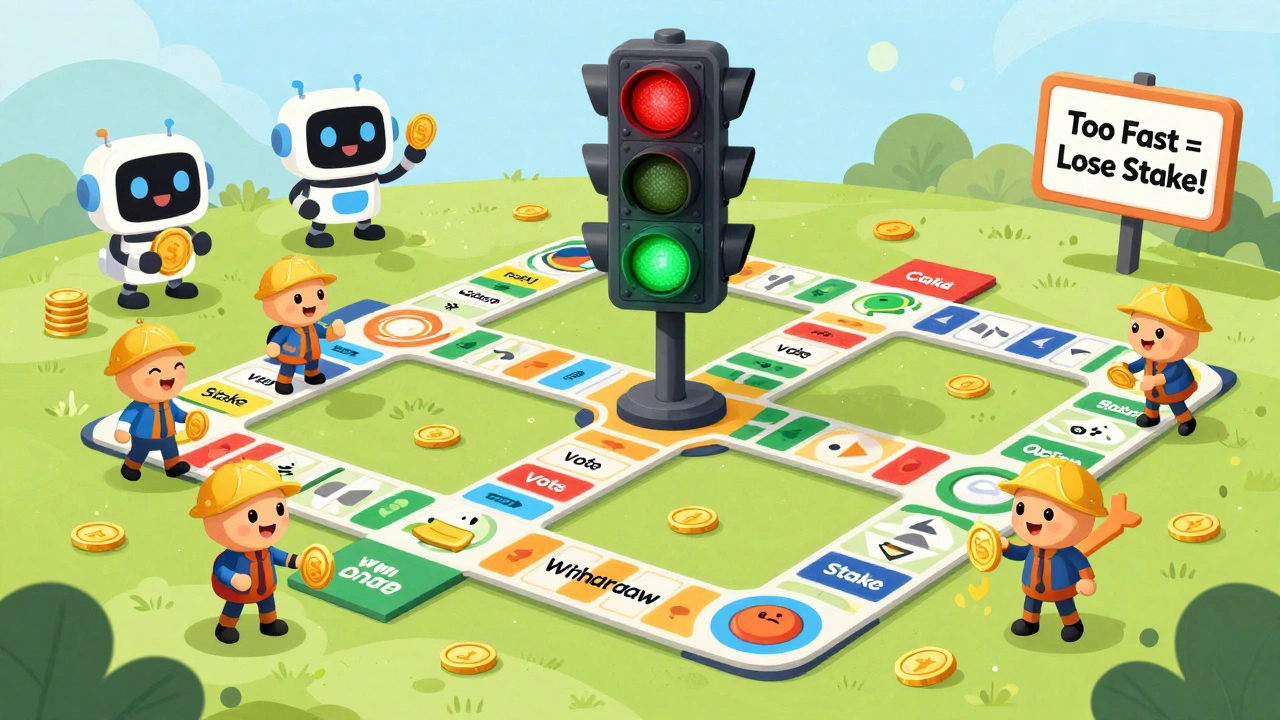
Token Design: How Digital Tokens Shape Security, Governance, and VoIP Systems
When we talk about token design, the structured rules that define how digital tokens are created, used, and controlled in systems like blockchains, VoIP platforms, and identity services. Also known as tokenomics, it's not just about crypto—it's the invisible architecture that decides who can access what, how decisions get made, and whether your calls stay private. Think of it like a keycard system: the design determines if one card opens every door, if only managers can unlock the server room, or if you need two people to agree before anything happens.
Governance tokens, digital assets that give holders voting power in decentralized organizations, are one of the most visible uses of token design. In DAOs, a simple one-token-one-vote system lets big holders dominate decisions, while quadratic voting gives smaller participants more influence—each model changes how fair or efficient the system feels. But token design isn’t just for voting. Crypto custody, how you store and control your digital assets also depends on it. Self-custody wallets like Ledger or Trezor use token-based authentication to lock access to your funds, while institutional storage uses MPC (multi-party computation) tokens to split control across multiple secure nodes. Without smart token design, your crypto is either vulnerable or locked away forever.
And it’s not just crypto. VoIP security, the methods used to protect voice calls over the internet relies on token design too. Shared tenant isolation in cloud VoIP platforms uses session tokens to keep your calls separate from other businesses on the same server. If those tokens are weak or reused, your private conversations could leak. Even digital notarization, using blockchain to prove when a document existed works because tokens act as tamper-proof timestamps—each one linked to a unique file hash and locked in place by cryptographic rules. This is why companies and governments are moving away from paper trails: math-based tokens can’t be forged, backdated, or deleted.
What ties all these together? Token design turns abstract rules into enforceable logic. It’s what makes a conference call system scale to 1,000 people without crashing. It’s why your CRM can log a call automatically after you hang up. It’s how a bug bounty program pays out $1 million to the right hacker without giving anyone else access. The posts below don’t just talk about tools—they show you how token design makes them work, from the way hardware wallets connect to MetaMask to how VoIP providers isolate your data from competitors. You’ll see real examples of what works, what fails, and how to spot weak token systems before they cost you money, time, or trust.