
Why VoIP KPI Benchmarks Vary by Industry
Not all voice calls are created equal. A customer service call at a retail store has different needs than a surgeon consulting a specialist via VoIP in a hospital. That’s why VoIP KPI benchmarks aren’t one-size-fits-all. Companies in finance, healthcare, telecom, and retail all use the same technology-VoIP-but they measure success differently. What’s acceptable in one industry is a disaster in another.
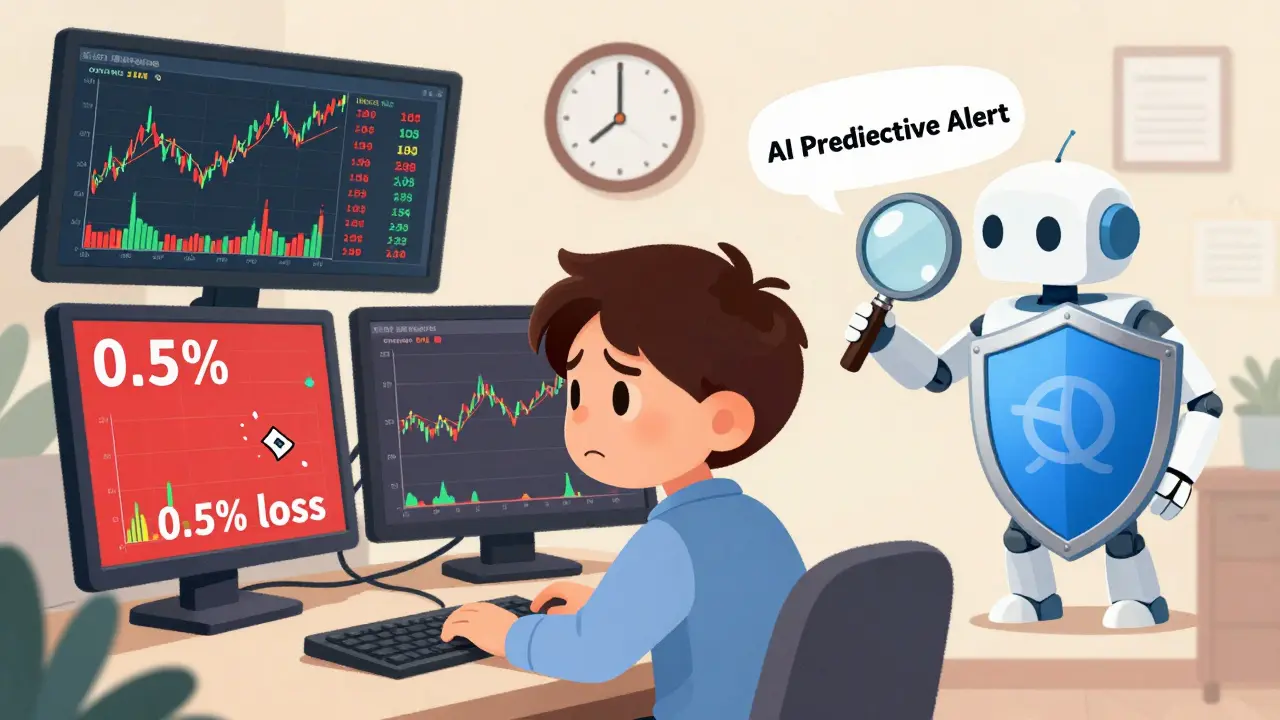
Take packet loss. In retail, losing 1% of voice packets might cause a brief glitch. In high-frequency trading, even 0.5% packet loss can mean a lost trade worth thousands. The same jitter that’s annoying in a sales call can be dangerous during a telehealth appointment. This isn’t about technical superiority-it’s about what’s at stake.
Industry-specific benchmarks exist because the cost of failure isn’t the same everywhere. A delayed call in a bank’s fraud department could mean stolen money. A dropped call in an emergency room could mean a delayed diagnosis. That’s why you can’t compare a retail call center’s performance to a hospital’s without context.
Core VoIP KPIs Everyone Should Track
Regardless of industry, five core metrics define VoIP performance. These are the baseline measurements every business should monitor:
- Mean Opinion Score (MOS): A 1-to-5 scale that rates voice quality. Anything below 3.6 is considered unacceptable for business use. Top performers hit 4.5 or higher.
- Packet Loss: The percentage of voice data that never arrives. Below 1% is standard. Financial services demand 0.5% or less.
- Jitter: Variability in packet arrival time. Measured in milliseconds. Keep it under 30ms for clear calls. Above 50ms, voices start sounding robotic.
- Latency: Delay between speaking and hearing. Under 150ms is excellent. Above 400ms makes conversation feel broken.
- Call Drop Rate: How often calls disconnect unexpectedly. Under 0.5% is ideal. Anything above 2% signals serious network problems.
These aren’t theoretical numbers. They’re backed by ETSI, ITU-T, and FCC standards. But here’s the catch: meeting these benchmarks doesn’t guarantee good customer experience. That’s where industry context comes in.
Telecom Industry: The Gold Standard
Telecom providers set the bar for VoIP performance. They don’t just use VoIP-they sell it. Their customers expect flawless service. That’s why they lead in every KPI.
- Network Availability: 99.999% uptime. That’s less than 5 minutes of downtime per year.
- Latency: Consistently under 120ms, even during peak hours.
- Call Setup Time: Average of 16 minutes to respond to a lead. That’s faster than most companies take to answer an email.
- MOS Score: Average of 4.7. Near-perfect clarity.
They achieve this with dedicated infrastructure, 5G optimization, and real-time media monitoring. But it’s expensive. Telecom companies spend 3-5x more on VoIP monitoring than retail firms. And even then, they face high churn-1.5% to 2% monthly-because customers switch providers for small price differences.
What’s interesting? Telecom leads in adoption. 98% of telecom firms use VoIP, and 100% monitor KPIs. No other industry comes close.
Financial Services: Precision Over Perfection
Finance doesn’t care about perfect voice quality. They care about reliability under pressure. A single dropped call during a trading session can cost millions. So their standards are strict, but focused.
- Packet Loss: Max 0.5%. Any higher, and systems trigger alerts automatically.
- Latency: Must stay under 150ms. Some firms cap it at 100ms for high-value clients.
- Call Drop Rate: Below 0.3%. If a call drops during a compliance call, it’s a regulatory violation.
- First Call Resolution (FCR): 80-85% thanks to AI-powered routing and agent assist tools.
JPMorgan Chase reduced jitter from 40ms to 25ms in 2023. The result? An 18-point boost in customer satisfaction scores. But it cost $2.3 million in upgrades. That’s the trade-off: precision demands investment.
They also track NPS-Net Promoter Score-and average +43. That’s higher than retail and close to telecom. Why? Because their customers aren’t just calling for help-they’re making decisions.
Healthcare: Balancing Compliance and Connection
Healthcare is the outlier. They’re behind on VoIP adoption-only 78% use it-and even fewer monitor KPIs properly (65%). Why? Legacy systems, budget limits, and the fact that not every call needs to be crystal clear.
- Latency: Tolerated up to 300ms. A 2-second delay is acceptable during a non-emergency consult.
- Packet Loss: Often around 1.2%, sometimes higher. Not ideal, but tolerated.
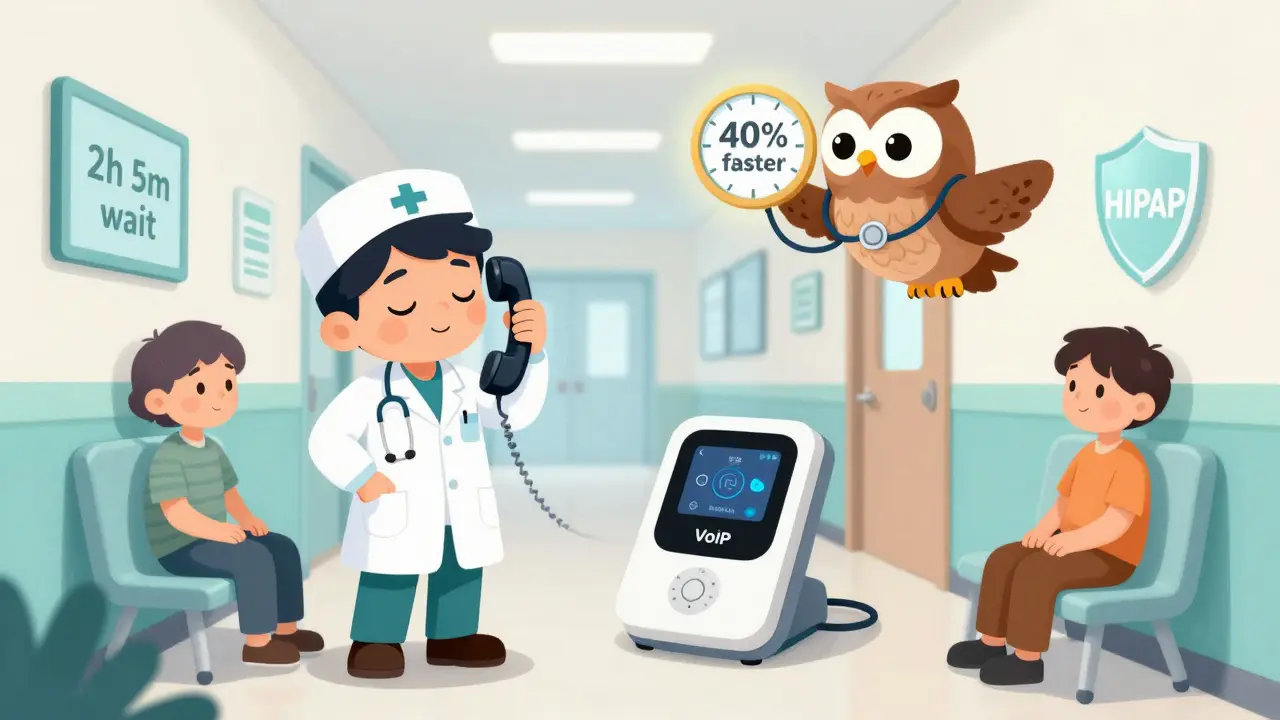
- Call Setup Time: Average of 2 hours and 5 minutes. Patients wait days for telehealth slots.
- Call Drop Rate: 1.8% on average. But in one case, a clinic raised latency to 350ms to support old equipment-and saw a 22% spike in abandoned calls.
Regulations like HIPAA and FCC’s Enhanced 911 rules force them to maintain 99.9% uptime for emergency calls. That’s a huge burden. Many hospitals use VoIP for internal communication but still rely on traditional phones for patient-facing calls.
Here’s the irony: AI tools can help. One hospital system used AI to prioritize urgent calls and cut wait times by 40%. But adoption is slow. Budgets go to equipment, not monitoring software.
Retail: Speed, Not Perfection
Retail VoIP is about volume, not precision. They handle thousands of calls a day-returns, complaints, orders. Their goal isn’t perfect audio. It’s fast resolution.
- First Call Resolution (FCR): 74% on average. Top performers hit 80% using AI to suggest answers in real time.
- Latency: Under 250ms. Most customers don’t notice delays if the agent answers quickly.
- MOS Score: 4.2. Good enough. One Best Buy manager said MOS monitoring cut customer complaints by 32% in Q4 2023.
- Connection Rate: 8-15% for outbound calls. AI-powered systems push this to 20-25%.
Retailers don’t spend much on monitoring. Their tools are basic. But they care about outcomes, not metrics. If a customer hangs up after 10 seconds, that’s a problem-even if jitter was 18ms.
They also struggle with inconsistent reporting. One Verizon customer reported a 27ms difference in latency readings between Cisco and Avaya systems. That’s not a network issue-it’s a vendor problem. Without standardization, benchmarks are meaningless.
How to Set Your Own VoIP Benchmarks
Don’t copy another industry’s numbers. Start with your own data.
- Measure for 30 days. Collect baseline numbers for MOS, jitter, packet loss, and latency. Don’t assume-record.
- Identify your pain points. Are customers hanging up? Are agents frustrated? Is there a spike in complaints after 3 PM?
- Match KPIs to business goals. If your goal is faster service, focus on call setup time. If it’s customer retention, track FCR and NPS.
- Use a single monitoring tool. Avoid mixing Cisco, Avaya, and open-source tools. Inconsistent data = bad decisions.
- Review quarterly. VoIP needs change. Your benchmarks should too.
Most companies skip step one. They assume their network is fine. Then they blame agents when customers complain. It’s never the agent. It’s the network.
What’s Changing in 2025 and Beyond
VoIP benchmarks aren’t static. New standards are coming fast.
- ETSI TS 103 559 (2025): Will define real-time media monitoring for hybrid work. 68% of voice traffic now starts from home offices.
- ITU-T G.1011.1: Standardized MOS calculation. No more vendor bias.
- 3GPP Release 18: Better VoIP over 5G networks. Less jitter, faster setup.
- AI Predictive Monitoring: By 2026, 45% of large enterprises will use AI to predict call quality issues before they happen.
These changes mean one thing: passive monitoring is dead. You need systems that don’t just report problems-they prevent them.
Common Mistakes and How to Avoid Them
- Mistake: Using telecom benchmarks for healthcare. Solution: Set your own thresholds based on real user feedback.
- Mistake: Ignoring one-way audio. Solution: If a caller says they can’t hear you, it’s not the user’s phone-it’s your network. Terminate and reconnect.
- Mistake: Trusting vendor reports. Solution: Cross-check with Wireshark or open-source tools. Vendor tools often lie.
- Mistake: Not training staff. Solution: 78% of VoIP jobs require CCNA Voice or equivalent. If your team doesn’t understand SIP or packet analysis, you’re flying blind.
Final Thoughts: KPIs Are Tools, Not Goals
VoIP KPIs aren’t about hitting numbers. They’re about protecting your business. A 0.2% drop in packet loss might seem minor. But in finance, that’s a million-dollar risk. In retail, it’s just noise.
The best companies don’t chase benchmarks. They use them to understand their customers’ real needs. If your call center is drowning in complaints, no amount of MOS scoring will fix it. You need to fix the process.
Start with data. Stay honest. Adjust as you go. And never forget: a perfect KPI score means nothing if your customer hangs up before saying hello.
What is an acceptable MOS score for VoIP calls?
An acceptable MOS score for business VoIP is 3.6 or higher, according to ETSI guidelines. A score of 4.0 or above is considered good, while top-performing industries like telecom and finance aim for 4.5 to 4.7. Anything below 3.6 results in noticeable audio issues and customer complaints.
What packet loss rate is too high for VoIP?
Packet loss above 1% degrades voice quality noticeably. For most businesses, 0.5% is the maximum acceptable threshold. Financial services and trading platforms demand 0.3% or lower. In healthcare, up to 1.5% may be tolerated due to legacy systems, but this often leads to higher call abandonment rates.
How does jitter affect VoIP call quality?
Jitter is the variation in packet arrival time. If jitter exceeds 30ms, voices sound choppy or robotic. Above 50ms, conversations become difficult to follow. Telecom and finance industries keep jitter under 25ms. Retail and healthcare can tolerate up to 40ms, but performance drops sharply beyond that.
Why do healthcare providers have slower VoIP response times?
Healthcare systems often use outdated infrastructure, rely on manual scheduling, and face staffing shortages. Many hospitals still use hybrid systems-VoIP for internal use, landlines for patient calls. This fragmentation causes delays. Average response time is 2 hours and 5 minutes, compared to 16 minutes in telecom.
Can AI improve VoIP KPI performance?
Yes. AI predicts call quality issues before they happen, routes calls based on real-time network conditions, and suggests answers to agents to improve First Call Resolution. Companies using AI see FCR rates jump to 80-85% and outbound connection rates rise to 20-25%. AI also helps standardize MOS scoring, reducing vendor bias.
What’s the difference between VoIP monitoring and traditional telephony monitoring?
Traditional telephony tracks signaling-call setup, duration, disconnects. VoIP monitoring tracks media quality-actual voice packets, jitter, MOS, packet loss. Problems can occur at either level. A call can connect perfectly (signaling is fine) but sound terrible (media is corrupted). Modern systems must monitor both.
Which industries have the highest VoIP adoption rates?
Telecom leads at 98% adoption, followed by financial services (92%), retail (85%), and healthcare (78%). Monitoring rates follow the same pattern: telecom (100%), finance (88%), retail (76%), healthcare (65%). Adoption is high where voice is critical to revenue or compliance.