Multi-Tenant Isolation: How VoIP Systems Keep Customers Separate and Secure
When you use a cloud-based VoIP system, you’re often sharing the same infrastructure as dozens or even hundreds of other businesses. That sounds risky—until you understand multi-tenant isolation, a security architecture that ensures each customer’s calls, data, and settings remain completely separate from others on the same platform. Also known as tenant separation, it’s what stops one company’s call logs from leaking into another’s, or a glitch in one account from crashing everyone else’s service. Without it, your business communications could be exposed to interference, data leaks, or even legal liability if another tenant misuses the system.
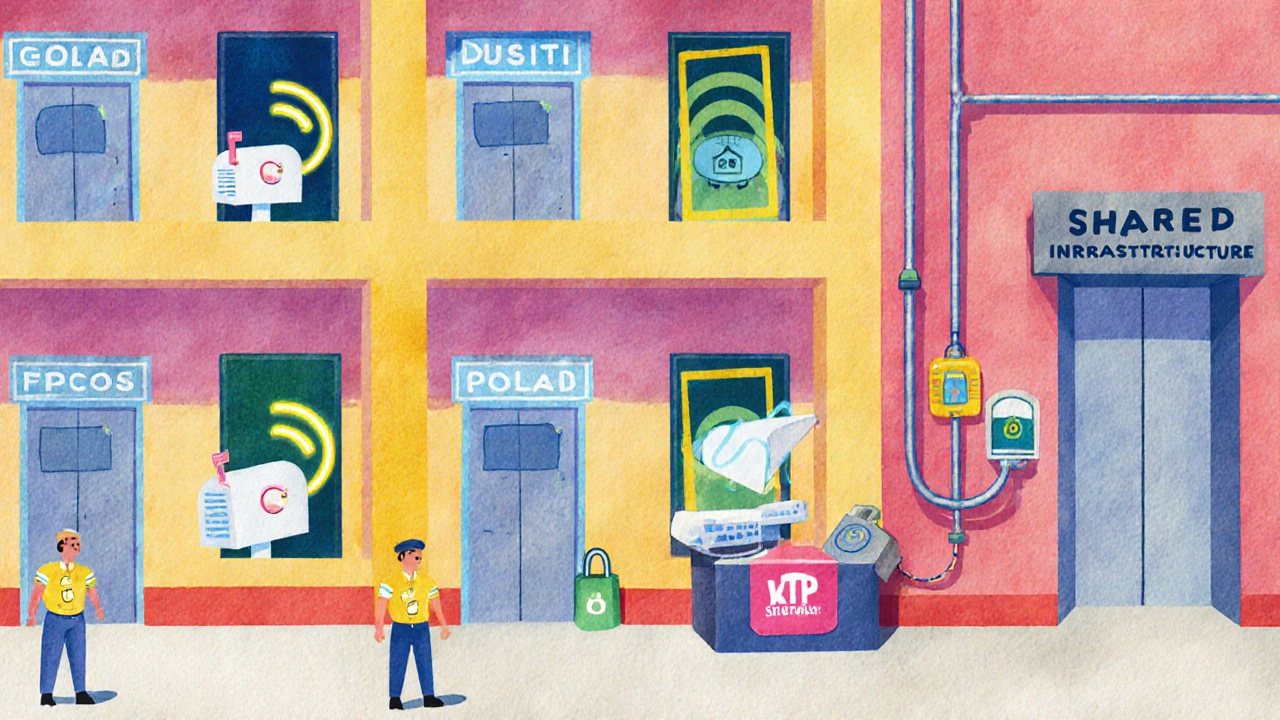
Think of it like renting apartments in the same building. Each tenant has their own door, lock, and utilities—no one can walk into your unit, listen to your conversations, or tamper with your Wi-Fi. That’s exactly what multi-tenant isolation, a security architecture that ensures each customer’s calls, data, and settings remain completely separate from others on the same platform. Also known as tenant separation, it’s what stops one company’s call logs from leaking into another’s, or a glitch in one account from crashing everyone else’s service. Without it, your business communications could be exposed to interference, data leaks, or even legal liability if another tenant misuses the system.
Multi-tenant isolation isn’t just about firewalls. It’s built into how the system routes calls, stores data, and manages user permissions. For example, when you set up a SIP trunking, a method for connecting VoIP systems to the public telephone network using internet protocols, each tenant gets their own unique SIP endpoint—no sharing. Call recordings, IVR menus, and agent dashboards are all locked down to individual accounts. Even if two companies use the same VoIP provider, their cloud telephony, phone systems hosted remotely and accessed over the internet environments never overlap.
This matters most for small businesses that can’t afford dedicated hardware. You get enterprise-grade security without the price tag. But not all providers do it right. Some cut corners by using shared databases or weak access controls—leaving you vulnerable. That’s why you need to ask: Does the provider use dedicated virtual instances? Are media streams encrypted per tenant? Can they prove their isolation with third-party audits?
When you see posts here about VoIP compliance, call recording laws, or SIP setup, they all tie back to this foundation. You can’t secure your calls if the system itself lets others peek in. That’s why multi-tenant isolation shows up in every serious VoIP guide—from agent scripting to codec negotiation. It’s not a feature. It’s the floor you stand on.
Below, you’ll find real-world examples of how businesses protect their communications, avoid data leaks, and choose providers that actually deliver true isolation—not just promises.