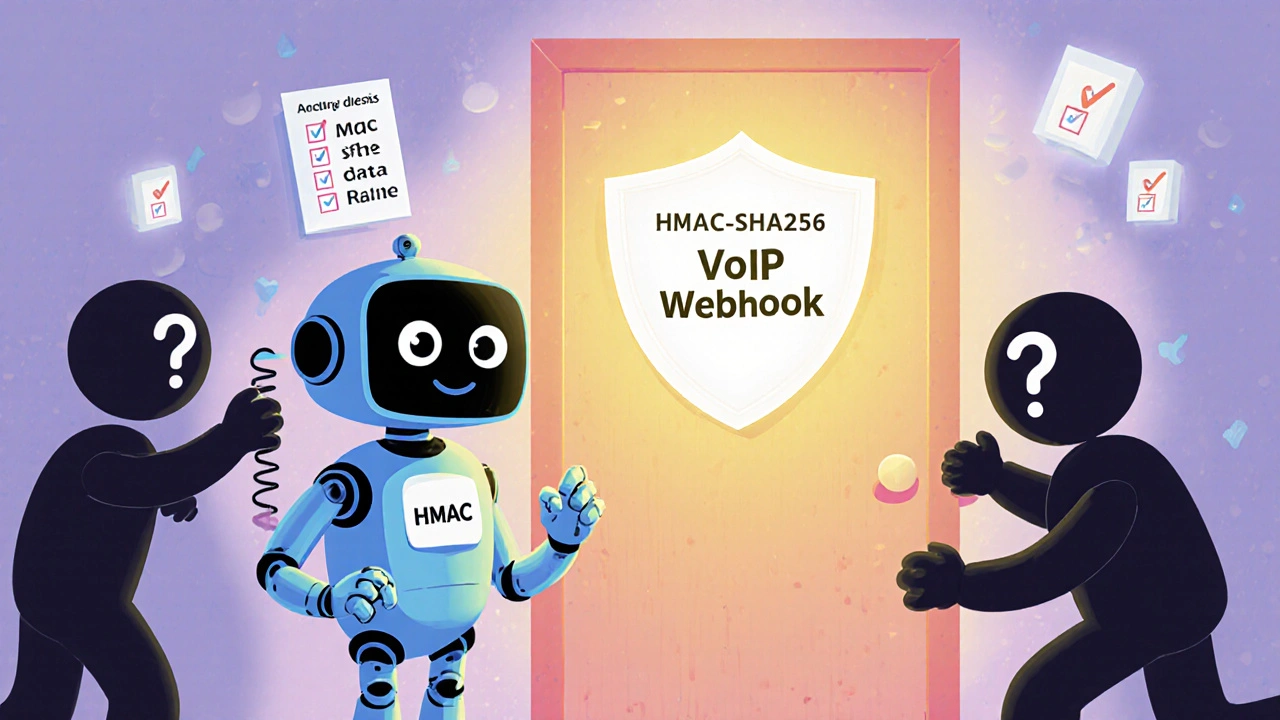
HMAC Signatures: How They Secure VoIP Calls and Prevent Tampering
When your VoIP call connects, it’s not just sending voice data—it’s also sending HMAC signatures, a cryptographic method that verifies a message’s origin and ensures it hasn’t been altered in transit. Also known as Hash-based Message Authentication Codes, these signatures are the quiet guardians of your call integrity. Without them, anyone on the network could intercept your SIP messages, change who’s calling, or even replay old calls to trick your system.
HMAC signatures work by combining a secret key with your message using a hash function like SHA-256. The result? A unique code that only someone with the same key can generate or verify. This is critical in SIP-based VoIP systems, where attackers might try to forge INVITE requests or hijack call setup. Systems like Asterisk, FreeSWITCH, and enterprise PBXs rely on HMAC to authenticate endpoints before allowing a call through. It’s not encryption—it doesn’t hide your voice—but it does stop bad actors from pretending to be your phone or your provider.
Related concepts like SIP authentication, the process of verifying users in VoIP networks using credentials like username and digest, often use HMAC as the underlying mechanism. You’ll see it in Digest Access Authentication (RFC 2617), where the server challenges the client with a nonce, and the client responds with an HMAC-secured hash. Meanwhile, message integrity, the guarantee that data hasn’t been changed between sender and receiver is what you’re really buying with HMAC—no middleman edits, no call rerouting, no fake caller ID. This matters most in regulated industries: healthcare, finance, legal—anywhere call logs are auditable and tampering carries legal risk.
Many of the posts in this collection touch on security layers that work alongside HMAC. You’ll find guides on ZRTP for end-to-end media encryption, DSCP markings that prioritize voice traffic, and VLAN designs that isolate VoIP from data attacks. But HMAC is the first line of defense at the signaling level. It’s not flashy. You won’t see it in a product brochure. But if your VoIP system skips it, you’re trusting your calls to an open door.
Below, you’ll find real-world setups, configuration tips, and comparisons that show how HMAC fits into actual business systems—whether you’re securing a small office SIP phone or scaling a contact center with hundreds of endpoints. No theory. Just what works.