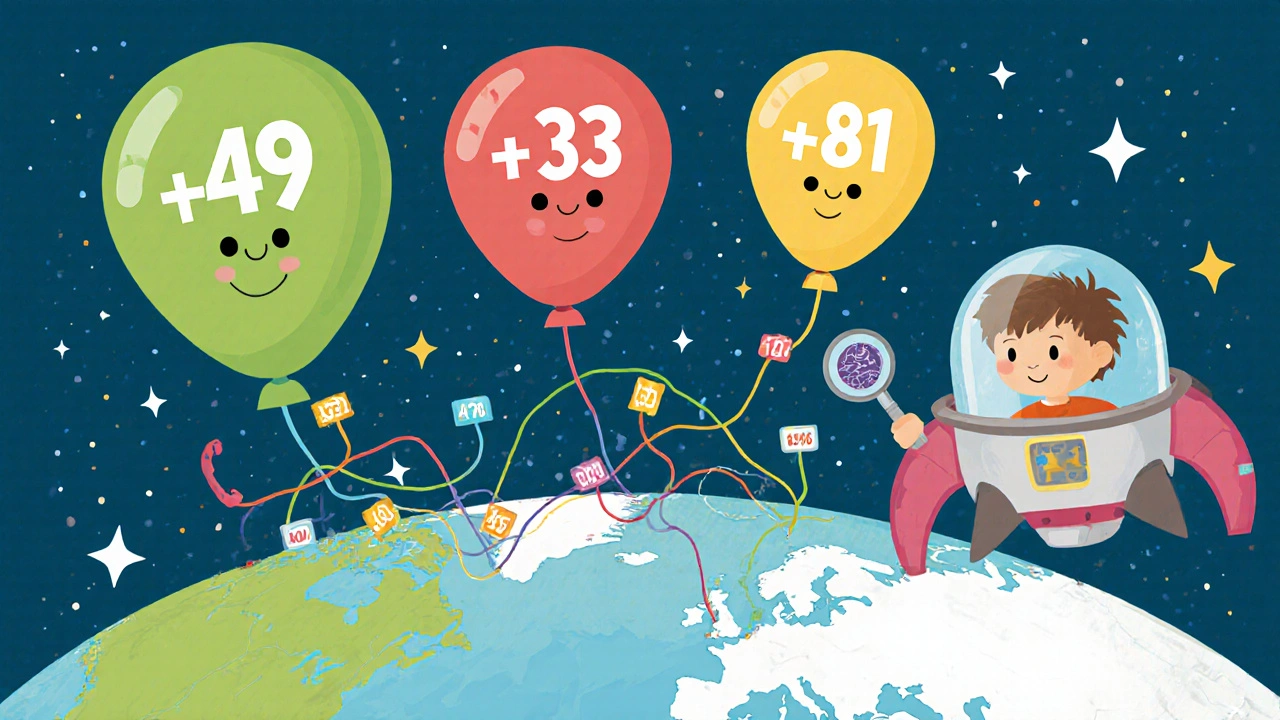
Global Telecom Switching: How Calls Route Across Networks and Why It Matters
When you dial a number in another country, your call doesn’t just jump across the globe—it gets passed between dozens of systems, each one deciding where to send it next. This process is called global telecom switching, the infrastructure that routes voice calls between different carriers and countries using digital networks. Also known as international call routing, it’s the invisible backbone that makes cross-border calls possible, whether you’re using a landline, mobile, or VoIP phone. Without it, your call to a supplier in India or a family member in Mexico would just hang forever.
Modern global telecom switching doesn’t rely on old copper wires anymore. It’s built on SIP trunking, a method that connects VoIP systems to public phone networks using internet protocols, which lets calls travel as data packets instead of analog signals. This shift means calls can be routed more efficiently, often skipping expensive long-distance carriers entirely. But it also introduces new points of failure—like mismatched codecs, poorly configured firewalls, or carriers that refuse to peer with each other. If your call sounds robotic or drops mid-sentence, it’s usually not your internet. It’s a switching problem.
Behind every international call are agreements between telecom providers called carrier interconnection, legal and technical arrangements that let one company’s network hand off calls to another’s. These deals determine how much you pay per minute, how fast the call connects, and whether your number even shows up correctly on the other end. Big providers like AT&T or Deutsche Telekom have direct peering with hundreds of others. Smaller VoIP companies often route through intermediaries, which adds delay and cost. That’s why some VoIP services are cheap but unreliable, while others cost more but never drop calls.
Global telecom switching also affects security. Calls passing through multiple networks can be intercepted or rerouted if one provider has weak authentication. That’s why tools like ZRTP and DSCP markings matter—they ensure your voice stays encrypted and prioritized, even as it jumps from one system to another. And when you port a number or set up a new DID, you’re not just moving a phone number—you’re reconfiguring how the global switching system recognizes and routes traffic to your device.
Today’s businesses rely on this system to serve customers worldwide. Whether you’re using a cloud contact center, integrating VoIP with Salesforce, or just calling overseas clients, the quality of your calls depends on how well these networks talk to each other. The posts below break down exactly how this works—from the technical layers of SIP and VLANs to the real-world delays you’ll see when switching providers or troubleshooting a failed call. You’ll find out why some calls take 3 seconds to connect while others ring forever, how to avoid hidden fees from international switching, and what to look for in a VoIP provider that actually controls its own routing paths—not just resells someone else’s.