Copyright for Business Music: Legal Use, Licenses, and Avoiding Fines
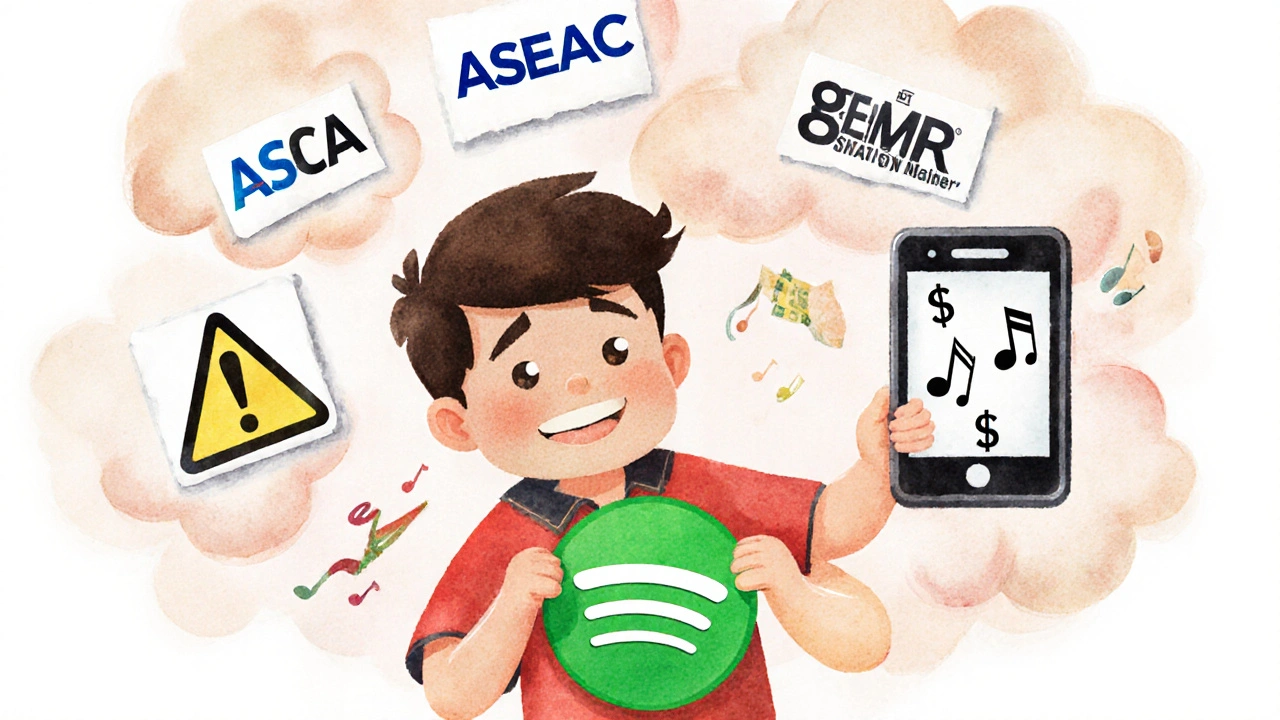
When you play music in your office, call center, or retail space, you're not just setting a mood—you're using a copyrighted work. This is copyright for business music, the legal framework that controls how and where recorded music can be played for commercial purposes. Also known as public performance rights, it applies whether you're streaming Spotify on a speaker, playing radio in the break room, or using background music during customer calls. Most people think if they paid for a streaming subscription, they can play it anywhere. That’s not true. Services like Spotify, Apple Music, or YouTube are licensed for personal, private use only. Play them in your business, and you’re breaking the law.
Companies that play music without proper licenses face fines up to $150,000 per song under U.S. copyright law. In 2023, the music industry collected over $1.2 billion in licensing fees from businesses—mostly from small shops, salons, and call centers that didn’t realize they needed permission. The key entities here are public performance rights, the legal right to play music in places open to the public or employees, music licensing organizations, like ASCAP, BMI, and SESAC in the U.S., which collect fees from businesses on behalf of artists and labels, and business music licensing, the process of legally obtaining permission to play music in commercial environments. These aren’t optional. If your business plays music—whether through a phone system, speaker, or TV—you need a license.
Some businesses try to avoid this by using "free" music from YouTube or SoundCloud. But most of those tracks are still under copyright, and the uploader doesn’t have the right to grant you permission. Others use royalty-free music libraries, which can be a safe option—if you check the license terms carefully. Not all "royalty-free" means no fees. Some require attribution, others limit use to specific platforms. For call centers using music on hold, there are specialized providers that offer legally cleared tracks with commercial use rights built in. You don’t need to be a lawyer to get this right. You just need to know where to look.
The posts below give you real, practical ways to handle music legally in your business. You’ll find guides on choosing licensed music services for call centers, understanding what’s covered under different licenses, avoiding common compliance traps, and even how to set up automated music on hold systems that stay within the law. No guesswork. No risk. Just clear steps to keep your business running without a lawsuit.