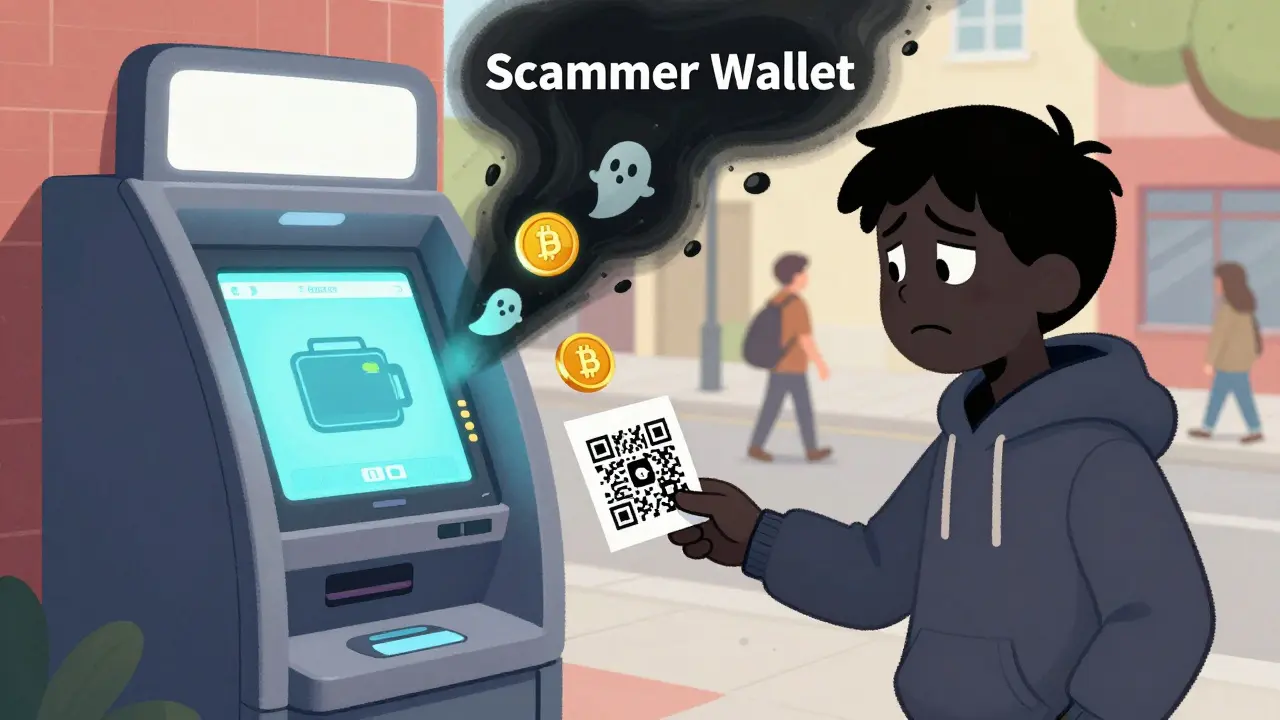
Scanning a QR code to send crypto feels safe. It’s quick, easy, and looks legit. But what if that code isn’t yours? What if it’s been swapped out to send your money straight to a scammer’s wallet? That’s not a hypothetical. In 2025, over $847 million was stolen through QR code scams in cryptocurrency - and most victims had no idea until it was too late.
How QR Code Crypto Scams Work
It starts with trust. You’re at a crypto ATM. Someone hands you a QR code saying, “Scan this to send your Bitcoin to your wallet.” Or you get a message: “Click here to claim your airdrop.” You scan it. The screen shows a familiar interface - maybe it looks like Coinbase, MetaMask, or Ledger. You confirm the amount. You hit send. The transaction goes through. And your crypto vanishes. Here’s the catch: the QR code wasn’t generated by your wallet. It was made by a scammer using a fake website. These sites use JavaScript to replace the real wallet address with one they control. When you scan the code, your phone or computer thinks it’s sending to your address - but it’s actually sending to the scammer’s. The code looks identical. The interface looks real. The only difference is the address underneath - and most people never check it. According to Chainalysis, these scams have a 68% success rate among new users. That’s because they don’t rely on hacking. They rely on you skipping one simple step: verifying the wallet address.Where These Scams Happen
QR code scams aren’t just online. They’re everywhere crypto is accepted. Crypto ATMs: In Q3 2025, the Department of Financial Protection and Innovation found that 18% of all crypto ATM fraud involved victims being given a QR code by a scammer. The ATM itself might be real, but the code you’re told to scan? Fake. Scammers stand nearby, pretending to help. They say, “Just scan this to get your funds.” You do. You lose. Phishing websites: Sites like freebitcoinqrcodes[.]com and qr-code-bitcoin[.]com look like legitimate tools to generate QR codes. They even use fake Captcha systems that mimic Google’s reCaptcha to trick you into thinking they’re safe. Once you enter your wallet address, the site replaces it with a scammer’s address and generates a new QR code. You scan it. Your crypto is gone. Social media and DMs: On Reddit’s r/CryptoScams, users report losing thousands after scanning codes sent by “support agents” claiming to be from Coinbase or Binance. One user lost 0.5 BTC ($30,000) after a scammer posed as customer service via Discord. The message looked official. The QR code looked real. The damage? Permanent. Deepfake scams: By late 2025, the FBI warned of new tactics: scammers using deepfake video calls to walk victims through QR code scams at ATMs. The person on screen looks and sounds like a real support rep. They tell you to scan a code. You do. You lose.Why You Can’t Trust QR Codes in Crypto
The biggest problem? QR codes are invisible. You can’t see the address inside. Unlike typing a wallet address manually - where you can spot a typo - a QR code hides everything behind a black-and-white pattern. Even if you’ve used a wallet before, you’re not trained to verify what’s inside the code. Malwarebytes found that 92% of fake crypto sites use clipboard hijacking. That means if you copy a wallet address from a website to paste it into your wallet, the scammer’s code replaces it with theirs before you paste. You think you’re pasting your own address. You’re not. And here’s the kicker: blockchain transactions are irreversible. Once your crypto leaves your wallet, there’s no undo button. No chargeback. No “oops, my bad.” The money is gone, and the trail is nearly impossible to follow.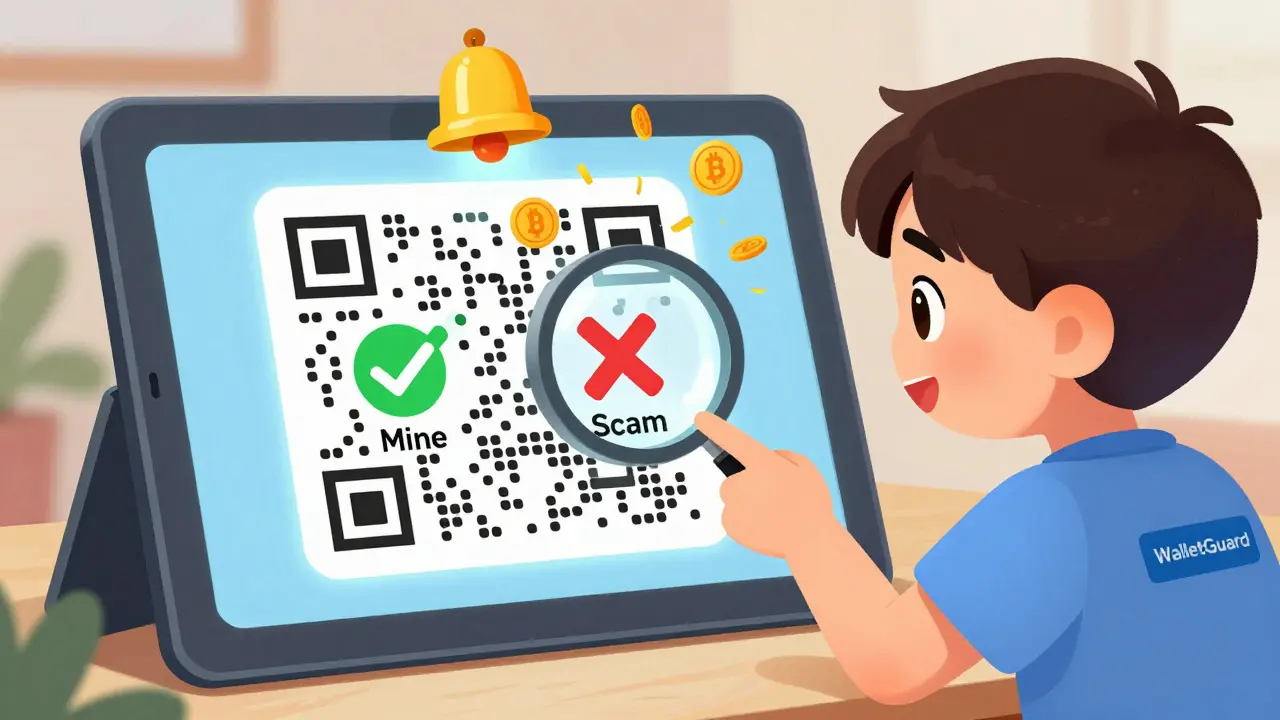
Who Gets Targeted - And Why
These scams don’t go after experts. They go after people who are new, rushed, or confused. The DFPI found that 63% of victims are between 25 and 44. These are people who use crypto regularly but aren’t security-savvy. They’re not hackers. They’re parents, teachers, small business owners - people who just want to send crypto quickly. Scammers exploit that urgency. They say, “Hurry, this offer expires in 15 minutes.” They create pressure. They make you skip the safety steps. And it works. QR code scams have a 47% higher success rate than phishing emails. Why? Because people trust physical objects. A QR code on a piece of paper, a screen at an ATM, a message from “support” - they feel real. They don’t feel like a hack. They feel like a shortcut.How to Protect Yourself
You don’t need to be a tech expert to stay safe. Here’s what actually works:- Never scan a QR code from someone else. If you’re told to scan a code to receive or send crypto, don’t. Generate the code yourself from your own wallet app.
- Always verify the wallet address manually. Before you send, look at the first four and last four characters of the address. Write them down. Then scan the code. Compare. If they don’t match, stop.
- Use a hardware wallet. Devices like Ledger and Trezor show the full wallet address on their screens before you confirm a transaction. If the address doesn’t match what you expect, you’ll see it - and you can cancel.
- Enable transaction preview. Most wallets let you see the full transaction details before signing. Turn it on. Read it.
- Install a scam address blocker. Browser extensions like CryptoScamDB or WalletGuard flag known malicious addresses. They won’t catch every scam, but they’ll block the most common ones.
- Never respond to unsolicited messages. If someone DMs you about a “free airdrop” or “urgent support,” it’s a scam. Legit services don’t ask you to scan codes via text or social media.
- Use your wallet’s built-in QR generator. Your MetaMask, Exodus, or Trust Wallet app can generate a QR code for receiving funds. Use that. Never use a third-party site.
What Companies Are Doing About It
Some players in the space are finally stepping up. Starting January 1, 2026, all crypto ATMs in the European Union are required to show the recipient wallet address on-screen before finalizing a transaction. You have to physically confirm it with a button press. No more blind scans. Twelve of the top 15 ATM manufacturers added similar confirmation steps in late 2025 after pressure from regulators. Coinbase now flags suspicious QR codes in its app and blocks transactions to known scam addresses. But the real solution isn’t technology - it’s behavior. No app can protect you if you skip the verification step. No button press matters if you’re too rushed to read it.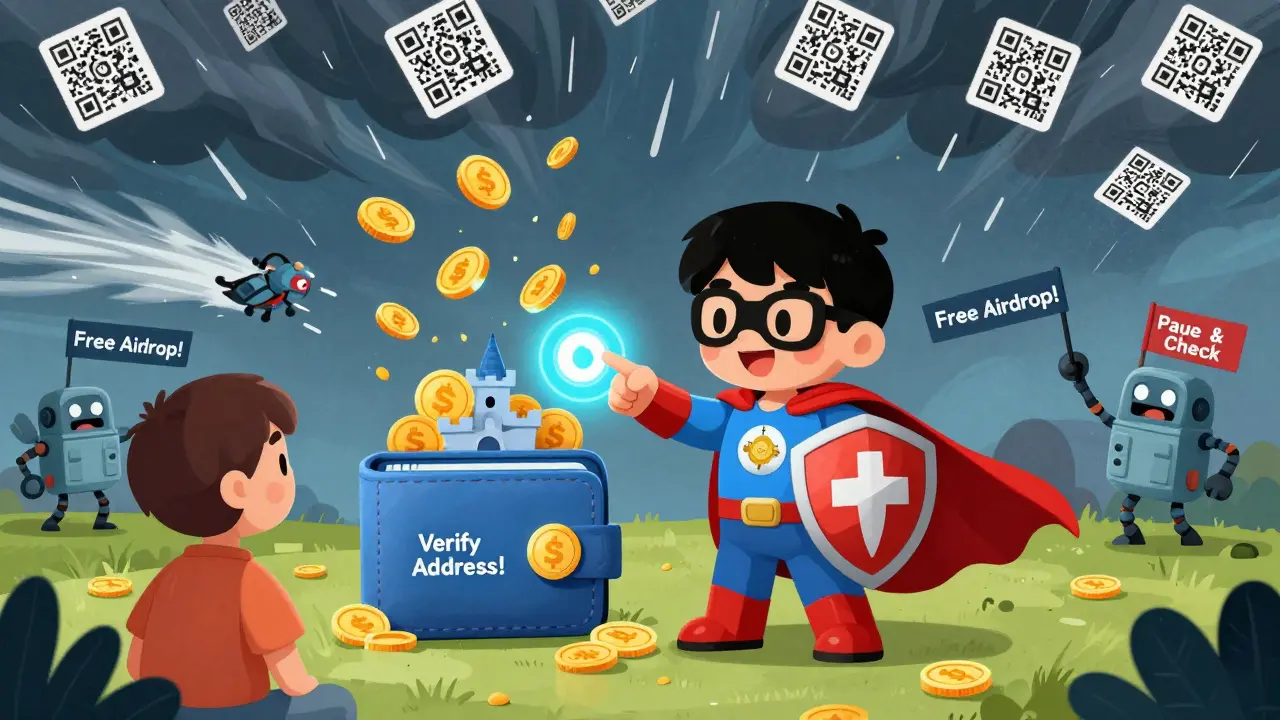
The Bigger Picture
QR code scams are growing because they’re simple, cheap, and effective. A scammer can set up a fake website for under $50. They don’t need to hack a server. They don’t need malware. They just need you to be distracted. Chainalysis reports that personal wallet compromises now make up 23.35% of all crypto theft - up from 14% in 2024. That’s not because exchanges are weaker. It’s because scammers stopped targeting exchanges. They started targeting you. The MIT Digital Currency Initiative predicts QR code scams will stabilize at 15-17% of all crypto fraud by 2027. That’s still dangerous. But it’s also fixable - if users stop treating QR codes like magic.What to Do If You’ve Been Scammed
If you’ve already sent crypto via a scam QR code:- Stop. Don’t send more. Don’t follow more instructions.
- Take a screenshot of the QR code, the website, and the transaction hash.
- Report it to the FBI’s IC3 (ic3.gov) and your local financial regulator.
- Share the transaction hash on blockchain explorers like Etherscan or Blockchain.com. Sometimes, other users or investigators can trace the funds.
- Don’t pay a “recovery service.” They’re scams too.
Final Reminder
You don’t need to be a genius to avoid these scams. You just need to pause. Every time you scan a QR code for crypto, ask yourself: Did I generate this code myself? If the answer is no - don’t scan it. Your wallet address is your key. Never let someone else control how it’s shared.Can I trust QR codes from crypto ATMs?
Only if you generated the QR code yourself using the ATM’s built-in system. If someone hands you a printed code or tells you to scan a code on your phone, it’s a scam. Legitimate ATMs don’t ask you to scan external codes. They generate the code for you on-screen.
Why can’t blockchain trace QR code scams?
Blockchain can trace every transaction - but it can’t trace who initiated it. If you send crypto to a scammer’s wallet because you scanned a fake QR code, the blockchain shows the transfer, but not the fraud. That’s why law enforcement needs your screenshots, transaction hashes, and reports to link the scam to the person behind it.
Are hardware wallets immune to QR code scams?
No, but they’re your best defense. Hardware wallets show the full destination address on their screen before you confirm. If the address doesn’t match what you expect, you’ll see it. That’s why 90% of users who avoided QR code scams used hardware wallets with address verification enabled.
Can I get my crypto back if I was scammed?
Almost never. Crypto transactions are irreversible. In rare cases, blockchain investigators have traced stolen funds and convinced exchanges to freeze them - but only if the scammer reused the same wallet or made a mistake. Don’t rely on recovery. Focus on prevention.
What’s the difference between a real and fake QR code?
There’s no visual difference. Both look like black-and-white squares. The only way to tell is to scan the code and compare the wallet address on your screen with the one you intended to send to. Always verify manually.
Is it safe to use QR code generators online?
Never. Even if the site looks official, it’s a trap. Legitimate wallets like MetaMask, Trust Wallet, or Ledger have built-in QR generators. Use those. Never use a third-party website to generate or scan crypto QR codes.
Why are QR code scams increasing so fast?
Because they’re easy to run, hard to detect, and target people who aren’t security experts. Scammers don’t need to hack systems - they just need to trick users into skipping one simple step: verifying the wallet address. With mobile crypto use growing, these scams will keep rising unless users change their habits.