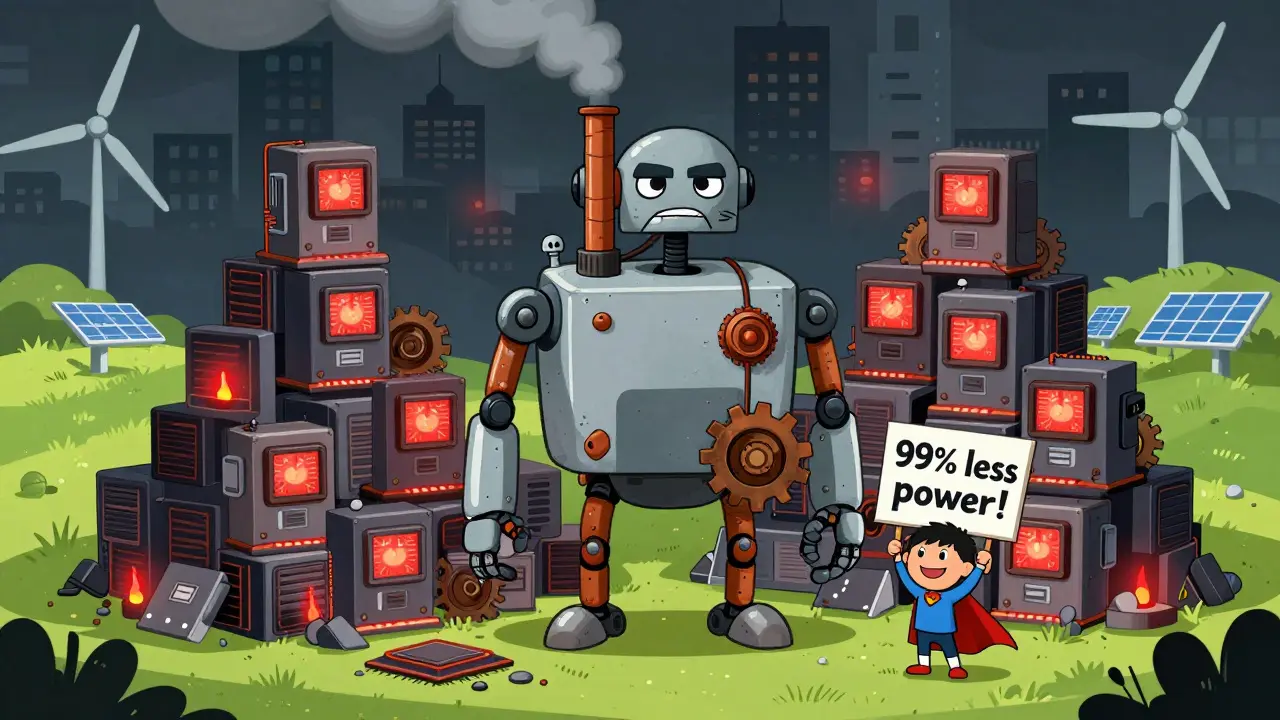
When Bitcoin first launched, no one thought much about how much electricity it used. But today, the energy cost of blockchain technology is impossible to ignore. The difference between Proof-of-Work (PoW) and Proof-of-Stake (PoS) isn’t just technical - it’s planetary. PoS uses 99% less energy than PoW. That’s not a guess. It’s a fact backed by real data from Ethereum’s own transition, and it changes everything about how we think about crypto and sustainability.
Why PoW Burns So Much Power
Proof-of-Work is like a global competition where miners race to solve impossible math puzzles. The first one to solve it gets rewarded with new coins. But here’s the catch: thousands of machines are solving the same puzzle at the same time. Most of them fail. All of them use electricity. And they don’t stop. They run 24/7, year after year. Bitcoin alone uses more electricity annually than entire countries like Argentina or the Netherlands. One Bitcoin transaction consumes about 830 kilowatt-hours (kWh). That’s enough to power an average U.S. home for over a month. Compare that to a single Visa transaction, which uses about 0.0008 kWh. Bitcoin uses more than one million times more energy per transaction. Why? Because PoW doesn’t just need power - it needs massive power. Miners use specialized hardware called ASICs, which cost thousands of dollars and generate so much heat they need industrial cooling systems. And because the puzzles get harder over time, miners are forced to upgrade constantly. This creates a mountain of electronic waste. One study estimated that Bitcoin mining produces over 30,000 tons of e-waste every year - roughly the same as the small electronic waste from the Netherlands.How PoS Works - Without All the Power
Proof-of-Stake throws out the race. Instead of using brute-force computing, PoS picks validators based on how much cryptocurrency they “stake” - meaning they lock up their coins as collateral. The more you stake, the higher your chance of being chosen to validate the next block. If you try to cheat? You lose your staked coins. That’s the punishment. No mining rigs. No heat. No constant upgrades. Validators don’t need supercomputers. They can run on a $500 laptop with 8GB of RAM. Some even run on Raspberry Pis. The software is lightweight. The power draw? Around 10 to 20 watts - less than a LED lightbulb. That’s it. No farms. No data centers. No cooling systems. This isn’t theory. Ethereum, the second-largest blockchain, switched from PoW to PoS in September 2022. Before the switch, Ethereum used about 45 terawatt-hours (TWh) per year. After? It dropped to 0.01 TWh. That’s a 99.95% reduction. Ethereum went from using more energy than the entire country of Croatia to using less than a single data center.The Real Numbers: PoW vs PoS
Here’s a clear side-by-side comparison of what these two systems actually use:| Factor | Proof-of-Work (e.g., Bitcoin, Pre-Merge Ethereum) | Proof-of-Stake (e.g., Ethereum 2.0, Solana, Cardano) |
|---|---|---|
| Energy per transaction | 830 kWh | 0.0004 kWh |
| Annual energy use (network) | ~110 TWh (Bitcoin) | ~0.01 TWh (Ethereum) |
| Hardware required | ASIC miners, industrial cooling | Laptop or Raspberry Pi |
| Hardware lifespan | 1-2 years (constant replacement) | 5+ years (no upgrades needed) |
| E-waste per year | 30,000+ tons | Negligible |
| Validator power draw | 1,000-3,000 watts per miner | 10-20 watts per validator |
These numbers aren’t estimates. They come from Ethereum’s own post-merge reports and independent studies from the Cambridge Centre for Alternative Finance. PoS doesn’t just save energy - it removes the entire energy infrastructure that PoW depends on.

More Than Just Power: The Ripple Effects
The energy savings from PoS don’t stop at the plug. They ripple out in ways most people don’t think about. First, there’s the economic side. PoW miners must sell their coins just to pay their electricity bills. That creates constant selling pressure, which can drive prices down. PoS validators? They don’t need to sell. Their costs are so low that even small staking rewards cover their expenses. This reduces market volatility and keeps more coins in circulation. Second, there’s accessibility. To mine Bitcoin today, you need a warehouse, a power contract, and tens of thousands of dollars. But anyone with 32 ETH can become a validator on Ethereum. No special hardware. No electrician. No permits. This opens the door for ordinary people to help secure the network - not just big corporations. Third, there’s regulation. Governments are cracking down on PoW mining because of its carbon footprint. China banned it in 2021. Kazakhstan and Russia have imposed heavy taxes. The European Union is considering restrictions. PoS? It’s seen as a solution. The Climate Action Tracker even listed Ethereum’s switch as one of the top 10 climate wins of 2022.What About Security? Isn’t PoS Weaker?
A common fear is that PoS is less secure because it doesn’t rely on brute force. But that’s backwards. PoW’s security comes from spending money on electricity - which anyone can do. PoS’s security comes from spending money on coins - which you can’t fake. If you try to attack a PoS network, you’d have to buy over 51% of all the coins. That’s not just expensive - it’s self-defeating. If you buy that much, the price goes up. And if you attack, you lose your entire investment. In fact, PoS networks like Ethereum and Solana have been live for years without a single successful attack. The economic stakes are higher than the electrical ones.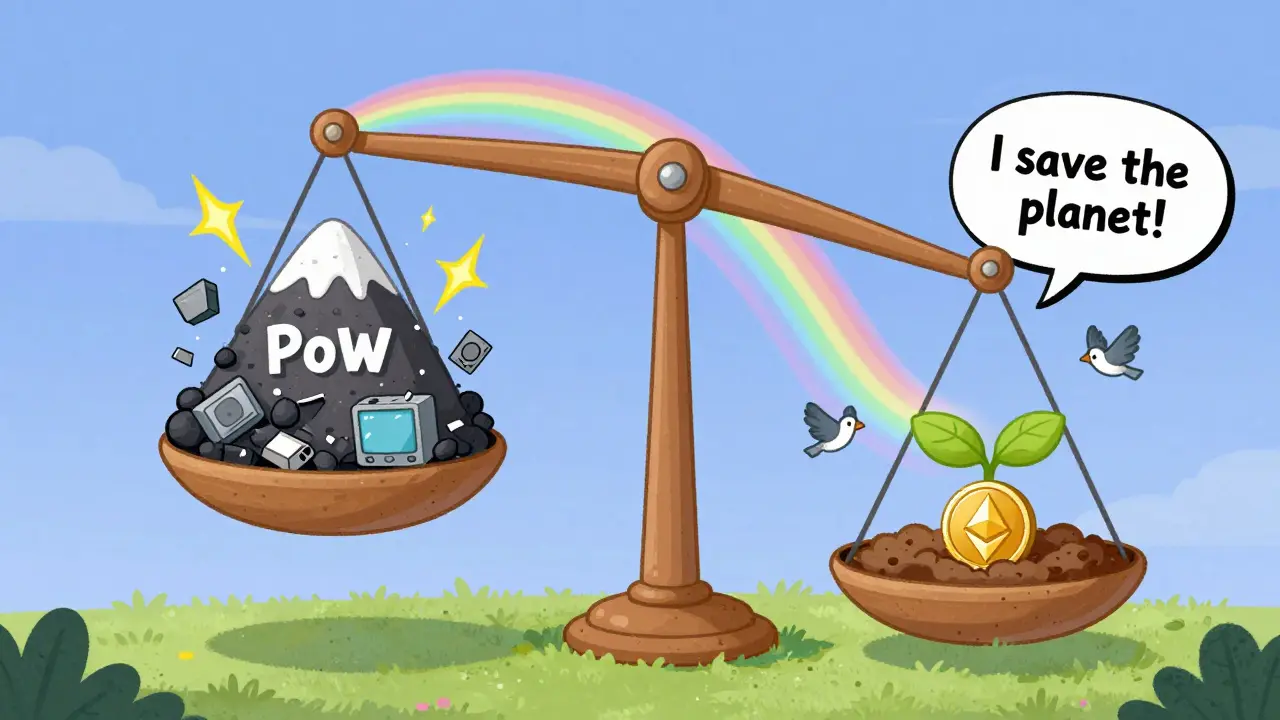
The Bigger Picture: Why This Matters
Blockchain isn’t going away. It’s being used for finance, supply chains, digital identity, and more. If every blockchain ran on PoW, the global electricity demand from crypto alone could double by 2030. That’s not sustainable. It’s not responsible. PoS proves that you don’t need to burn power to build trust. You just need smart design. Ethereum’s switch showed the world that a major blockchain can cut its energy use by 99.95% overnight - without losing security, speed, or decentralization. Other networks are following. Solana, Cardano, Polygon, and Tezos have been on PoS since day one. Even new projects are skipping PoW entirely. The future of blockchain isn’t about who can build the biggest mining farm. It’s about who can build the cleanest, most efficient system.What’s Next?
PoS isn’t perfect. It has challenges - like centralization risks if too much stake is held by a few wallets. But those are problems that can be solved with better incentives and governance. The energy issue? It’s already solved. The shift from PoW to PoS is the biggest environmental win in tech this decade. It proves that innovation doesn’t have to cost the planet. It can save it.How much energy does Proof-of-Stake actually save compared to Proof-of-Work?
Proof-of-Stake uses between 99% and 99.95% less energy than Proof-of-Work. Ethereum’s transition in 2022 cut its energy use from 45 terawatt-hours per year to just 0.01 terawatt-hours - a 99.95% reduction. That’s equivalent to turning off 99.95% of all the power used by its previous mining system.
Can I run a PoS validator on my home computer?
Yes. Most PoS validators run on standard laptops with 8GB of RAM and a solid-state drive. The software is lightweight, and the power draw is around 10-20 watts - less than a ceiling fan. You don’t need expensive hardware, cooling systems, or special power contracts.
Why did Ethereum switch from PoW to PoS?
Ethereum switched to PoS primarily to reduce its massive energy footprint. Before the switch, Ethereum used more electricity than many countries. The move, called "The Merge," was also designed to improve scalability and reduce transaction fees, but the environmental benefit was the biggest driver for public and regulatory support.
Does PoS create less electronic waste than PoW?
Yes. PoW mining generates tens of thousands of tons of e-waste yearly from discarded ASIC miners. PoS validators use standard consumer hardware that lasts five years or more without needing replacement. This eliminates the constant cycle of buying, overheating, and trashing specialized equipment.
Are there any blockchains still using PoW today?
Yes, Bitcoin and Litecoin still use PoW. But they’re the exceptions now. Most major blockchains launched after 2020 use PoS or similar low-energy mechanisms. Ethereum’s switch marked a turning point - and since then, new projects almost always choose PoS for its efficiency and sustainability.