
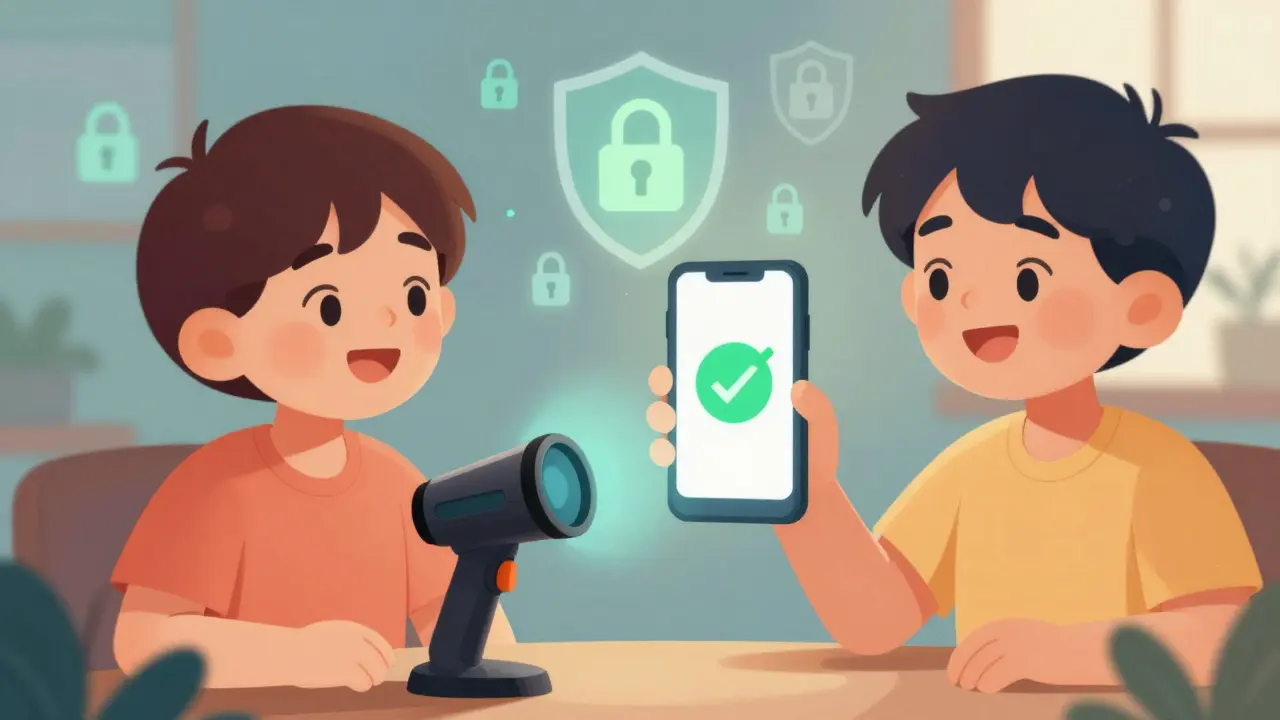
Imagine you want to prove to a friend that you know the combination to their safe, but you don't want them to see the numbers. You open the safe, take out an item they asked for, and close it again. They now know you have access, but they still don't know the code. That is the core idea behind zero-knowledge proofs, or ZKPs. This cryptographic method allows one party (the prover) to convince another party (the verifier) that a statement is true without revealing any underlying information.
In a world where data breaches are common and privacy regulations are tightening, this technology is becoming essential. It solves a major problem: how do we verify identity, compliance, or transaction validity without handing over sensitive personal data? From proving you are over 18 without showing your birthdate to verifying complex blockchain transactions instantly, ZKPs are changing how we handle trust in digital systems.
How Zero-Knowledge Proofs Actually Work
To understand ZKPs, you need to look at the three strict rules that define them. These were formalized by cryptographers Shafi Goldwasser, Silvio Micali, and Charles Rackoff in the mid-1980s. If a system doesn't meet all three, it isn't a true zero-knowledge proof.
- Completeness: If the statement is true, an honest verifier will be convinced. Basically, if you really do know the secret, the proof works.
- Soundness: If the statement is false, no cheating prover can trick the verifier into believing it's true. The chance of getting away with a lie is negligible-often lower than winning the lottery multiple times in a row.
- Zero-Knowledge: The verifier learns nothing other than the fact that the statement is true. They gain zero insight into the secret itself.
A classic example used to explain this is the "Ali Baba’s Cave" scenario. Imagine a circular cave with a magic door in the middle that only opens with a specific word. You (the prover) enter one side. Your friend (the verifier) stands outside and shouts which exit you should come from. If you know the word, you can open the door and exit on either side, matching their request every time. If you didn’t know the word, you’d only have a 50% chance of guessing correctly each round. After repeating this 20 times, your friend is mathematically certain you know the word, yet they never heard it.
The Two Main Types: Interactive vs. Non-Interactive
Early ZKPs were interactive protocols requiring back-and-forth communication. While secure, they are slow and impractical for modern internet applications where users expect instant results. This led to the development of non-interactive zero-knowledge proofs (NIZKs).
In a non-interactive setup, the prover generates a single proof message that the verifier can check immediately without any further conversation. This shift was crucial for scaling blockchain networks. Today, most practical applications use advanced forms of NIZKs, specifically zk-SNARKs and zk-STARKs.
| Feature | zk-SNARKs | zk-STARKs |
|---|---|---|
| Proof Size | Very small (kilobytes) | Larger (kilobytes to megabytes) |
| Verification Speed | Extremely fast (milliseconds) | Fast, but slower than SNARKs |
| Trusted Setup Required? | Yes (initial ceremony needed) | No (transparent setup) |
| Quantum Resistance | No (relies on elliptic curves) | Yes (based on hash functions) |
| Best Use Case | Blockchain scaling (ZK-Rollups) | Long-term secure archives |
The key difference lies in trust and future-proofing. zk-SNARKs require a "trusted setup" phase where random parameters are generated. If anyone keeps a copy of these parameters, they could forge fake proofs. Projects like Zcash hold public ceremonies to destroy these keys, ensuring transparency. On the other hand, zk-STARKs are "transparent," meaning no trusted setup is needed, and they rely on hash functions that are resistant to quantum computer attacks. However, STARK proofs are larger, which makes them less ideal for storage-constrained blockchains.
Real-World Applications Beyond Cryptocurrency
While many people associate ZKPs with Bitcoin forks or privacy coins, their utility extends far beyond finance. Here is how different industries are using this technology right now.
Digital Identity and Age Verification
Currently, to prove you are over 21, you must show a driver’s license. This reveals your name, address, exact birthdate, and photo. With ZKPs, you can generate a proof that says "Age > 21" based on your encrypted data. The bar scanner verifies the proof is valid without ever seeing your ID details. Companies like Aleo are building platforms specifically for this kind of private-by-default application development.
Supply Chain Compliance
Manufacturers often need to prove that products meet safety or sustainability standards without revealing trade secrets. For instance, a pharmaceutical company might need to prove a drug contains less than 0.1% of a restricted substance. Using ZKPs, they can submit a proof of chemical composition analysis to regulators. The regulator sees the "pass" status, but not the full formula or supplier list. Circularise uses similar logic to track carbon footprints and material origins in supply chains without exposing proprietary business data.
Private Cloud Computing
When you run code on a cloud server, you usually have to trust that the provider isn't peeking at your data. With ZKPs, a user can offload computation to the cloud and receive a proof that the calculation was performed correctly on the expected inputs. This allows for verifiable outsourcing of heavy processing tasks while keeping the input data completely confidential.
Why Blockchain Needs Zero-Knowledge Proofs
Blockchains face a trilemma: they struggle to balance decentralization, security, and scalability. Public blockchains like Ethereum are transparent, meaning everyone can see every transaction. This creates two problems: lack of privacy and slow processing speeds due to congestion.
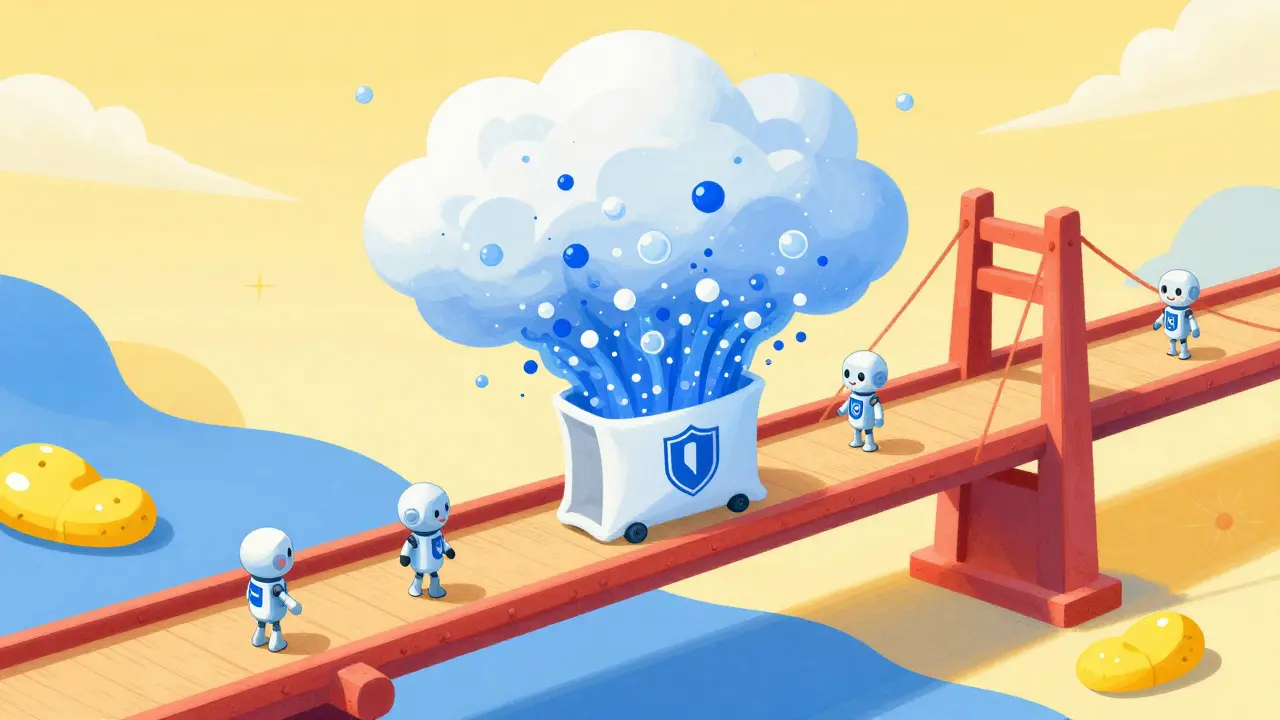
ZKPs solve both. In ZK-Rollups, thousands of transactions are processed off-chain. A single zero-knowledge proof is then submitted to the main blockchain, attesting that all those transactions were valid. The network only needs to verify the small proof, not re-run every transaction. This increases throughput by hundreds of times while reducing gas fees. Meanwhile, because the transaction details remain hidden within the proof, users retain financial privacy. Networks like StarkNet and Loopring leverage this architecture to handle high volumes of activity efficiently.
Challenges and Limitations
Despite the hype, ZKPs are not a magic bullet. Implementing them is difficult and resource-intensive.
- Computational Cost: Generating a proof requires significant CPU power and memory. While verifying a proof is fast, creating one can take seconds or even minutes for complex computations. This means provers often need specialized hardware or optimized software stacks.
- Circuit Design Complexity: Developers must translate standard programming logic into arithmetic circuits. This is not intuitive and requires expertise in abstract algebra and constraint systems. A small bug in the circuit design can lead to catastrophic security failures.
- Trusted Setup Risks: As mentioned with zk-SNARKs, if the initial parameter generation is compromised, the entire system’s integrity is at risk. Although multi-party ceremonies mitigate this, it remains a central point of failure compared to traditional encryption.
Furthermore, auditing ZKP code is hard. Unlike simple smart contracts, verifying that a zero-knowledge circuit behaves as intended requires deep mathematical scrutiny. This barrier to entry slows adoption among general-purpose developers who aren't cryptography experts.
The Future of Privacy-Preserving Technology
We are moving toward a future where privacy is not an afterthought but a default feature of the web. As regulatory pressure mounts (think GDPR and CCPA), companies cannot afford to store raw personal data unnecessarily. ZKPs offer a way to comply with these laws by design-processing data without storing or exposing it.
Research is currently focused on making proof generation faster and cheaper. Innovations like universal setups allow different applications to share the same initial parameters, reducing overhead. Additionally, the rise of post-quantum cryptography ensures that today’s ZKP implementations will remain secure against future quantum computing threats, particularly through the adoption of STARK-based systems.
For businesses, the takeaway is clear: zero-knowledge proofs are transitioning from theoretical computer science to practical infrastructure. Whether you are building a decentralized app, securing a supply chain, or protecting user identities, understanding ZKPs is no longer optional-it is a competitive advantage.
What is a simple example of a zero-knowledge proof?
The "colored balls" analogy is popular. Imagine Alice wants to prove to Bob that she can distinguish between red and green balls, but Bob is colorblind. Alice picks two balls (one red, one green) and holds them behind her back. She shows them to Bob, then swaps them behind her back. Bob asks if she swapped them. If Alice says yes or no correctly many times in a row, Bob becomes convinced she can tell the colors apart, even though he never learned which ball was which color.
Are zero-knowledge proofs unbreakable?
They are mathematically secure under specific assumptions, such as the hardness of discrete logarithms or collision resistance of hash functions. However, implementation errors, bugs in the circuit code, or compromised trusted setups can create vulnerabilities. No cryptographic system is immune to human error or poor engineering practices.
What is the difference between zk-SNARKs and zk-STARKs?
zk-SNARKs produce smaller proofs and faster verification but require a trusted setup phase and are vulnerable to quantum computers. zk-STARKs are larger and slightly slower to verify but do not require a trusted setup and are quantum-resistant. SNARKs are currently more popular in blockchain scaling due to their efficiency.
Can zero-knowledge proofs be used for password authentication?
Yes. Instead of sending your password to a server, you can generate a ZKP that proves you know the password associated with an account. The server verifies the proof without ever seeing or storing your actual password, significantly reducing the risk of data breaches.
Why do ZKPs require so much computing power?
Generating a proof involves complex mathematical operations, such as polynomial commitments and elliptic curve pairings. The prover must perform extensive calculations to construct the proof structure, whereas the verifier only needs to check a few final values. This asymmetry means proof generation is computationally expensive, while verification is lightweight.