
You click a link promising free tokens. You connect your wallet. You sign one quick message. Then, your balance hits zero in three seconds. This isn’t a glitch. It is the most common way people lose money in Web3, a decentralized internet ecosystem built on blockchain technology today.
In August 2025 alone, attackers stole over $12 million from more than 15,000 users using these exact tactics. The problem isn’t just bad luck. It is a sophisticated evolution of cybercrime that exploits how we interact with digital assets. Unlike traditional email scams, where you might recover funds through a bank chargeback, blockchain transactions are irreversible. Once you sign, it’s gone. Understanding the mechanics of wallet drainers and signature scams is no longer optional for anyone holding crypto. It is survival.
The Anatomy of a Wallet Drainer
A wallet drainer is a malicious script designed to empty your cryptocurrency holdings automatically. These attacks usually start with a lure. Maybe it’s a fake NFT minting page, a cloned exchange interface, or a Discord message claiming a special airdrop. The goal is to get you to connect your wallet to a compromised website.
Once connected, the attacker doesn’t need your password. They don’t need your seed phrase. They just need you to approve a transaction. Modern drainers use JavaScript injected into the browser to trigger transfers the moment you interact with the page. According to data from CertiK, these scripts can drain 100% of a victim's balance in an average of 3.2 seconds after approval. That leaves almost no time to hit cancel.
The scariest part? The interface looks real. Attackers clone popular platforms like Uniswap or OpenSea pixel-for-pixel. If you aren’t checking the URL bar carefully, you won’t notice you’re on a fake site until the funds are already moving to the attacker’s address.
Signature Scams: The Invisible Threat
If wallet drainers are the blunt instrument, signature scams are the surgical strike. These attacks exploit the complexity of blockchain interactions. When you use a decentralized application (dApp), you often have to "sign" messages. Sometimes this is to prove ownership. Other times, it’s to authorize spending limits.
Attackers craft deceptive prompts that look like simple approvals but actually grant full access to your wallet. For example, a prompt might say "Sign to verify identity," but the underlying code grants unlimited allowance to a malicious contract. Once signed, the attacker can pull any token you hold at any time, without asking again.
This tactic has evolved dramatically with the introduction of EIP-7702 batch signatures. This technical standard allows multiple operations to be bundled into a single transaction. Scammers now hide malicious transfers inside legitimate-looking batches. You see one button labeled "Approve," but behind the scenes, it executes five different commands, including sending your ETH to the hacker. This makes visual inspection nearly impossible for non-experts.
| Feature | Wallet Drainer | Signature Scam |
|---|---|---|
| Mechanism | Malicious script triggers auto-transfer upon connection/approval | Deceptive message grants unlimited access or hidden permissions |
| User Action Required | Connect wallet + Sign one transaction | Sign a specific message or approval |
| Speed of Loss | Instant (avg. 3.2 seconds) | Can be immediate or delayed days later |
| Detection Difficulty | High (UI cloning is perfect) | Very High (technical details hidden in code) |
| Common Lure | Fake NFT mints, Airdrops | Bridge transfers, Token swaps, Identity verification |
Why Web3 Phishing Is Worse Than Email Spam
We all ignore spam emails. But Web3 phishing hits harder because the stakes are higher and the recovery options are lower. Traditional Business Email Compromise (BEC) attacks average around $1,245 per incident. In contrast, a successful Web3 phishing attack averages nearly $8,000 in stolen assets. Why the difference?
First, there is no customer support. There is no fraud department to call. Blockchain transactions are final. Second, the barrier to entry for attackers is low. With open-source phishing kits available on GitHub, even novice coders can launch effective campaigns. Third, AI has made social engineering terrifyingly effective. Tools that generate human-like text allow scammers to create personalized lures that bypass our natural skepticism. In 2025, over 80% of phishing emails used AI-generated content, and Web3 attacks are following suit.
Furthermore, the sheer volume of targets is massive. With over 48 million active Web3 wallets globally, the attack surface is expanding faster than security solutions can keep up. Only 28% of regular users currently use advanced protection tools like transaction simulation, leaving the vast majority exposed.
Real Stories: How People Got Burned
Numbers tell one story, but personal accounts reveal the emotional toll. On Reddit’s r/CryptoScams, user u/EthereumHolder99 shared a typical experience in October 2025. He clicked what he believed was a legitimate token approval for Uniswap. Instead, it was a drainer contract. He lost 2.3 ETH (worth about $4,600) in under five seconds. "I thought I was being careful," he wrote. "But the UI looked exactly right."
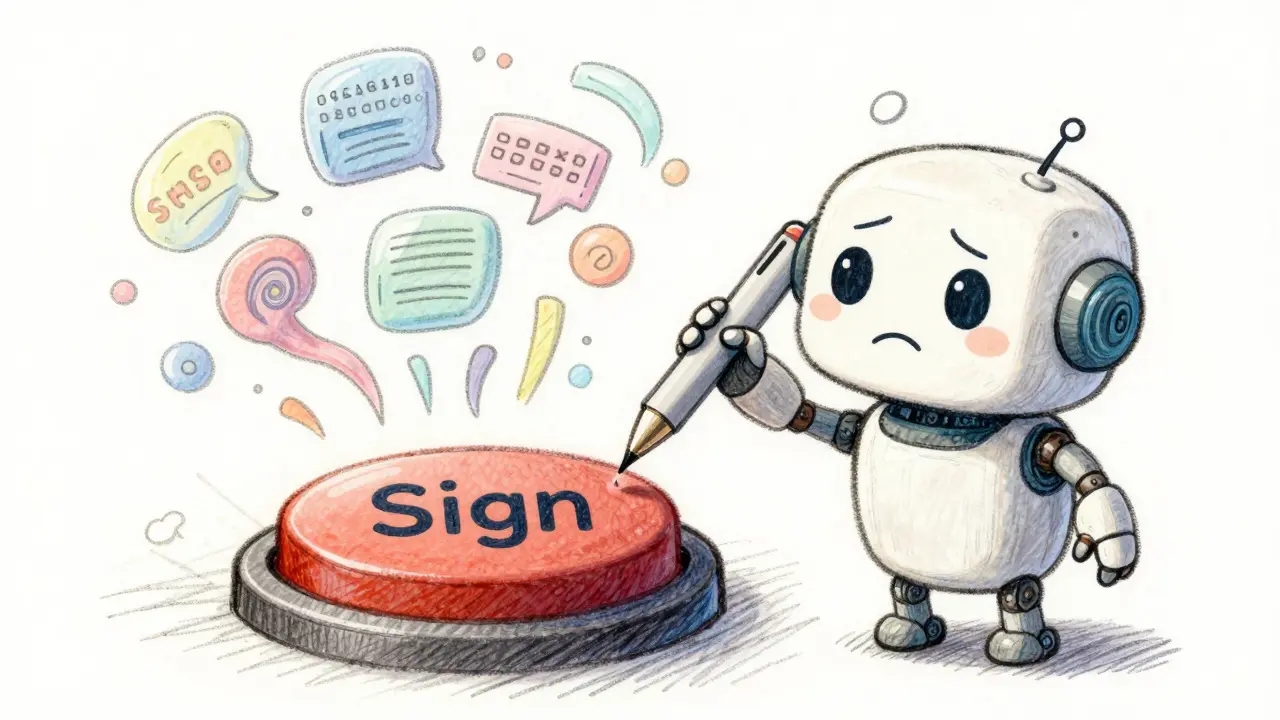
Another common pattern involves confusion between "Sign" and "Approve." Many users treat these buttons as identical. In reality, signing a message can authorize a contract to spend your tokens indefinitely. Trustpilot reviews for wallet security services show that 68% of negative feedback specifically cites signature scams as the primary failure point. Users feel betrayed not by the tech, but by their own lack of awareness.
However, success stories exist. One user on GitHub’s Web3 Security subreddit avoided losing $12,500 by noticing a discrepancy in MetaMask’s transaction simulation feature. The preview showed a transfer to an unknown address, despite the dApp claiming it was a simple bridge operation. This highlights that vigilance, combined with the right tools, works.
How to Protect Yourself: A Practical Checklist
Defending against Web3 phishing requires a layered approach. Relying on just one method is risky. Here is what experts recommend based on current threat data:
- Use Transaction Simulation: Enable this feature in wallets like MetaMask. It shows you exactly what a transaction will do before you sign it. Data shows this blocks 67% of known drainer contracts.
- Install Browser Extensions: Tools like Blockaid scan URLs and contracts in real-time. Independent testing indicates they catch about 43% of threats that slip past other defenses.
- Check URLs Meticulously: Hover over links before clicking. Look for subtle misspellings (e.g., "unswap.com" instead of "uniswap.org"). Bookmark official sites and never navigate via search results or social media links.
- Revoke Permissions Regularly: Use services like Revoke.cash to audit which contracts have access to your wallet. If you see an old app you no longer use, revoke its allowance immediately.
- Use a Burner Wallet: Keep your main holdings in a cold storage hardware wallet. Use a separate, low-balance software wallet for daily dApp interactions. If it gets drained, the loss is minimal.
Education is also key. ScamSniffer data suggests users need an average of eight simulated phishing interactions to reliably identify scams. Stay updated on new tactics, especially those involving batch signatures or AI-generated content. Treat every request to sign something with suspicion.
The Future of Web3 Security
The landscape is shifting. Regulators are waking up. The EU’s MiCA regulations, effective June 2025, include specific provisions for wallet security. Meanwhile, the industry is racing to build better tools. We are seeing the rise of decentralized reputation systems for contract addresses and ENS integration for sender verification, expected in early 2026.
Yet, challenges remain. Vitalik Buterin, co-founder of Ethereum, noted in late 2025 that signature scams represent a fundamental UX-security tradeoff that hasn’t been solved yet. As long as interacting with Web3 requires signing complex cryptographic messages, scammers will find ways to exploit user confusion. Until protocol-level changes make transactions transparent and intuitive, personal vigilance remains your best defense.
What is the difference between a wallet drainer and a signature scam?
A wallet drainer is a malicious script that automatically transfers funds from your wallet once you connect to a fake site and approve a transaction. A signature scam tricks you into signing a message that grants a malicious contract permission to access your funds, often hiding the true intent within complex technical details or batch operations.
Can I recover funds lost to a Web3 phishing attack?
Generally, no. Blockchain transactions are irreversible. Unlike credit card fraud, there is no central authority to reverse the payment. Your best chance is if the attacker interacts with a centralized exchange, where law enforcement might freeze the assets, but this is rare and difficult.
How do I know if a dApp is legitimate?
Always check the URL for typos. Verify the contract address on official sources like CoinGecko or the project’s verified social media channels. Use tools like Blockaid or Revoke.cash to scan the domain and contract. If a deal seems too good to be true, it almost certainly is.
Is MetaMask safe from phishing?
MetaMask itself is secure, but it relies on user input. Since it connects to thousands of third-party websites, it cannot block every malicious site. However, enabling features like transaction simulation and using browser extensions significantly reduces risk. MetaMask was involved in 63% of reported phishing incidents in 2025 simply due to its market dominance.
What should I do if I accidentally sign a suspicious transaction?
Act fast. Immediately move remaining funds to a new wallet address. Then, use a service like Revoke.cash to revoke all allowances granted to the suspicious contract. Monitor the transaction on a block explorer to see if funds were transferred. While recovery is unlikely, limiting further damage is critical.