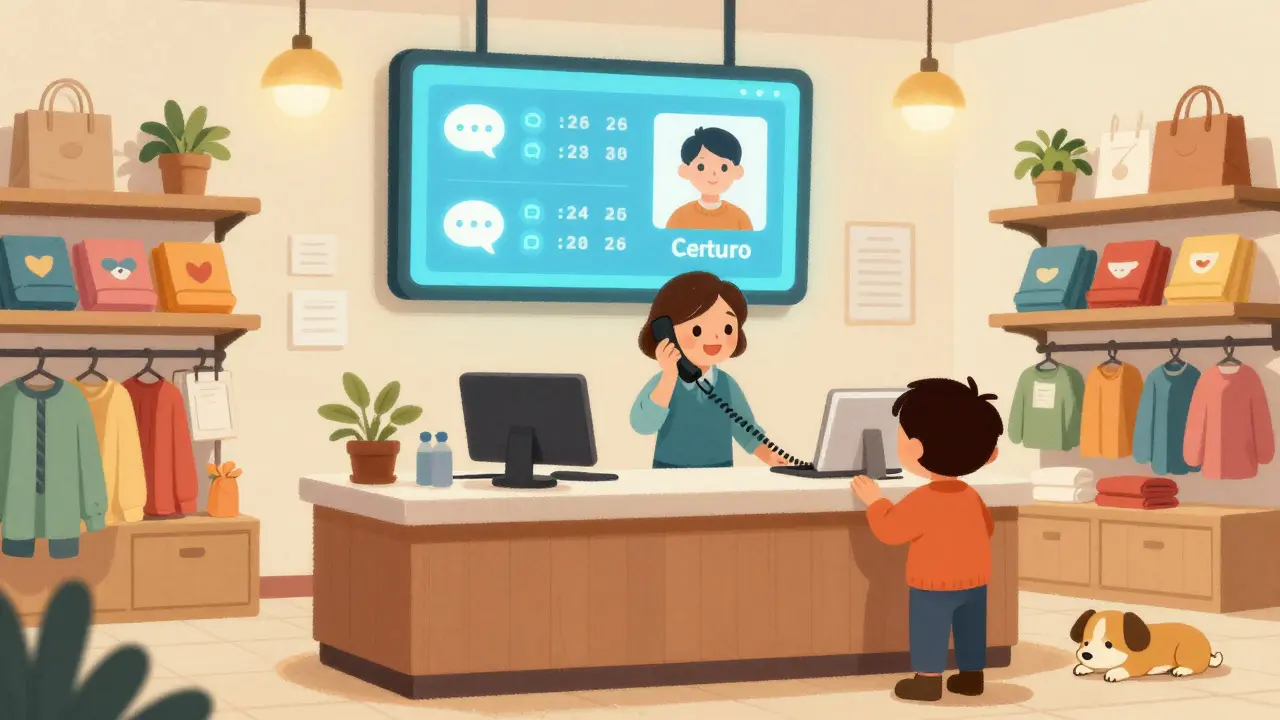
When a customer calls your store, do they get stuck on hold for minutes? Do your staff have to juggle between a landline, a mobile phone, and a chat app just to answer one question? If so, you're losing sales - and customers. VoIP for retail isn't just a tech upgrade; it’s the backbone of modern customer service. It turns every call into a chance to build trust, not just close a sale.
How VoIP Changes Retail Communication
Traditional phone systems are stuck in the past. They need physical lines, expensive hardware, and weeks to install. VoIP, or Voice over Internet Protocol, runs over your existing internet connection. That means no more digging up the yard for copper wires. No more monthly fees for each extra line. Just plug in a phone, log in, and you’re live. But the real power isn’t in the phone itself. It’s in what VoIP connects. A retail VoIP system doesn’t just handle calls. It links voice, text, email, and live chat into one dashboard. Imagine a customer starts chatting with you on your website about a sweater. Later, they call to ask about sizing. With VoIP, your rep sees the full chat history - no repeats, no frustration. That’s the kind of smooth experience customers remember.What Features Actually Matter for Retailers
Not all VoIP features are created equal. Here’s what works in retail:- Omnichannel routing: A message started on Instagram? Still visible when they call. No lost context.
- CRM integration: When a known customer calls, their purchase history, loyalty points, and past complaints pop up instantly. No more "What’s your order number?"
- Auto-attendant with custom messages: Instead of "Press 1 for sales," say: "Hi, you’ve reached Oakwood Boutique. Right now, we’re offering 20% off winter coats - press 2 to hear more."
- On-hold marketing: While they wait, play a short audio loop highlighting your weekend sale, new arrivals, or loyalty program. Turn silence into sales.
- Call recording: Not for spying - for training. Listen back to your best reps. See what they do right. Coach your others.
- Real-time dashboards: See how many calls are waiting, which store is busiest, or if a Facebook ad is driving a spike in calls. Adjust staffing on the fly.
These aren’t gimmicks. They’re tools that cut wait times, reduce repeat calls, and turn every interaction into a personalized moment.
Cost Savings That Add Up Fast
Let’s talk money. A typical retail store with 10 phone lines on a traditional system pays $800-$1,200 a month. With VoIP? You’re looking at $300-$500. That’s a 50% drop - and that’s before you factor in long-distance savings. Why? Because VoIP uses your internet. No more paying for separate phone lines. No hardware maintenance. No technician coming in to fix a broken switchboard. Even international calls cost pennies. A store in Chicago calling a supplier in Toronto? Same price as a local call. And here’s the kicker: most VoIP providers offer contract-free plans. You pay only for what you use. Need 5 lines in January? 15 in December? Just change it online. No penalties. No long-term lock-in. That kind of flexibility is rare in business tech - and it’s perfect for retail’s seasonal swings.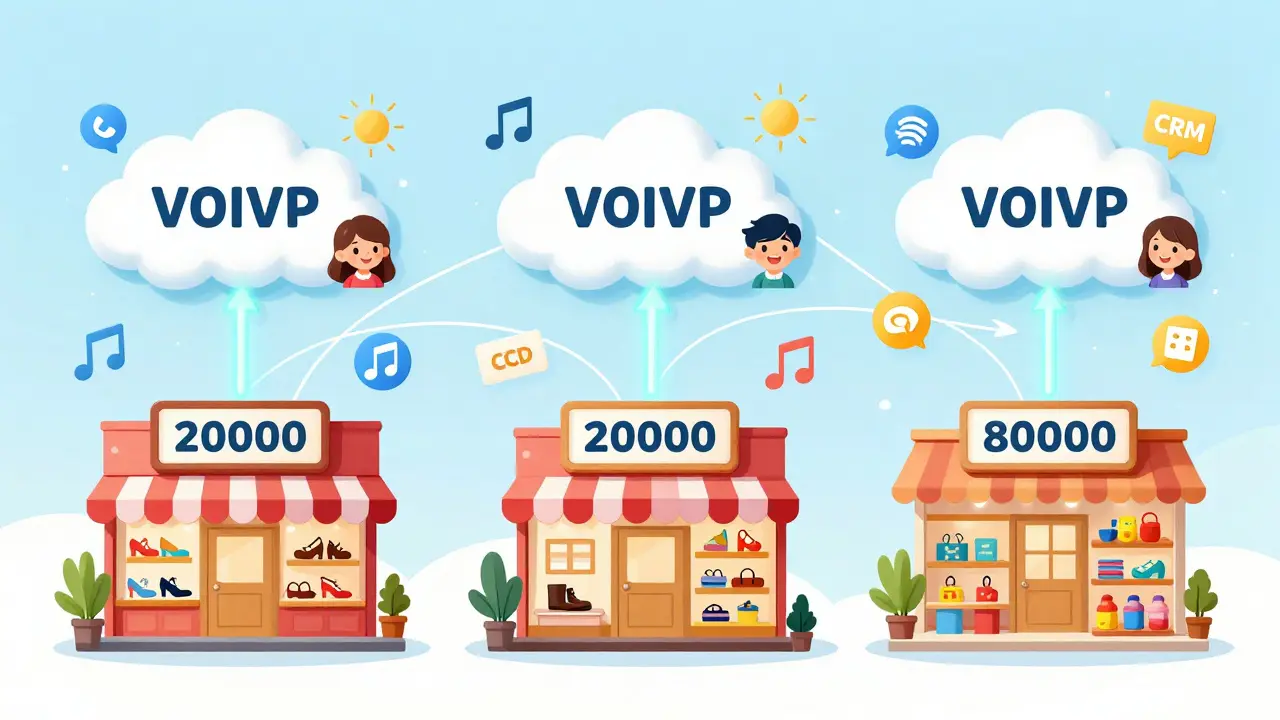
Multi-Location? VoIP Makes It Simple
If you’ve got three stores, ten, or fifty - VoIP is the only way to keep things sane. Traditional systems treat each location like its own island. VoIP unites them. All your stores can share one system. A customer in Miami can call your New York location and get the same experience: same greeting, same menu, same access to inventory. Each store keeps its local phone number so customers feel connected - but behind the scenes, everything flows through one cloud system. Need to open a pop-up shop for the holidays? Set up a new line in 10 minutes. No truck rolling out with phones and cables. Just log in, assign a number, and you’re ready. And if one store’s internet goes down? Calls automatically reroute to another location or even to a remote agent’s phone. No lost business. No angry customers.24/7 Support Without Hiring Night Shifts
Customers don’t care if it’s 2 a.m. in your time zone. If they have a question, they want an answer. VoIP lets you build a virtual team. You can hire customer service agents in different time zones - say, one in the Philippines for night shifts and one in Texas for afternoons. All of them log into the same system. A customer calling at 11 p.m. in Chicago gets routed to an agent in Manila who’s just starting their day. The customer doesn’t know the difference. They just get help. This isn’t sci-fi. It’s how stores like Urban Outfitters and Sephora handle global support. And you don’t need a billion-dollar budget to do it.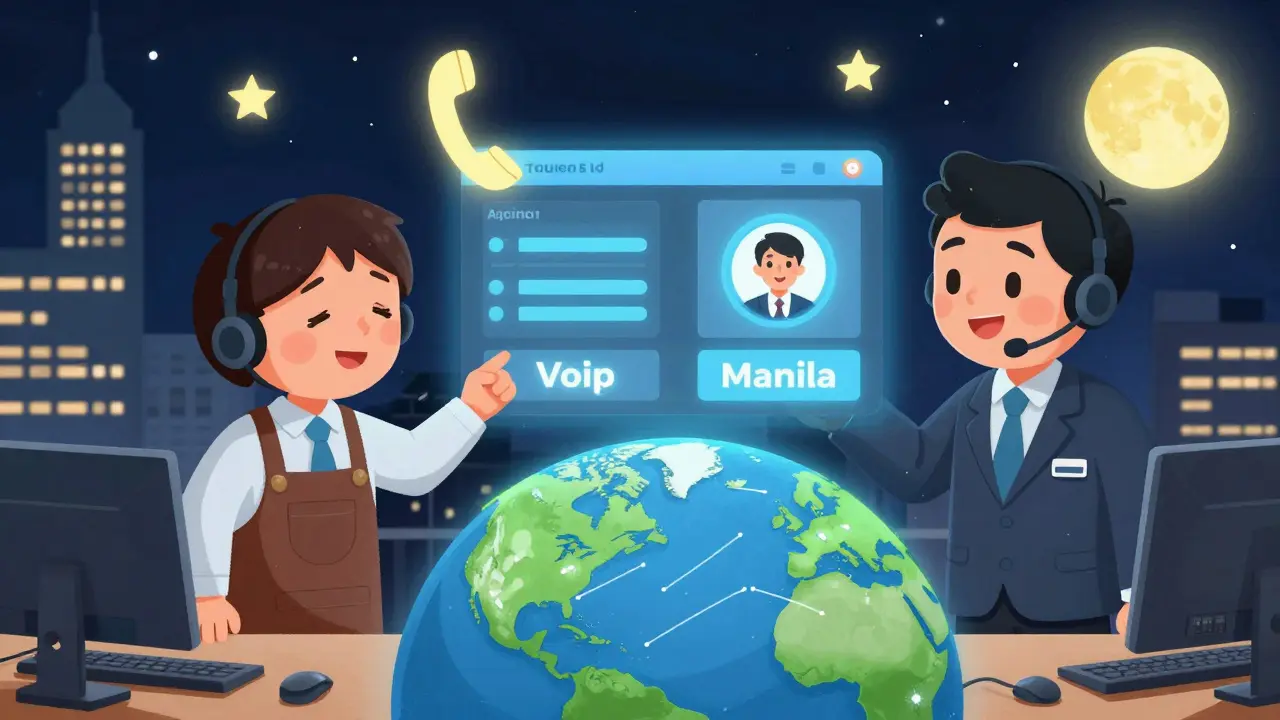
Real Data, Real Decisions
Most retail owners guess what’s working. VoIP gives you proof. You’ll see:- Which marketing campaign brought in the most calls
- How long customers wait before hanging up
- Which staff member resolves issues fastest
- Which store has the highest abandoned call rate
That’s power. If your holiday promo drove 300 calls but 120 went unanswered, you know to hire two more people next year. If your best rep closes 40% more upsells than others, you can train the whole team on their technique. Data turns guesswork into strategy.
VoIP Providers That Actually Get Retail
Not every VoIP company understands retail. Look for ones built for it:- SoundLine Communications: Built for multi-location retailers. Their dashboard shows call volume per store, with alerts for spikes.
- VoIPstudio: Strong CRM integrations with Shopify, Salesforce, and Zoho. Great if you’re already using one.
- Clarity Voice: Specializes in retail features like on-hold messaging and custom auto-attendants.
Try a free trial. Set up a test line for one store. See how it feels. You’ll know fast.
What Happens When You Don’t Use VoIP
If you’re still on landlines or basic cell phones, you’re running on fumes. Your staff waste time switching apps. Customers get transferred three times. You miss sales because no one answers after 5 p.m. Your holiday rush turns into chaos. And you’re paying twice as much for less. Retail isn’t about having the prettiest storefront anymore. It’s about having the smoothest experience - from the moment someone calls to the second they leave the store. VoIP doesn’t just help with that. It makes it possible.Can VoIP work if my internet goes down?
Yes, if your VoIP provider supports failover routing. Most modern systems can redirect calls to mobile phones, remote agents, or another store location if your internet fails. Always confirm this feature is included in your plan before signing up.
Do I need special phones for VoIP?
You can use regular desk phones designed for VoIP, or you can use softphones - apps on your tablet or laptop. Many retailers use smartphones with VoIP apps to handle calls while moving between sales floors. No need to buy expensive hardware.
How long does it take to set up VoIP for a retail store?
Most systems can be fully set up in under an hour. You’ll need internet access, a router, and a phone. Providers offer plug-and-play devices and step-by-step setup guides. Even adding a new store location takes minutes - no technician needed.
Can VoIP help with online orders and curbside pickup?
Absolutely. Many VoIP systems include browser-based SMS. When a customer orders curbside, you can text them a confirmation, update them when their order’s ready, or even let them call in with a quick voice message. No extra apps. Just seamless coordination.
Is VoIP secure for handling customer data?
Yes, when you choose a provider that uses end-to-end encryption and complies with PCI-DSS standards for payment data. Reputable VoIP systems encrypt calls, protect CRM integrations, and give you control over who can access call recordings. Always ask about security before signing up.