
Picture this: your dispatcher is juggling three emergency calls while a technician is stuck in traffic on the wrong side of town. In the old days, you’d have separate landlines, paper maps, and radio checks that often led to confusion. Today, that chaos is unnecessary. Modern VoIP for field services is the integration of internet-based calling, mobile technician apps, and real-time GPS tracking into a single unified system. By combining voice communication with location data, businesses can route jobs to the closest available worker instantly, cut travel time, and keep customers informed with accurate arrival estimates.
This isn't just about making phone calls; it's about connecting every interaction-calls, texts, and movements-to a specific job ticket. When you tie your telephony directly to your field service management (FSM) platform, you stop bouncing between spreadsheets, map apps, and dialers. You get a complete traceability trail where every call recording and route deviation is logged automatically. This shift from fragmented tools to integrated ecosystems is transforming how plumbing, HVAC, electrical, and maintenance teams operate in 2026.
How Integrated VoIP Changes Field Communication
Traditional setups relied on corporate mobile numbers or personal phones, meaning call history was lost or manually entered. With embedded VoIP softphones are software applications that allow users to make and receive voice calls over an internet connection within a mobile app., technicians initiate calls directly from the customer record or job ticket inside their FSM app. Platforms like DreamzFSM and LVGPS highlight this by ensuring every call, SMS, and recording ties directly to a job ID.
Why does this matter? Context preservation. When a dispatcher reviews a job later, they don't just see "Call made at 10:00 AM." They hear the actual conversation, see the duration, and know exactly which customer was contacted. This creates an audit trail for quality monitoring and dispute resolution. If a customer claims they weren't notified, you have the recorded proof linked to that specific work order. It also eliminates the friction of switching apps. Technicians stay focused on the job because their communication tools live right alongside their schedule and inventory lists.
Key benefits of integrated VoIP include:
- Automatic Logging: No manual entry of call notes; metadata syncs instantly to the backend.
- Smart Routing: Calls can be routed based on technician availability or skill set, not just who answers first.
- Professional Presence: Businesses use a consistent company number rather than personal cell phones, building trust with clients.
- Quality Assurance:
The Power of GPS-Driven Routing
Voice gets the message out, but GPS gets the technician there efficiently. GPS-driven routing is a technology that uses real-time location data from vehicles or mobile devices combined with algorithms to assign and sequence jobs for optimal efficiency. Instead of static territory assignments, modern systems like those from Verizon Connect and Optsy use dynamic matching. When an urgent job pops up, the system identifies the nearest available technician and sends the assignment directly to their mobile device.
This approach drastically reduces response times. Imagine a burst pipe in a residential area. A traditional dispatcher might call the team lead in that zone, who then has to figure out who is free. With GPS-enabled dispatch, the system scans all active locations, filters by availability, and pushes the job to the closest tech within seconds. Furthermore, these routing engines pull live traffic data. If there’s an accident on the main road, the app recalculates the path, saving fuel and time.
For managers, this data is gold. You can analyze travel times versus service times to understand where bottlenecks occur. Are technicians spending too much time driving? Is the scheduling logic flawed? The fieldservicesoftware.io blog notes that this visibility allows for continuous improvement of scheduling strategies. Customers also benefit from accurate ETAs. Instead of a vague "between 8 and 4," they receive precise updates based on real-time traffic and location, reducing no-shows and frustration.
Mobile Apps as the Central Hub
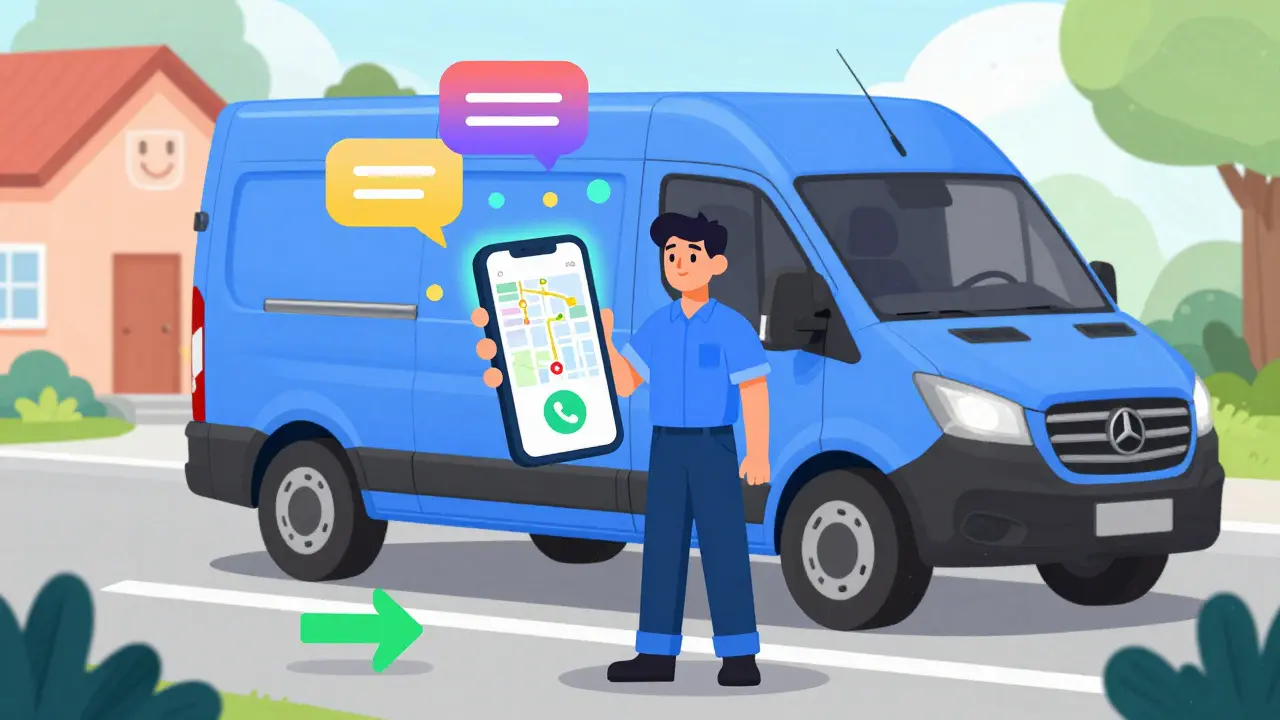
The glue holding VoIP and GPS together is the field service mobile app is the primary user interface for technicians, supporting job management, status updates, navigation, and communication on Android and iOS devices.. These apps are designed for the realities of the field: one-handed use, offline capabilities, and quick access to critical information. Products like FieldServicePro and Salesforce Field Service emphasize features that let technicians manage everything on the go.
A robust mobile app should include:
- Job Management: View assigned work orders, update stages, and capture signatures or photos.
- Inventory Integration: Check parts availability before heading to the site to avoid second trips.
- Built-in Navigation: One-tap directions using the optimized route calculated by the backend.
- Real-Time Notifications: Push alerts for new jobs, priority changes, or messages from dispatch.
Chetu’s development insights suggest that successful apps prioritize streamlined workflows. If the app requires too many taps to accept a job or make a call, technicians will resist using it. The goal is to reduce cognitive load. When a technician arrives on site, they should be able to clock in, view the job details, call the customer via VoIP, and start the repair without fumbling through multiple screens. This seamless experience drives adoption and ensures data accuracy.
Choosing the Right Platform: Comparison
Not all solutions are created equal. Some focus heavily on telematics, others on CRM integration. Here is how major players compare in terms of their core strengths regarding VoIP and routing:
| Platform | Primary Focus | VoIP Integration | Routing Capability |
|---|---|---|---|
| DreamzFSM | Mid-market FSM Suite | Built-in softphone, call logging per job | Standard mapping and basic optimization |
| Salesforce Field Service | Enterprise CRM & AI | Integrated via ecosystem partners, video assist | AI-driven scheduling and complex routing |
| Verizon Connect | Telematics & Fleet Tracking | Focus on vehicle comms and driver safety | Advanced fleet routing, traffic-aware paths |
| FieldServicePro | Small Business Mobility | Mobile-first calling and messaging | Simple, effective GPS navigation for techs |
| Optsy | Map Routing Software | Standalone or integrated routing engine | Fastest/safest directions based on real-time traffic |
If you already use Salesforce, sticking with their Field Service module makes sense for deep CRM alignment. If you manage a large fleet of vehicles, Verizon Connect offers superior telematics integration. For smaller teams looking for an all-in-one solution without heavy customization, DreamzFSM or FieldServicePro provide strong out-of-the-box value. Custom development firms like Chetu serve organizations with unique regulatory needs or legacy systems that off-the-shelf products can't handle.
Implementation Challenges and Pitfalls
While the technology is powerful, implementation isn't always smooth. The biggest hurdle is often connectivity. Both VoIP and GPS rely on stable mobile data. In areas with poor cellular coverage, call quality drops, and location updates lag. This can lead to missed jobs or inaccurate ETAs. To mitigate this, choose platforms with robust offline modes that cache job details and sync data once connectivity is restored.
User resistance is another common issue. Technicians may feel micromanaged by constant location tracking or wary of call recording. Transparency is key. Explain that tracking improves safety and helps justify overtime or travel expenses. Call recordings protect them from false accusations. Training must emphasize the benefits: less paperwork, fewer double bookings, and easier access to customer history.
Integration complexity can also derail projects. If your FSM system doesn't talk to your existing ERP or billing software, you'll end up with data silos. Ensure your chosen vendor supports standard APIs or has pre-built connectors for your current stack. Finally, consider privacy regulations. In regions like the UK under GDPR, you must clearly inform employees and customers about data collection, obtain consent where required, and secure stored recordings and location histories against unauthorized access.
Future Trends: AI and Automation
Looking ahead, the convergence of VoIP, GPS, and mobile apps is evolving with artificial intelligence. Salesforce and other leaders are incorporating AI to predict job durations and optimize schedules proactively. Imagine a system that analyzes historical data to realize that a specific type of HVAC repair usually takes two hours, not one, and adjusts future routing accordingly. AI can also transcribe VoIP calls in real-time, flagging sentiment issues or compliance breaches instantly.
5G networks will further enhance this landscape by providing higher bandwidth and lower latency. This means clearer video assistance for remote diagnostics and more precise location tracking. Customer self-service portals will likely become standard, allowing clients to track their technician’s ETA on a map and communicate via chat or voice without picking up the phone. As these technologies mature, the ability to seamlessly blend communication, location, and workflow automation will define the most competitive field service operations.
What is the cost of implementing VoIP and GPS routing for field services?
Pricing varies significantly by vendor and scale. Mid-market SaaS FSM systems with mobile apps and basic routing typically range from $20 to $50 per user per month. Enterprise solutions like Salesforce Field Service or comprehensive telematics platforms like Verizon Connect may cost more, often billed per user or per vehicle. Additional costs can apply for advanced VoIP features like call recording, AI analytics, or high-volume SMS messaging. Custom development projects involve upfront engineering costs but offer tailored long-term value.
Do technicians need smartphones to use these systems?
Yes, most modern field service mobile apps require smartphones running Android or iOS. These devices provide the necessary hardware for GPS location tracking, high-quality microphones and speakers for VoIP calls, and cameras for documentation. While some older systems used dedicated ruggedized devices, the power and affordability of consumer-grade smartphones have made them the standard for field workforce management.
How does VoIP improve customer satisfaction in field services?
VoIP improves satisfaction by enabling accurate ETAs and transparent communication. When GPS data feeds into the system, customers receive precise arrival windows instead of broad ranges. Integrated VoIP allows technicians to call customers directly from the job record, ensuring context is preserved. Features like automated SMS notifications for dispatch updates keep customers informed without requiring them to call the office, reducing anxiety and improving the overall service experience.
Is call recording legal in field service communications?
Legality depends on local jurisdiction. In many places, including parts of the US and the UK, consent is required. One-party consent means only one person in the conversation needs to agree, while all-party consent requires everyone to acknowledge recording. Businesses must implement clear policies, such as playing a beep tone or verbal announcement at the start of calls, to comply with regulations like GDPR in Europe or TCPA in the US. Always consult legal counsel to ensure compliance.
Can these systems work if there is no internet connection?
Most robust field service apps offer offline capabilities. Technicians can view cached job details, update statuses, and even draft notes without an active connection. However, real-time VoIP calling and live GPS tracking require an internet connection. Once connectivity is restored, the app automatically syncs all offline data with the central server. For areas with frequent dead zones, choosing a platform with strong offline mode functionality is critical.