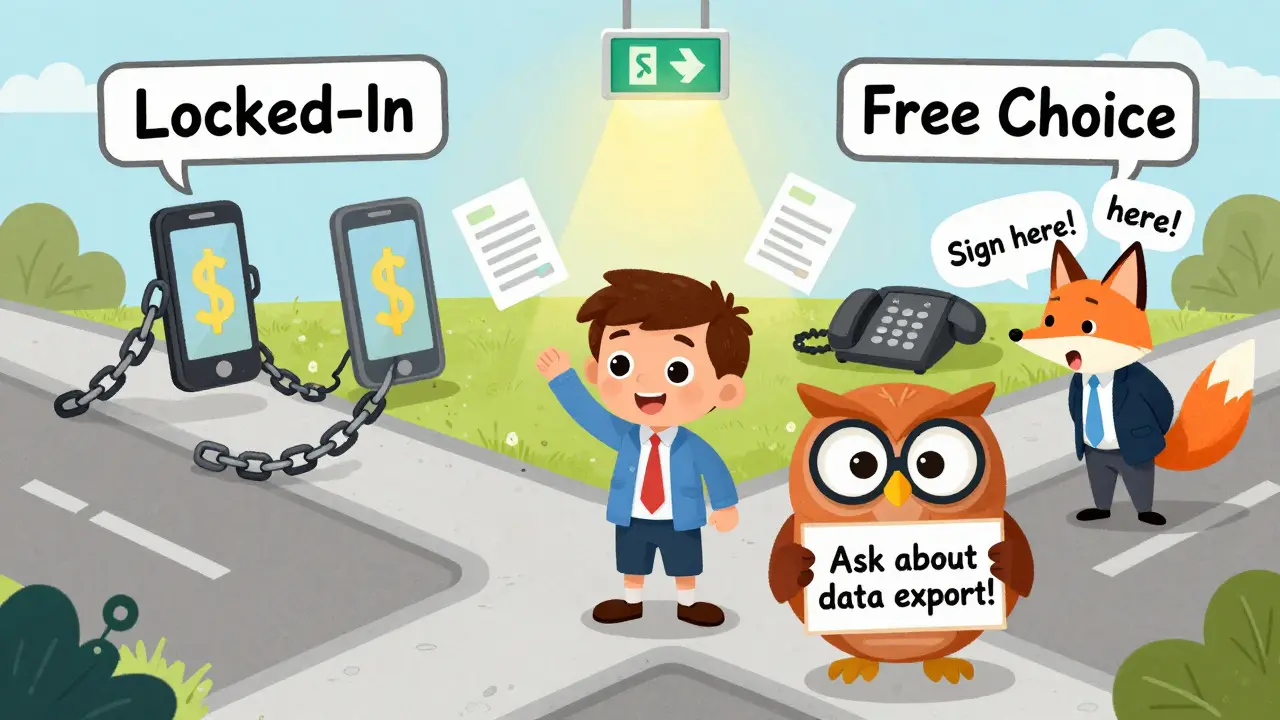
When your business switches to cloud VoIP, you expect better calls, lower costs, and more flexibility. But what if you can’t leave the provider-even if they raise prices, cut features, or deliver poor service? That’s vendor lock-in, and it’s more common than you think. Many companies sign long-term contracts thinking they’re saving money, only to realize they’re trapped. The truth? You don’t need a five-year deal to get great VoIP service. You just need to know what to look for before you sign.
How Vendor Lock-In Happens in Cloud VoIP
Vendor lock-in doesn’t happen overnight. It creeps in through small, seemingly harmless choices. One provider offers a slick dashboard that integrates with your CRM. Another gives you custom call routing no one else has. You start relying on these features. Then, when you try to switch, you hit a wall. Most cloud VoIP providers build their systems around proprietary technology. That means your call logs, voicemail systems, and even phone numbers might be tied to their platform. If you try to move, you’ll likely lose access to these features unless you rebuild everything from scratch. And rebuilding costs time, money, and downtime. Some providers charge egress fees-fees for moving your data out of their system. These aren’t always listed in the contract. One company in Atlanta paid $12,000 just to export their call history when switching providers. Another had to buy new hardware because their old phones only worked with the original vendor’s network. Long-term contracts aren’t just about commitment-they’re financial traps. Providers offer big discounts if you sign for two or three years. But if you break the contract early, you lose those savings and pay a penalty. That’s not a deal. That’s a trap.What Gets You Stuck
There are five main ways vendors keep you locked in:- Proprietary APIs: Your VoIP system talks to your CRM, helpdesk, or billing tool through a custom connection. If the vendor changes the API, or you switch providers, that connection breaks.
- Specialized hardware: Some providers require you to use their phones, gateways, or adapters. Generic SIP phones won’t work. You’re forced to buy more gear from them.
- Locked-in data formats: Your call logs, recordings, and analytics are stored in a format only their system can read. Exporting them is either impossible or requires expensive conversion tools.
- Contract penalties: Early termination fees, non-refundable setup costs, and minimum usage clauses make leaving expensive.
- Hidden fees: Data transfer fees, per-user charges for advanced features, or charges for API access add up quietly over time.
How to Avoid Getting Trapped
You don’t have to accept this. Here’s how to protect yourself:1. Demand Open Standards
Look for providers that use SIP (Session Initiation Protocol), RTP (Real-time Transport Protocol), and other open standards. These are industry-wide protocols-not owned by any one company. If your VoIP system runs on SIP, you can switch providers without rebuilding your entire setup. Ask: "Do you support standard SIP trunking? Can I use any SIP-compatible phone?" If they hesitate, walk away.2. Check Data Export Options
Before signing, ask for a full data export. Can you download your call logs in CSV? Can you export voicemail recordings as MP3 files? Can you get a complete list of user settings? If the provider says "we’ll help you migrate," that’s not enough. Get it in writing. If they can’t or won’t provide this, they’re setting you up for lock-in.3. Skip Long-Term Contracts
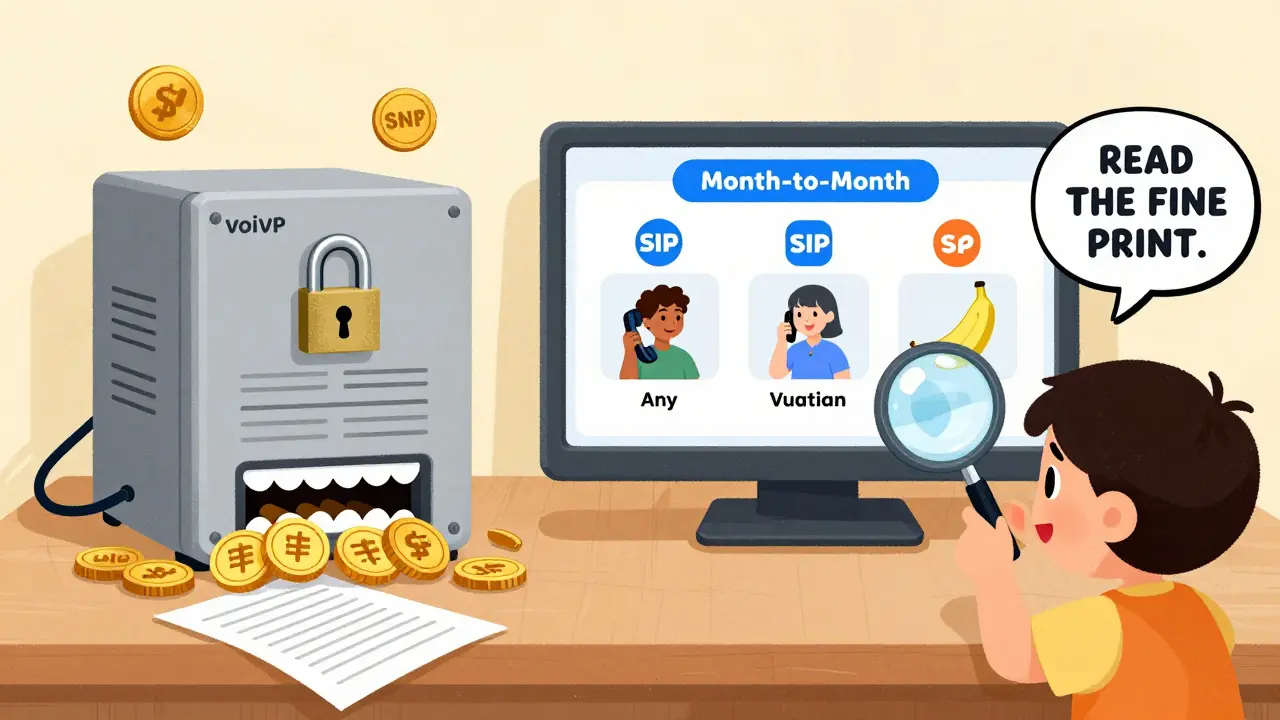
Never sign a contract longer than 12 months unless you’re 100% sure. Even then, make sure there’s a 30-day notice clause for renewal. Many providers offer month-to-month plans now-especially for small and mid-sized businesses. You’ll pay a little more per month, but you keep control. If service drops, you leave. No penalties. No surprises.4. Test Before You Commit
Ask for a free trial. Not a demo. A real test with your actual phone numbers, your CRM, and your team. Run calls through it. Test call quality during peak hours. See how easy it is to add users or change settings. If the interface is clunky or support takes days to respond, that’s a red flag. You’ll be stuck with that for years if you sign.5. Document Everything
Keep a record of every setting, integration, and custom feature you set up. Save screenshots. Write down how your auto-attendant works. Note which third-party apps connect to your VoIP system. This isn’t just good practice-it’s your escape plan. If you ever need to switch, this documentation cuts migration time from months to weeks.6. Look for Transparent Pricing
Avoid providers who hide fees. Ask: "Are there charges for transferring data out of your system? What’s the early termination fee? Do you charge for API access?" If they can’t answer clearly, they’re hiding something. Good providers list every cost upfront. Look for ones that offer flat-rate pricing with no hidden add-ons.What to Look for in a Provider
Not all cloud VoIP providers are the same. Here’s what separates the ones that respect your freedom from the ones that want to trap you:| Feature | Lock-In Risk | Freedom-Friendly |
|---|---|---|
| Protocol | Proprietary signaling | SIP, RTP, SDP |
| Hardware | Requires vendor-specific phones | Works with any SIP phone |
| Data Export | Only available through support request | One-click CSV/JSON export |
| Contract Term | 2-3 year mandatory | Month-to-month or 1-year |
| Egress Fees | $0.10 per GB or more | No data transfer fees |
| API Access | Requires paid upgrade | Free, documented API |
Real-World Example: A Company That Escaped
A small law firm in Charlotte, NC, signed with a major VoIP provider in 2023. They got a great deal: unlimited calling, free international, and a free phone system. But within a year, the provider started charging $5 extra per user for call recording. Then they removed the API access they’d promised. When the firm tried to switch, they found out their call logs were stored in a format only the vendor could read. They had to hire a consultant for $8,000 just to recover their data. They switched to a provider that uses open standards, offers month-to-month billing, and lets you export everything. Setup took two days. No fees. No surprises. Their monthly bill dropped 30%.Bottom Line: Freedom Costs Less Than Lock-In
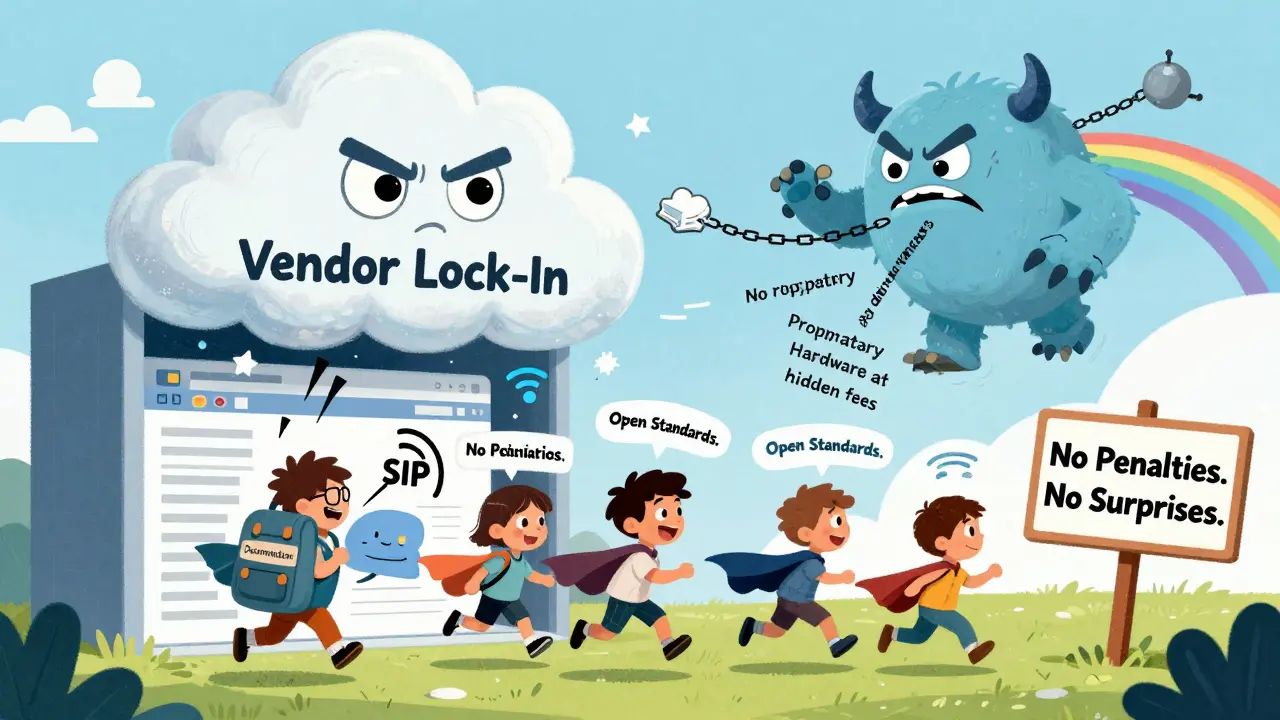
Vendor lock-in in cloud VoIP isn’t an accident. It’s a business model. Providers count on you getting comfortable, then raising prices, cutting features, or making migration impossible. You don’t need to be locked in. You just need to ask the right questions before you sign. Choose providers that support open standards. Avoid long-term contracts. Demand full data access. Document everything. If a provider makes it hard to leave, they don’t deserve your business. You’re not buying a phone system. You’re buying freedom. Don’t trade it for a discount.What is vendor lock-in in cloud VoIP?
Vendor lock-in in cloud VoIP happens when your business becomes dependent on a specific provider’s proprietary technology, making it difficult or expensive to switch to another service. This can include locked-in data formats, non-standard hardware, hidden fees, and contract penalties that make leaving costly.
Can I avoid long-term contracts with cloud VoIP?
Yes. Many providers now offer month-to-month plans with no long-term commitment. These plans often cost slightly more per user, but they give you full control. You can leave anytime without penalties, which is far cheaper than being stuck with poor service or rising prices for years.
Do I need to buy special phones for cloud VoIP?
Not if you choose a provider that supports SIP (Session Initiation Protocol). SIP is an open standard that works with almost any phone. Avoid providers that force you to use their branded hardware-that’s a major lock-in tactic. You can use existing phones, consumer-grade SIP phones, or even softphones on laptops and phones.
What should I ask before signing a VoIP contract?
Ask: Can I export my data? Is there an early termination fee? Do you charge for data transfer out? Do you support SIP and standard APIs? Can I use my own phones? Get written answers to all of these. If they avoid the questions, walk away.
Are there free tools to help migrate from one VoIP provider to another?
Yes. Tools like Asterisk, FreeSWITCH, and open-source SIP proxies can help you rebuild your system on new infrastructure. Many providers also offer migration support as part of their onboarding. The key is having your data and configurations documented ahead of time. Without documentation, migration becomes expensive and risky.
What’s the biggest mistake businesses make with cloud VoIP?
Signing long-term contracts without testing the service first or understanding the exit terms. Many companies focus only on price and features, ignoring how hard it will be to leave. That’s like buying a car with a non-transferable warranty-you’re stuck with it no matter what.