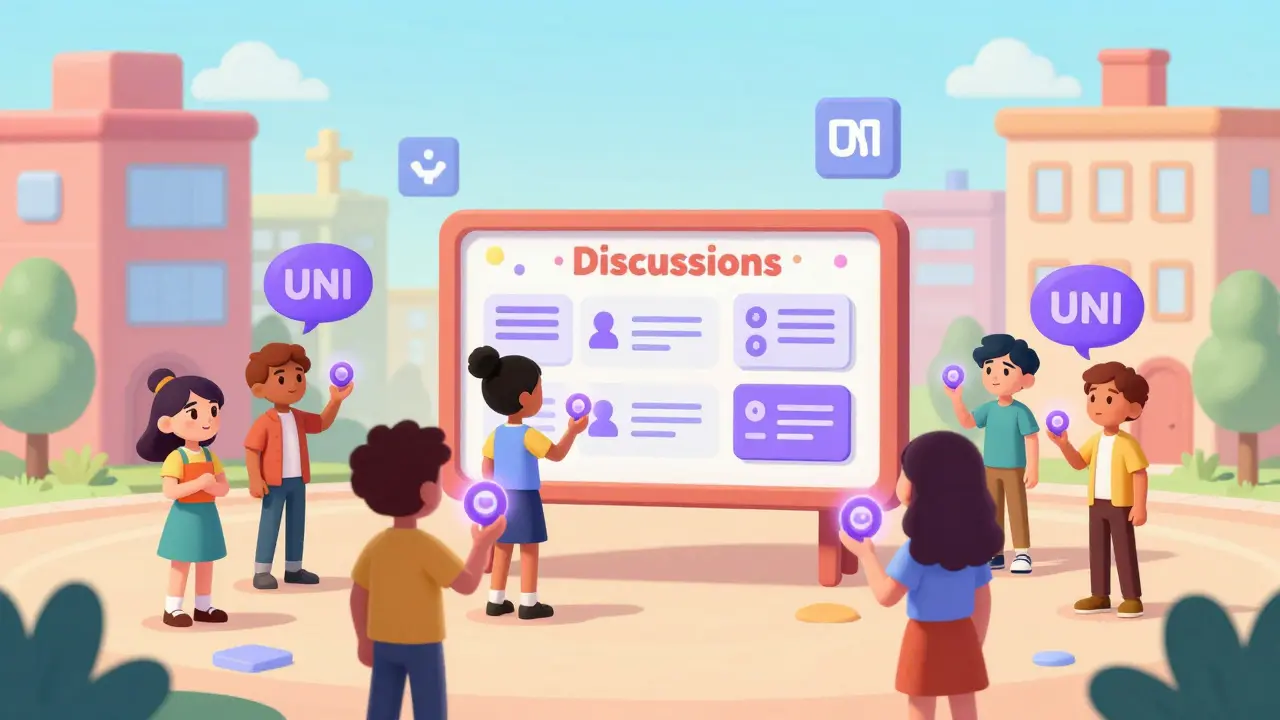
Imagine owning a piece of the largest decentralized exchange in the world but having almost no say in how it runs. That was the reality for many UNI token holders when they first looked at Uniswap governance. On paper, you have voting rights. In practice, a small committee handles millions of dollars in grants, and big whales can flip votes at the last second. It sounds broken, right? But that’s exactly why studying Uniswap’s governance model matters. It shows us what happens when idealistic decentralization hits the hard wall of real-world logistics.
We’re going to cut through the hype. You’ll see how the three-layer system actually works, why the treasury isn’t as democratic as you think, and what new structures like the "pipes" model mean for your tokens. This isn’t just theory; it’s the blueprint for how decentralized finance (DeFi) protocols try to stay alive without a CEO.
The Three Layers of Uniswap Decision-Making
Uniswap doesn’t run on a single vote. It operates through a complex stack that moves from casual chat to binding code. Understanding these layers is key because most people get stuck thinking about the final vote and ignore where ideas are born or killed.
First, there’s off-chain community governance. This is the social layer. It happens on Discord, Twitter, and the official forum at gov.uniswap.org. Here, developers and users debate ideas. No code is written yet. It’s just noise, signal, and persuasion. If an idea dies here, it never gets voted on.
Second comes off-chain operations governance. This covers protocol maintenance and ecosystem development outside formal voting. Think of this as the day-to-day work that keeps the lights on. The team decides which bugs to fix first or which partnerships make sense without asking every token holder for permission.
The third and most famous layer is on-chain voting. This is where UNI token holders cast binding votes via smart contracts. Only proposals that survive the first two layers reach this stage. According to research from Other Internet, this structure creates a paradox: governance is technically minimal in scope but extremely arduous in execution. You can only vote on specific things, but getting those things onto the ballot is a marathon.
How a Proposal Actually Passes
You can’t just wake up and submit a change to the protocol. The process is designed to filter out bad ideas before they cost the network money. It follows a strict three-phase lifecycle:
- RFC (Request for Comments): You post your idea on the governance forum. You need to gather feedback. If nobody cares, you stop here.
- Temperature Check: A non-binding poll gauges sentiment. This tells you if you have enough support to bother writing code. Proposals must incorporate feedback from this phase to move forward.
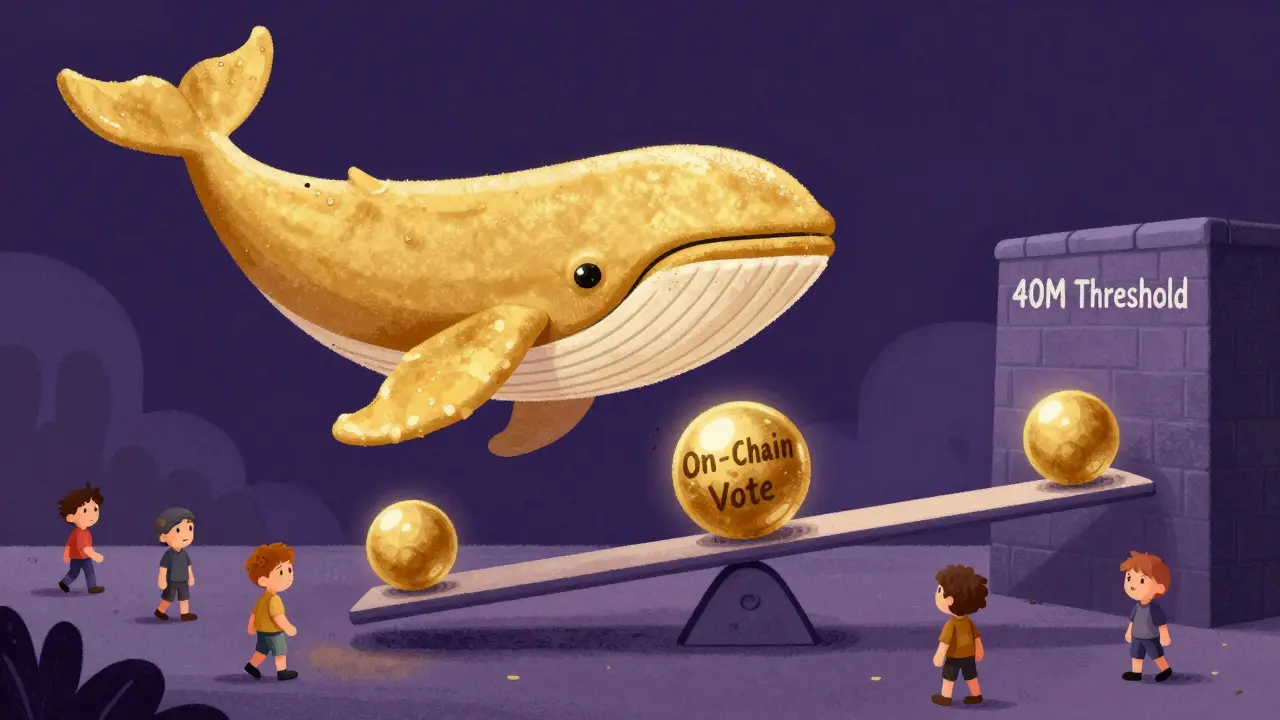
- On-Chain Vote: The final binding vote. It lasts exactly 7 days. To pass, a proposal needs a minimum of 40 million UNI tokens voting "yes."
Notice that threshold? 40 million UNI. That’s a huge number. It means small holders rarely drive proposals alone. They need delegation. Without reaching that quorum, even a popular idea fails. This protects the protocol from low-effort attacks but makes genuine grassroots innovation incredibly difficult.
The Treasury Problem: Who Really Controls the Money?
When the UNI token launched, everyone thought they owned the treasury. Technically, they did. But practically, they didn’t. The treasury remained locked for 30 days after launch, and then something interesting happened. Instead of letting thousands of voters decide every grant, the community created the Uniswap Grants Program (UGP).
The UGP is a committee of just six people. They decide how millions of dollars from the Uniswap treasury are allocated to ecosystem projects. Researchers call this a "monopoly on treasury disbursement." Why does this exist? Because voting on every small grant would grind the protocol to a halt. It’s efficient. It’s also controversial.
| Aspect | Broad Community Voting | UGP Committee Model |
|---|---|---|
| Decision Speed | Slow (weeks/months) | Fast (days/weeks) |
| Participation | High potential, low actual | Low (6 members) |
| Accountability | Transparent on-chain | Opaque off-chain |
| Use Case | Major protocol changes | Routine grant allocations |
The UGP handles routine decisions. The broader community steps in only for controversial or massive allocation shifts. This hybrid model tries to balance efficiency with democracy, but it leaves many token holders feeling like their ownership is symbolic rather than functional.
The Whale Dilemma and Voting Power
Here’s the uncomfortable truth about Uniswap governance: it’s not equal. One token equals one vote, but one person doesn’t hold one token. Large whale holders control vast amounts of UNI. They can sit out the discussion and then swoop in during the final hours of a 7-day vote to tip the scales.
This creates a participation crisis. Small holders realize their votes don’t matter mathematically. So they stop participating. This leads to "governance apathy." Meanwhile, large holders find it easy to push their agenda. Smaller groups struggle to reach the 40 million UNI threshold needed to even start a vote.
To fix this, the community relies on delegation. You give your voting power to someone else who you trust to represent your interests. But the current system is messy. There’s no easy way to track who delegates to whom or what those delegates actually care about. Some participants suggest building a delegation portal to increase transparency. Others propose specialized roles-like delegates for developers, liquidity providers, or integrators-to ensure expertise guides decisions, not just wallet size.
Enforcement: The Ghost in the Machine
Even when a vote passes, enforcement is tricky. Uniswap uses a smart contract framework called Governor Bravo to manage votes. Once a proposal passes, it executes on-chain. But what if the proposal involves dealing with another company or protocol? Can you force them to comply?
No. DAOs are legal gray zones. There’s no court to enforce a vote. If a partner refuses to honor a governance decision, Uniswap has limited recourse. This lack of formal accountability means proposals often rely on informal coordination and reputation. It works most of the time, but it’s fragile. As the protocol grows, this gap between technical execution and legal enforceability becomes a bigger risk.
New Structures: Pipes and Polycentralization
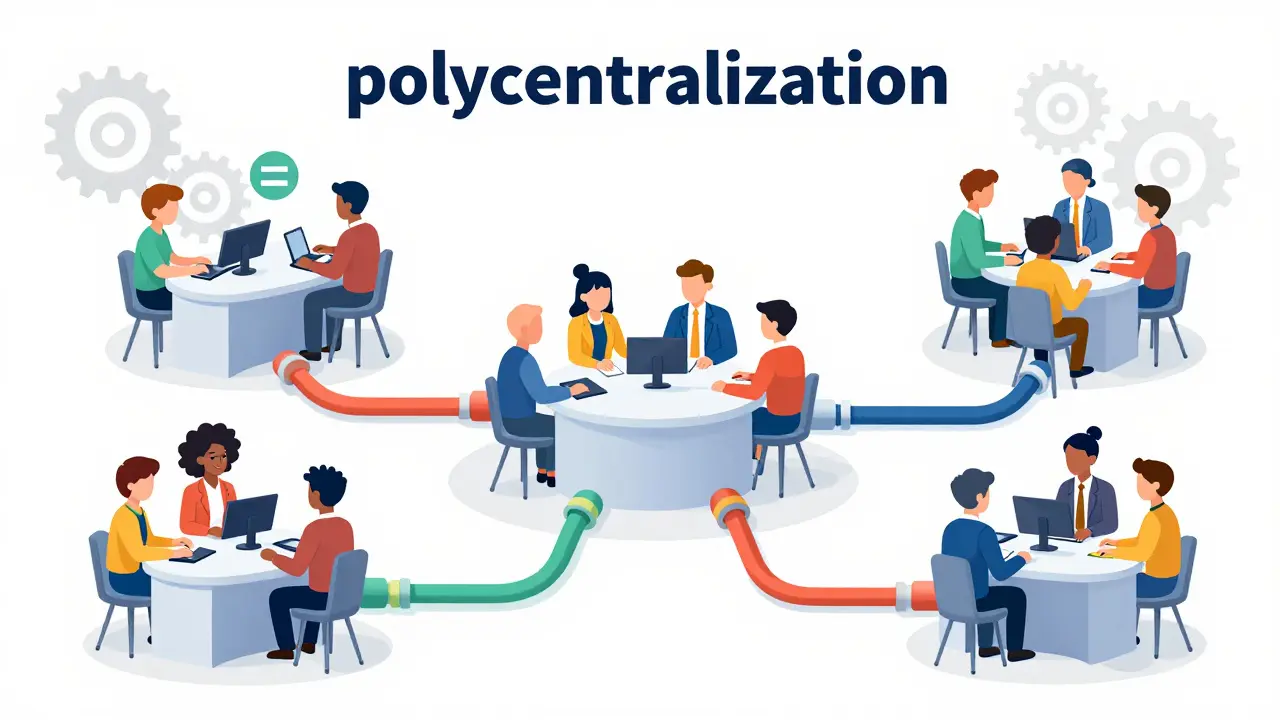
Uniswap isn’t standing still. Recent developments show a shift toward more automated and distributed structures. The introduction of a "pipes" model involves specialized smart contracts that handle asset release and transformation automatically. This reduces the need for constant governance intervention for routine treasury flows.
There’s also a move toward polycentralization. Instead of one UGP committee, multiple grant-making bodies are emerging. Groups like Other Internet and The Stable operate as working groups under the Uniswap umbrella. They distribute grants independently. This diversifies funding decisions and reduces the concentration of power in a single six-person committee. It’s an experiment in scaling decentralization by creating smaller, focused centers of authority rather than one big central one.
Why This Matters for Your Tokens
If you hold UNI, you’re part of this experiment. You might not vote every week, but the structure of governance affects the value and direction of the protocol. A well-run DAO attracts developers and liquidity. A broken one loses both. Understanding these mechanisms helps you decide whether to delegate your vote, join a working group, or simply observe. The future of DeFi depends on solving these governance puzzles, and Uniswap is the biggest test case we have.
What is the minimum number of UNI tokens required to pass a proposal?
A proposal requires a minimum of 40 million UNI tokens voting "yes" to achieve passage and become executable on-chain. This high threshold ensures broad support but makes it difficult for small groups to initiate changes alone.
Who controls the Uniswap treasury?
Technically, all UNI token holders own the treasury. However, day-to-day allocation is managed by the Uniswap Grants Program (UGP), a six-person committee. Major or controversial decisions may be put to a broader community vote.
How long does an on-chain vote last?
On-chain voting periods last exactly 7 days. This timeframe allows for sufficient participation while preventing indefinite delays in decision-making.
Can I enforce a governance decision against another protocol?
No. Uniswap governance lacks formal legal enforcement mechanisms. Decisions rely on smart contract execution for internal changes and informal coordination for external partnerships. Legal accountability remains undefined in the current DAO structure.
What is the "pipes" model in Uniswap governance?
The pipes model refers to specialized smart contracts that automate the release and transformation of treasury assets. This reduces the need for manual governance votes for routine financial operations, streamlining treasury management.
Why do whales dominate Uniswap governance?
Voting power is tied directly to token holdings. Large holders (whales) possess enough UNI to sway outcomes, especially near the end of voting periods. Small holders often lack the collective organization or delegation infrastructure to counterbalance this influence.
What is polycentralization in Uniswap?
Polycentralization is the creation of multiple specialized grant-making bodies (like Other Internet and The Stable) instead of relying on a single committee. This distributes financial power and decision-making across different expert groups within the ecosystem.
Where do Uniswap governance discussions happen?
Primary discussions occur on the Uniswap governance forum at gov.uniswap.org. Additional social dynamics and informal debates take place on Discord, Twitter, and other community spaces.