
You’ve probably seen it happen. A new protocol launches, the hype is real, and then six months later, the price tanks because early investors dump their tokens the second they unlock. It’s frustrating for retail users who bought in late, but it’s a structural nightmare for the project itself. The core problem isn’t just greed; it’s short-termism. When decision-makers and major holders can cash out quickly, they prioritize quick wins over long-term health. This leads to bad governance votes, reckless treasury spending, and protocols that look great on paper but die in practice.
So, how do you fix this? You don’t rely on honor codes or Twitter promises. You use code. Token lockups and sophisticated governance mechanisms are the primary tools crypto projects use to force alignment between insiders and the community. But here’s the catch: poorly designed lockups can actually make things worse by creating predictable sell-pressure cliffs or concentrating power in the hands of whales who can afford to lock up capital for years. Let’s break down how modern tokenomics uses time as a weapon against short-term thinking, and where the current designs are falling short.
The Evolution from Simple Cliffs to Complex Vesting
In the early days of ICOs (around 2017-2018), the solution was blunt: lock everything for one year. If you were a founder or an early investor, you couldn’t touch your tokens for 12 months. This reduced immediate dumping, but it created a new problem. Everyone unlocked at once. On day 366, millions of tokens hit the market simultaneously, often crashing the price. That’s why we saw a shift toward more nuanced structures.
Today, serious projects use multi-year vesting schedules with "cliffs." A cliff is a period where zero tokens are released-often 6 to 12 months. After the cliff, tokens unlock linearly over the next 24 to 48 months. For example, a standard team allocation might be locked for 12 months, then release 1/48th of the total grant every month for four years. This smooths out supply shocks. It also keeps contributors engaged. If you know you won’t see your full payout until 2029, you’re less likely to vote for a proposal that pumps the price today but ruins the protocol tomorrow.
| Vesting Type | Typical Duration | Cliff Period | Governance Impact |
|---|---|---|---|
| Linear Vesting | 24-48 months | None or 1 month | Steady supply increase; encourages consistent participation. |
| Cliff + Linear | 36-48 months | 12 months | Prevents early exit; creates monthly liquidity events rather than single cliffs. |
| Performance-Based | Variable | Tied to KPIs | Aligns unlocks with actual product milestones (e.g., TVL targets). |
| Vote-Escrowed | 1 week - 4 years | N/A (User chooses) | Directly links voting power to time commitment; reduces mercenary voting. |
Linking Voting Power to Time Commitment
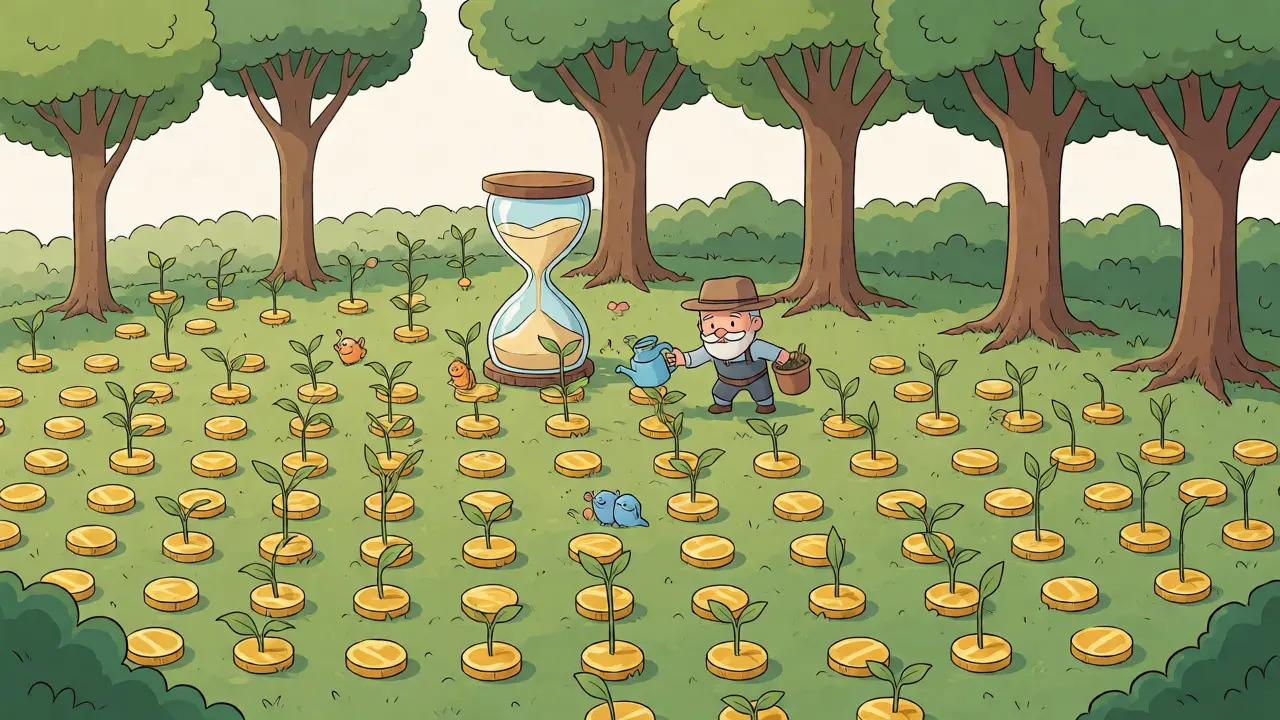
Locking tokens prevents selling, but it doesn’t automatically improve governance. To truly fight short-termism, leading protocols like Curve Finance and Polkadot have introduced mechanisms where your voting power scales with how long you lock your tokens. This is known as Vote Escrow (ve) models.
In Curve’s veCRV system, if you lock CRV tokens for four years, you get maximum voting weight and fee rewards. If you lock them for just one week, your influence is negligible. This forces participants to think about the protocol’s trajectory over a multi-year horizon. Why would someone willing to lock capital for four years vote for a parameter change that only benefits them for the next quarter? They wouldn’t. Their incentives are structurally aligned with the long-term success of the network.
Polkadot takes a similar approach with its community voting. DOT holders must lock their tokens to vote, with durations ranging from 0 to 224 days. The longer you lock, the higher your voting multiplier-up to 6x. This numeric link between illiquidity and influence is a powerful deterrent against speculative governance. You’re essentially paying for your vote with opportunity cost. If you want to sway a critical treasury decision, you need to be willing to sit out the market volatility for several months.
The Risk of Governance Plutocracy
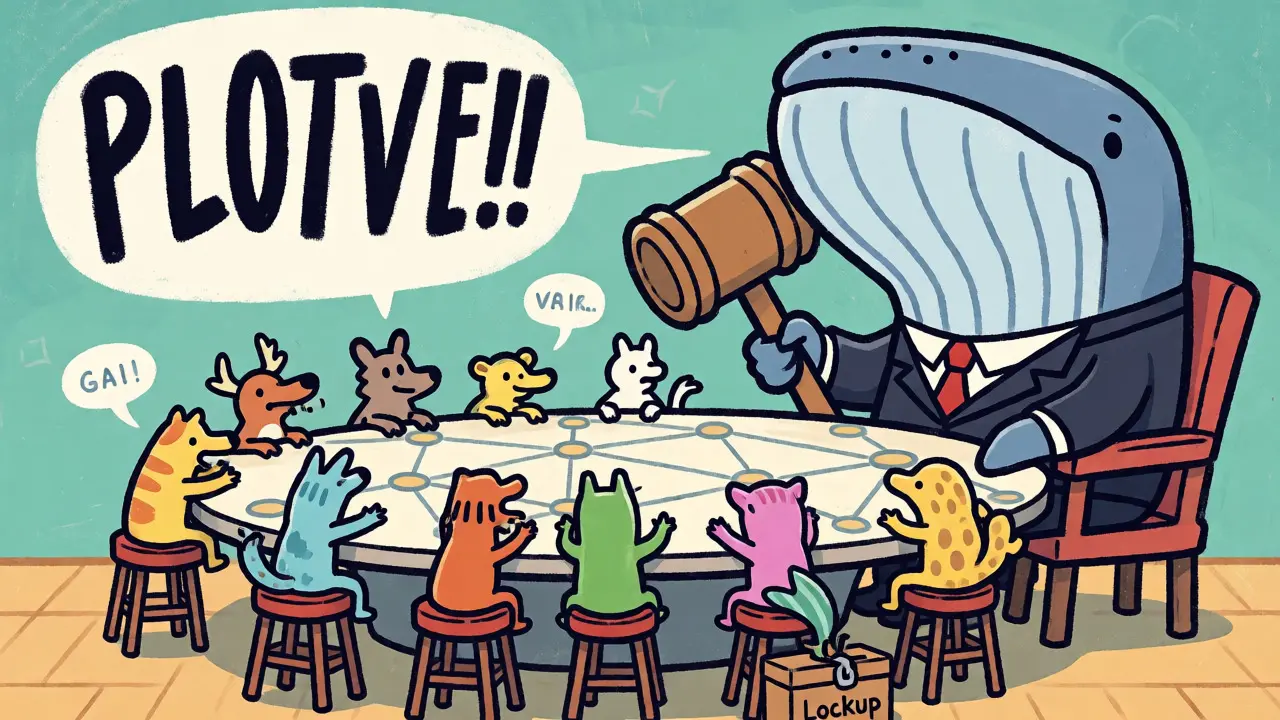
Here is where it gets tricky. While vote escrow models reduce short-termism, they risk creating a "governance plutocracy." In this scenario, only the wealthiest stakeholders-whales who can afford to lock up large amounts of capital for years-have meaningful voting power. Smaller users, who might need liquidity sooner, effectively lose their voice.
Chainscore Labs’ analysis highlights this danger. When governance becomes dominated by a few large, illiquid players, proposals tend to favor those specific interests. For instance, a whale might support high emission rates that benefit their staking position, even if it dilutes the value for everyone else. Because these whales are locked in, they aren’t going anywhere, so they can push through changes that smaller, more liquid users disagree with but can’t easily exit without taking a loss.
This creates a paradox. We introduce lockups to democratize long-term thinking, but we end up centralizing power among those with the deepest pockets. Some researchers argue that there is a "sweet spot" for lockup durations. Data suggests that medium-term lockups (around 60 days for liquidity purposes, or 12-24 months for governance) often balance stability and flexibility better than extreme 4-year locks. Too short, and you get churn; too long, and you get entrenched elites.
Empirical Evidence: Do Lockups Actually Work?
It’s easy to theorize, but does the data back it up? A 2024 working paper from the U.S. Office of Financial Research examined proof-of-stake systems and found that longer lockup periods significantly reduce the severity of "runs"-mass withdrawals during market stress. However, they don’t eliminate them entirely. The study showed that extending lockups from 7-14 days to 30-60 days had a measurable positive impact on stability.
Another agent-based modeling study simulated DAO behavior and found that fair initial distribution alone doesn’t prevent concentration. However, combining staking programs with inflationary policies and medium-term lockups reduced token concentration by up to 30%. Interestingly, the model suggested that 60-timestep lockups (a metaphor for medium-duration commitments) outperformed both very short and very long lockups in maintaining healthy decentralization. This supports the idea that rigid, multi-year immobility isn’t always the best answer. Flexibility matters.
Design Pitfalls: The "Unlock Cliff" Problem
One of the most common mistakes in tokenomics is poor timing of unlocks. If a project has a massive tranche of tokens unlocking on a specific date, traders will front-run it. They’ll sell before the event, causing the price to drop ahead of schedule. Then, when the actual unlock happens, there’s no buying pressure left to absorb the supply.
Successful protocols avoid single-date cliffs. Instead, they stagger unlocks across multiple stakeholder groups. For example, a well-designed plan might release public sale tokens within the first two months, community allocations over 19 months, and team tokens over 48 months. By ensuring no single date sees more than 5-10% of the total supply enter circulation, projects can mitigate shock. Optimism and Arbitrum are good examples of networks that use pre-announced, staggered tranches to manage expectations and maintain community trust.
Practical Implementation for DAOs
If you’re designing a tokenomics model, start by mapping out who holds the tokens and what their incentives are. Developers and advisors should have long vesting periods (24-48 months) with a significant cliff (12 months). Public investors might have shorter lockups (6-12 months) to provide some liquidity early on. Community rewards should be distributed gradually to encourage ongoing participation.
Consider using virtual tokens for governance. Platforms like Snapshot allow unvested tokens to count toward voting power immediately, even if they aren’t transferable yet. This ensures that contributors have a say in the protocol’s direction from day one, fostering a sense of ownership before they can monetize their positions. Just be careful to decouple voting rights from transferability so that people can’t buy and sell "future" voting power in a secondary market, which reintroduces speculation.
What is a token cliff in crypto vesting?
A token cliff is a specific period at the beginning of a vesting schedule during which no tokens are released. Typically lasting 6 to 12 months, it ensures that recipients remain committed to the project before gaining any liquidity. After the cliff ends, tokens usually begin vesting linearly on a monthly basis.
How do vote-escrow models reduce short-termism?
Vote-escrow models, such as Curve’s veCRV, tie voting power and reward yields to the duration a user locks their tokens. Users who lock tokens for longer periods (e.g., 4 years) receive significantly higher voting weights than those who lock for short periods. This incentivizes long-term commitment and discourages speculative voting aimed at short-term gains.
Can token lockups cause price crashes?
Yes, if poorly designed. Large, simultaneous unlocks (known as "cliffs") can create sudden spikes in circulating supply, leading to sell pressure and price drops. This is why modern protocols prefer staggered, linear vesting schedules over single-date unlocks to smooth out supply increases.
What is governance plutocracy in DeFi?
Governance plutocracy refers to a situation where voting power is disproportionately concentrated in the hands of a few wealthy stakeholders (whales). Because these whales can afford to lock up large amounts of capital for extended periods, they dominate governance decisions, potentially ignoring the needs of smaller users and leading to centralized control despite decentralized technology.
Are longer lockups always better for governance?
Not necessarily. While longer lockups align incentives, excessively long periods can deter participation from smaller users who need liquidity. Research suggests that medium-term lockups often offer the best balance between stability and flexibility, preventing both rapid churn and entrenched elite control.