
The Silent Danger in Your Device
Picture this: You buy what looks like a brand-new hardware wallet online. You open the box, set it up, and transfer your life savings into digital gold. Everything seems perfect until, suddenly, your funds vanish. There was no login, no phishing email, and no physical access to your computer. This isn't science fiction; it is a documented reality that has cost millions in recent years. These incidents stem from tampered hardware wallets, a specific type of supply chain attack where malicious actors intercept legitimate devices during distribution.
We are seeing a significant shift in how criminals target crypto assets. Instead of brute-forcing passwords or guessing PINs, they are compromising the physical tool you rely on for safety. In September 2025 alone, security analysts reported 37 distinct incidents involving modified devices across 18 countries. The total losses attributed to these compromised units reached roughly $47.8 million. For many users, buying a wallet meant securing their funds, but increasingly, the purchase itself has become the most dangerous step.
How the Attack Actually Works
To understand why this happens, we need to look under the hood. A legitimate hardware wallet stores your private keys offline. In theory, this keeps them safe from hackers on the internet. However, a tampered hardware wallet is one whose firmware or physical components have been altered before sale.
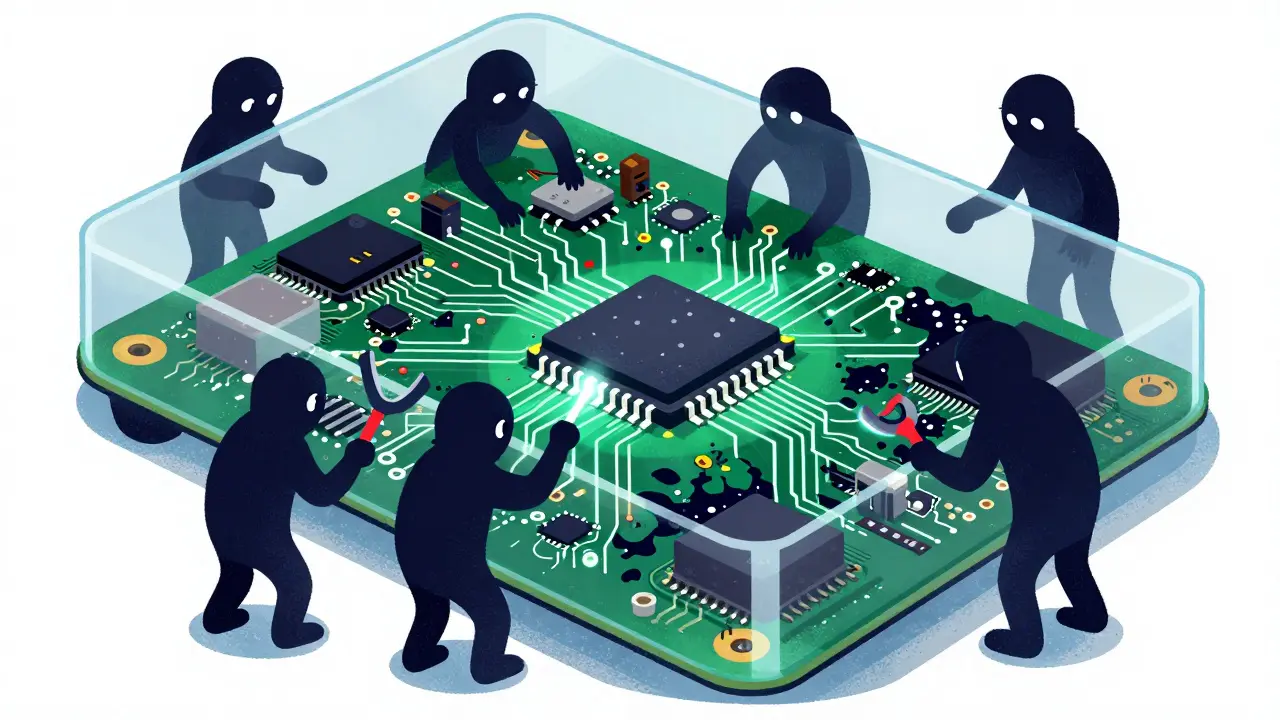
Supply Chain Attacks typically involve criminals inserting themselves into the logistics network. They don't need to own the factory; they just need to intercept the box.Once they have physical possession of the device, they use specialized equipment to reflash the memory chips. By modifying the software running on the chip, they can trick the device into sending your recovery phrase to their servers while still showing you a 'safe' screen. Some attackers go further, pre-generating multiple sets of mnemonic phrases. When you initialize the wallet, you think you are generating a new seed, but the attacker already knows every possible variation, allowing them to watch for transactions and drain your account later.
Technical Vulnerabilities in Popular Devices
Not all wallets are created equal when it comes to defense against these maneuvers. The architecture of the device plays a massive role in its resilience. Many current models rely on ARM Cortex-M4 processors to handle cryptographic operations. While fast, these processors can be vulnerable to a technique called voltage glitching.
Attackers induce computational errors by manipulating the power supply. With as little as $200 worth of equipment, a criminal can bypass security checks and inject malicious code. Research suggests that about 7 out of 12 major hardware wallet models currently lack dedicated hardware isolation between their main processor and secure elements. This gap allows the main processor to read data directly from the secure storage if manipulated correctly.
| Device Model | Security Architecture | Vulnerability Risk |
|---|---|---|
| Ledger Nano X (2.3.0) | Dual-chip with Secure Element | Low (17% susceptibility) |
| Trezor Safe 3 | EAL6+ Certified Secure Element | High (92% susceptibility) |
| BitBox02 | HSM-based | Moderate (67% susceptibility) |
| Coldcard | Open Source Hardware | Low (Design transparency) |
Signs Your Device Might Be Compromised
You cannot always tell just by looking at the box, but there are red flags. One of the first indicators of a tampered unit involves transaction speed. Legitimate hardware wallets process transactions in approximately 3 to 4 seconds. If your device takes significantly longer-specifically between 12 to 15 seconds-it may be exfiltrating data to a hidden server while processing your request.
Another clue is the packaging. Most manufacturers apply tamper-evident seals. If the seal is broken, missing, or applied over a sticker, you should walk away immediately. In verified cases, the outer plastic wrapping often looked pristine, but the inner box had been opened. Checking the firmware hash is critical too. Once you connect the device, you should verify the version number against the official manufacturer's website. If the numbers don't match, your device is not genuine.
Verifying Your Purchase: A Step-by-Step Guide
Buying a wallet is easy; securing it requires discipline. Experts recommend a strict verification protocol before transferring any significant amount of money. Here is the process:
- Inspect Packaging: Look for unbroken seals and official holograms.
- Check Serial Numbers: Match the serial on the box with the one displayed on the device screen during setup.
- Verify Firmware Hash: Compare the device's software signature with the manufacturer's published values.
- Generate Seed on Device: Never use a computer to generate your recovery phrase. The device must create it internally.
- Test Recovery: Write down your phrase, then wipe the device and recover using the phrase to ensure it works.
- Fund Small Amounts: Before moving your entire portfolio, send a small test transaction.
- Register Device: Officially link the hardware with your provider to get updates and support.
Despite these clear steps, studies show that nearly 70% of users skip the firmware verification entirely. This negligence is exactly why attacks continue to succeed. Manufacturers provide tools to verify authenticity, but users often treat the process like opening a generic USB drive rather than a bank vault.

The Market Shift and Manufacturer Response
In response to rising threats, the industry is moving towards zero-trust verification systems. Major players are realizing that relying on a central server to prove authenticity is risky. Blockchain-based verification protocols are emerging, where the device's identity is anchored to a public ledger. As of late January 2026, leading companies announced plans to make this standard across their product lines.
However, regulation is lagging behind technology. New European Union laws will soon require manufacturers to implement ISO 27001-certified supply chain security. Non-compliance penalties could reach 6% of global revenue. This regulatory push is likely to force smaller competitors to adopt higher standards or exit the market, potentially consolidating power among larger, more secure providers.
Future Outlook and Mitigation Strategies
While the threat landscape is evolving, so are our defenses. The integration of quantum-resistant algorithms is becoming a priority for new hardware releases. Furthermore, independent audit firms are now offering third-party certification badges for hardware, similar to energy star ratings for appliances. Users are advised to look for these certifications, which indicate the device has passed rigorous physical and supply chain testing.
Diversification also helps. Using multi-signature setups ensures that even if one device is compromised, funds remain inaccessible without approval from other keys stored in different locations. This layered approach drastically reduces the risk of total loss due to a single supply chain failure.
Can I check my wallet after buying it?
Yes. Immediately upon receipt, inspect packaging for tamper evidence and check the firmware hash on the manufacturer's official site against your device. Do not use the device for large transfers until verified.
What brands are most secure?
Models with dual-chip architecture and isolated Secure Elements generally offer better protection. Currently, Ledger and Coldcard feature designs that make physical manipulation significantly harder compared to single-processor models.
Are older models safer or newer ones?
Newer models released after mid-2025 typically incorporate improved secure element isolation. Older units may lack the latest firmware protections against voltage glitching attacks.
Should I buy from Amazon?
Only from authorized sellers listed directly on the manufacturer's website. Third-party listings on marketplaces carry a high risk of being resold devices that were intercepted in transit.
Is it safe to use a wallet from a gift registry?
Never. Any device used previously or left in transit creates a massive vulnerability. Always purchase sealed units directly from official sources to guarantee chain of custody.