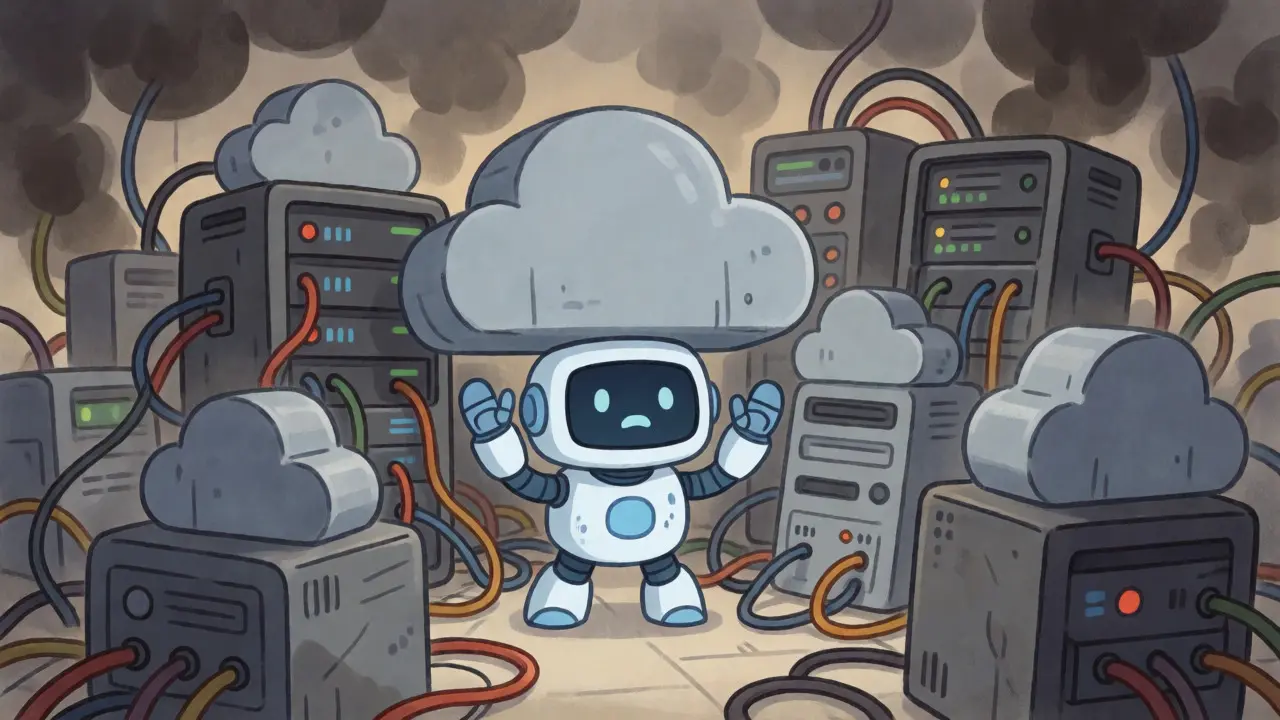
You’ve probably heard the horror stories. A validator goes offline during a critical consensus window because a shared cloud server throttled its CPU to save costs. Or worse, a major network faces backlash not because of code bugs, but because its infrastructure runs on coal-powered data centers in remote regions. For anyone running validators or nodes, the infrastructure choice is no longer just about uptime-it’s about survival, reputation, and profitability.
Here’s the reality: the era of throwing cheap virtual machines at blockchain problems is over. As networks like Solana and Ethereum scale, the demand for millisecond-level precision and massive state storage has collided with environmental scrutiny. You need hardware that doesn’t blink when traffic spikes, and you need it powered by clean energy. This guide breaks down how to build or choose sustainable data center setups that keep your nodes fast, reliable, and green.
Why Public Cloud Fails Serious Validators
Let’s address the elephant in the room: hyperscale public clouds were built for web apps, not for the brutal, real-time demands of blockchain consensus. When you run a validator on AWS or Azure, you are sharing resources. You’re subject to "noisy neighbors"-other tenants on the same physical host who suddenly spike their I/O usage, stealing bandwidth from your node.
For Proof-of-Stake (PoS) networks, this latency variance is fatal. Networks like Solana validate blocks in milliseconds. If your disk read/write speed drops because the hypervisor decided to throttle your burst credits, you miss the block. Missed blocks mean slashed rewards. It’s that simple.
Bare metal servers solve this. These are dedicated, single-tenant machines. No hypervisor overhead. No shared memory bus. Your CPU cycles are yours alone. This exclusivity ensures that when the network hits peak load, your validator performs exactly as expected. There is no surprise billing spike because you aren’t paying for elastic scaling; you pay for fixed, predictable capacity.
The Sustainability Imperative: Beyond Greenwashing
It’s easy to slap a "100% Renewable" badge on a website and call it a day. But for serious operators, sustainability is about verifiable data. Investors and regulators are increasingly demanding transparency in energy procurement. If your data center claims to be green but buys unverified Renewable Energy Certificates (RECs) while drawing power from a local coal grid, you’re exposed.
True sustainability in validator infrastructure involves three layers:
- Direct Power Sourcing: The facility uses on-site solar/wind or direct contracts with renewable providers.
- Efficiency Metrics: Low Power Usage Effectiveness (PUE). A PUE of 1.5 means only 50% extra energy is used for cooling/lighting. Top-tier facilities aim for 1.1-1.2.
- Hardware Lifecycle: Using refurbished enterprise-grade hardware reduces e-waste before the server even turns on.
When you choose a provider, ask for their annual sustainability report. Look for specific numbers, not vague promises. Did they reduce carbon intensity year-over-year? Do they use free-air cooling in colder climates like Raleigh or Northern Europe?
Technical Requirements for High-Performance Nodes
Sustainability cannot come at the cost of performance. In fact, efficient data centers often perform better because they manage heat more effectively. However, the hardware specs matter. General-purpose cloud instances rarely offer the specific I/O throughput needed for modern chains.
For networks like Polkadot or Cosmos, team recommendations are strict. You need ECC (Error-Correcting Code) memory to prevent silent data corruption. You need true NVMe storage, not shared SAN volumes. If you’re running an archive node, your chain state can grow into terabytes. Shared storage introduces latency jitter that disrupts consensus participation.
Consider the following comparison of infrastructure types for validator operations:
| Feature | Public Cloud (VM) | Bare Metal (Dedicated) | Colocation (Your Hardware) |
|---|---|---|---|
| Resource Isolation | Low (Shared CPU/RAM) | High (Exclusive Access) | High (Exclusive Access) |
| Latency Consistency | Variable (Hypervisor overhead) | Consistent | Consistent |
| Storage Performance | Throttled/Burst-based | Dedicated NVMe/SSD | User-controlled |
| Cost Predictability | Unpredictable (Egress fees) | Fixed Monthly | Fixed + Power/Space |
| Sustainability Control | Opaque | Provider-dependent | Full Control |
Choosing the Right Facility: Tier III and IV Standards
Not all data centers are created equal. For a validator, downtime is money. A Tier II facility might have redundant power paths but no redundant cooling. A Tier III facility supports concurrent maintainability-you can service any component without taking the server offline. Tier IV offers fault tolerance, meaning the system survives multiple independent failures.
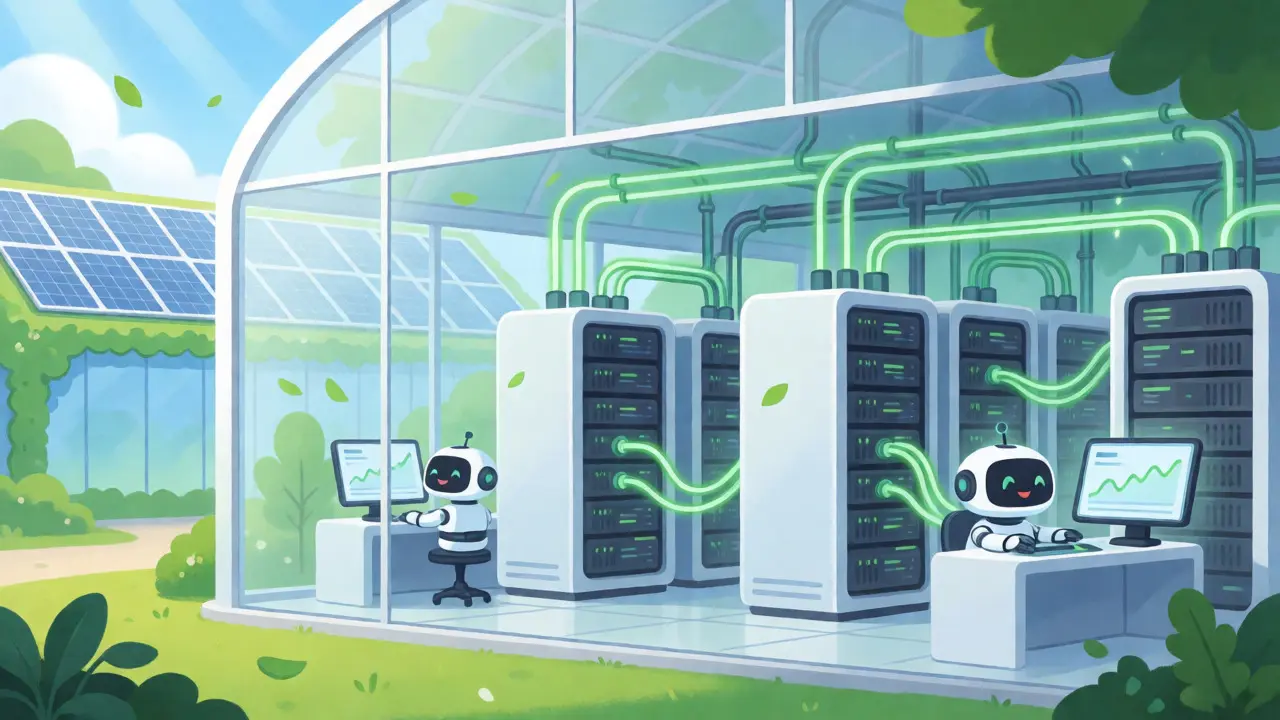
Most professional validator hosts operate out of Tier III or IV facilities. Why does this matter for sustainability? Because inefficient facilities waste energy on poor airflow management. Modern Tier III+ designs use hot/cold aisle containment and advanced liquid cooling options. This reduces the energy required to keep your high-performance CPUs from thermal throttling.
Geographic location also plays a role in both latency and energy mix. Hosting a validator in a region with a high percentage of hydroelectric power (like Quebec or parts of Scandinavia) instantly lowers your carbon footprint compared to hosting in a region reliant on natural gas. Furthermore, if your target peers are primarily in Asia, hosting in Frankfurt adds unnecessary latency. Match your data center location to your network’s geographic distribution.
Professional Management vs. DIY Operations
Running a sustainable node isn’t just about plugging it in. It requires constant monitoring, patching, and optimization. This is where professional validator service providers like Stakin or W3coins add value. They don’t just rent you space; they manage the stack.
These providers often achieve 99.5%+ uptime SLAs because they have 24/7 on-site technicians. If a drive fails at 3 AM, someone swaps it immediately. For a solo operator, that could mean hours of downtime. Professional hosts also handle the complex networking setup-multi-homed transit connections ensure that if one ISP goes down, your validator stays connected to the peer-to-peer network.
Moreover, large-scale providers can negotiate better rates for renewable energy contracts due to their volume. They pass these efficiencies down, offering a greener option than what a small operator could secure independently. They also handle the compliance paperwork, providing you with certificates of origin for the electricity used by your rack.
Implementation Checklist for Sustainable Migration
If you’re ready to move your validator to a sustainable, high-performance environment, follow these steps to avoid pitfalls:
- Audit Current Specs: Measure your actual CPU, RAM, and Disk I/O usage. Don’t guess. Use tools like `htop` and `iotop` for a week.
- Test on Testnet First: Never migrate mainnet validators blindly. Deploy a testnet validator on the new bare metal infrastructure. Monitor latency and sync times for 7 days.
- Verify Energy Claims: Ask the provider for their current PUE rating and energy source breakdown. Request documentation on renewable energy certificates.
- Check Network Peering: Ensure the data center has direct peering exchanges with major ISPs in your target region.
- Plan for Storage Growth: Blockchain state grows. Ensure your bare metal plan allows for scalable storage expansion without re-provisioning the entire machine.
Migrating is risky. Back up your keys securely. Keep the old node running until the new one is fully synced and stable. Only then should you switch the voting power.
Frequently Asked Questions
Does using renewable energy actually improve validator performance?
Indirectly, yes. Facilities focused on sustainability often invest in newer, more efficient hardware and better cooling systems. Efficient cooling prevents thermal throttling, allowing your CPU to maintain higher clock speeds for longer periods. Additionally, these facilities tend to have better-maintained infrastructure, reducing the risk of unexpected outages.
Is bare metal more expensive than public cloud for validators?
Initially, bare metal can appear more expensive per month. However, when you factor in egress fees, API calls, and the cost of troubleshooting performance issues caused by resource contention, bare metal is often cheaper for consistent, heavy workloads. Public cloud bills for validators frequently triple due to unpredictable data transfer costs.
How do I verify a data center's sustainability claims?
Look for third-party certifications like LEED, ISO 50001, or membership in organizations like the Climate Neutral Data Centre Pact. Ask for their annual sustainability report which details Power Usage Effectiveness (PUE) and Carbon Intensity metrics. Be wary of providers who only claim to purchase offsets without showing direct renewable sourcing.
Can I run a validator on home hardware sustainably?
Yes, if your home uses renewable energy and your hardware is efficient. However, residential internet reliability and static IP availability can be issues. Home setups lack the redundancy of professional data centers. If your power goes out or your router crashes, you lose rewards. It’s viable for hobbyists but risky for professional staking.
What happens if my validator misses blocks due to infrastructure lag?
Consequences vary by network. On some chains, you simply earn fewer rewards. On others, like Polkadot or Cosmos, persistent downtime can lead to slashing, where a portion of your staked tokens is burned. This makes low-latency, reliable infrastructure a financial necessity, not just a technical preference.