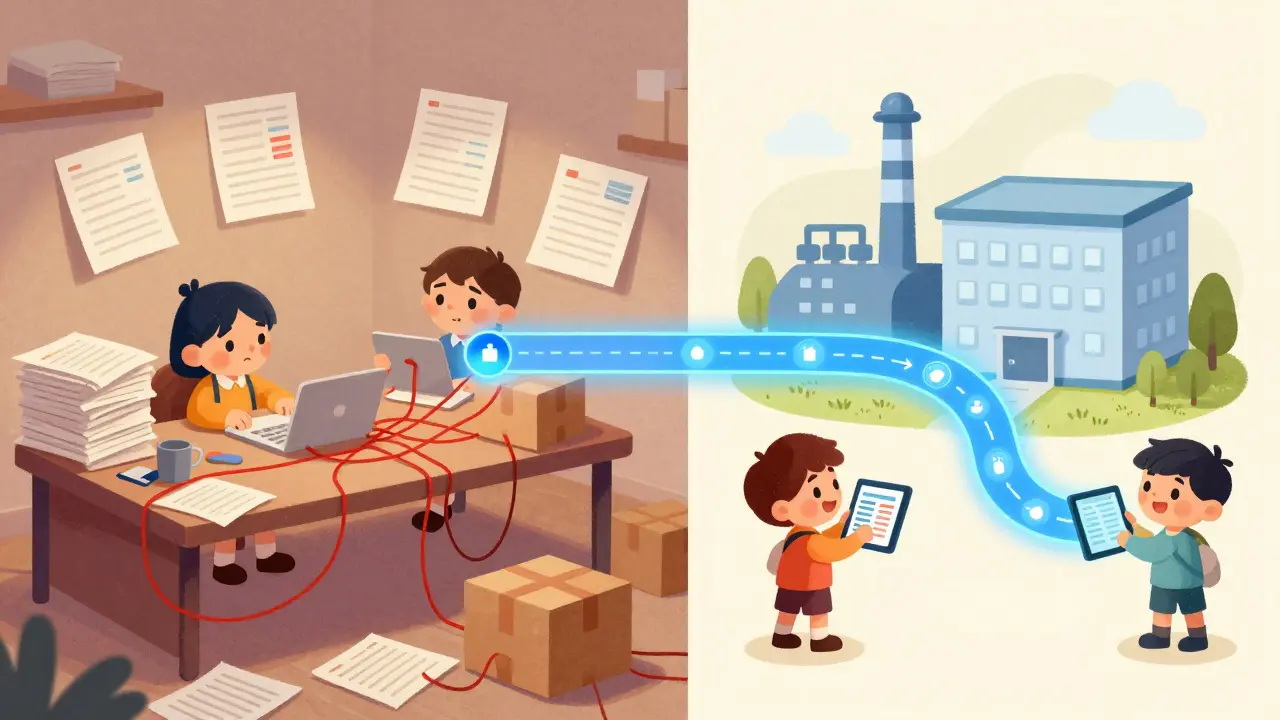
Imagine a shipment of high-end pharmaceuticals moving from a factory in Switzerland to a hospital in London. In the traditional system, you have paper trails, email confirmations, and database entries that live on separate servers. If a batch is recalled, finding out exactly which hospitals received it can take weeks. Now, imagine that same process recorded on a distributed ledger, where every scan, signature, and temperature check is instantly visible to all authorized parties. That is the promise of blockchain technology in supply chain management.
We are not talking about cryptocurrency speculation here. We are talking about operational reality. For years, supply chains have been plagued by information silos, counterfeiting, and opaque logistics. Blockchain addresses these issues by creating a single source of truth that is transparent, traceable, and tamper-proof. This article breaks down how this technology works, why it matters for your business, and what you need to know before implementing it.
The Core Problem: Information Silos and Trust Deficits
Traditional supply chain systems rely on centralized databases or disconnected spreadsheets. When a manufacturer sends goods to a distributor, they update their own records. The distributor updates theirs. There is often no direct link between these two datasets. This creates information asymmetry. You don’t know if the data your partner sees matches the data you see.
This lack of visibility leads to inefficiencies. Disputes over delivery times, quality issues, or ownership transfers require manual reconciliation. It also opens the door for fraud. Counterfeit products enter the supply chain because there is no immutable record proving a product’s origin and journey. According to analysis from the International Society of Supply Management (ISMWORLD), blockchain eliminates these silos by providing a shared view of procurement, manufacturing, transportation, and delivery phases.
How Blockchain Ensures Transparency and Traceability
To understand why blockchain is different, you need to look at its technical architecture. Unlike a central server controlled by one company, a blockchain is a network of computers (nodes) that all hold a copy of the ledger. Here is how it drives transparency and traceability:
- Immutability: Once data is added to the blockchain, it cannot be changed without consensus from the network. This prevents retroactive manipulation of records, such as altering temperature logs for perishable goods.
- Decentralization: There is no single point of failure. If one node goes offline, the network continues to function. This distributes authority and reduces the risk of centralized control or manipulation.
- Cryptographic Security: Transactions are secured using public-private key pairs. This ensures that only authorized participants can add data and that their identity is verifiable.
- Real-Time Visibility: Every transaction is recorded instantly. Stakeholders can track product movement from origin to consumption in real-time, enabling proactive decision-making regarding delays or diversions.
For example, in the food industry, regulators need to verify compliance with safety standards. With blockchain, each step-from farm to fork-is recorded on cryptographically-secured blocks. This provides an indisputable audit trail that confirms adherence to laws and standards, reducing the time and cost of compliance verification.
Private vs. Public Blockchains: Choosing Your Architecture
Not all blockchains are created equal. The choice between private and public architectures depends on your supply chain’s trust model and security requirements.
| Feature | Private Blockchain | Public Blockchain |
|---|---|---|
| Governance | Centralized; controlled by known entities | Decentralized; no central authority |
| Trust Model | High trust among participants | Low trust; participants may be unknown |
| Security | Relies on internal controls; less decentralized security | Cryptographic prevention of attacks; high decentralization |
| Performance | Higher transaction throughput; lower latency | Lower throughput due to consensus mechanisms |
| Best Use Case | Established partnerships, B2B networks | Open markets, consumer-facing traceability |
Private blockchains are ideal when all parties have established relationships. They offer reduced computational overhead and faster transactions. However, they sacrifice some decentralized security properties since individual nodes can potentially alter data within their control. Public blockchains, on the other hand, provide safety by design through cryptographic prevention of double-spending attacks and immutable records. They are better suited for supply chains where participants lack prior trust relationships.
Hybrid models combine elements of both, balancing security with operational efficiency. For instance, sensitive pricing data might remain on a private channel, while product authenticity proofs are published on a public ledger for consumer verification.
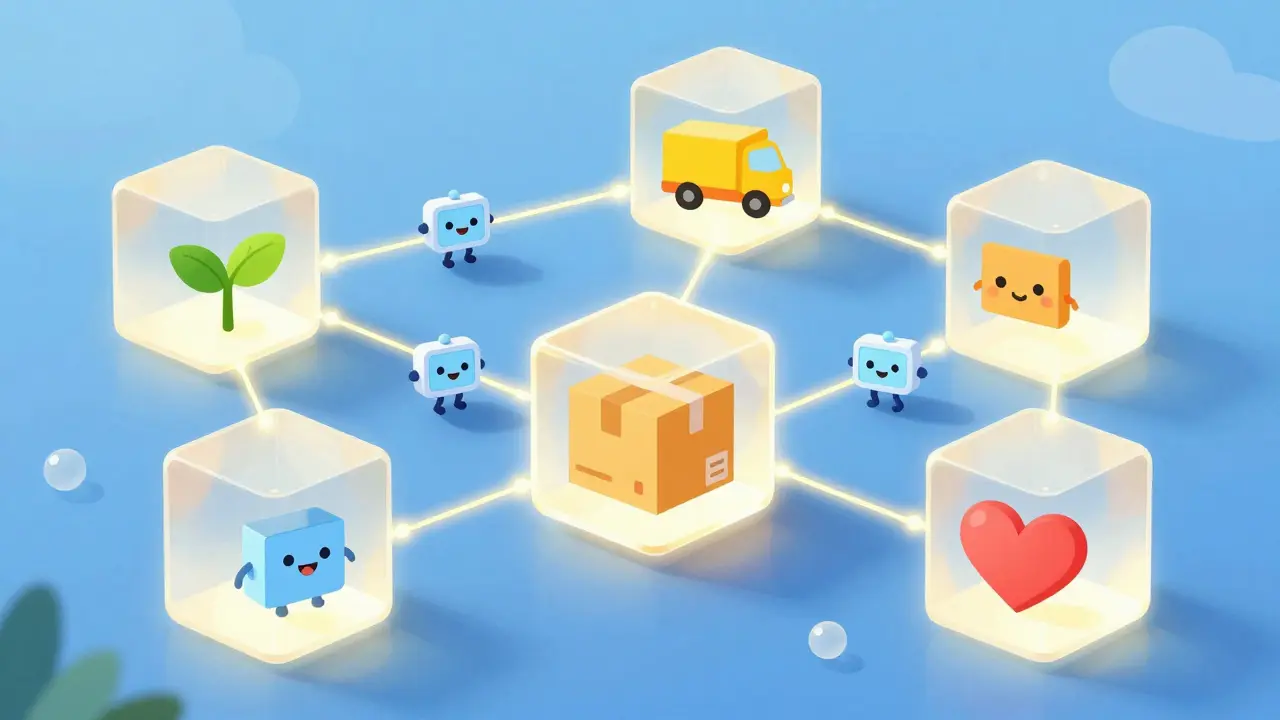
Key Use Cases: Traceability, Transparency, and Tradeability
ConsenSys identifies three primary use case categories for enterprise blockchain in supply chain management. Let’s break them down with practical examples.
1. Traceability
Traceability improves operational efficiency by mapping and visualizing the entire supply chain. It enables rapid product recalls. If a contaminant is found in a batch of ingredients, manufacturers can use blockchain records to pinpoint affected goods and distribution channels instantly. This reduces the scope of recalls and minimizes waste. In pharmaceuticals, traceability helps identify counterfeit products at specific distribution points, protecting patient safety.
2. Transparency
Transparency provides real-time visibility into the movement of goods. This allows for proactive decision-making. If a shipment is delayed or damaged, stakeholders can react immediately rather than discovering the issue upon arrival. Transparency also builds trust with consumers. Brands can share verified information about product origin, ethical sourcing, and environmental impact, enhancing brand loyalty.
3. Tradeability
Tradeability facilitates efficient trading and transfer of supply chain assets. Blockchain enables peer-to-peer transactions of goods, raw materials, and commodities without intermediaries. This can transform supply chain financing by allowing direct settlement upon verified delivery. Smart contracts automate this process, triggering payments automatically when predefined conditions are met.
The Role of Smart Contracts in Automation
Smart contracts are self-executing contracts with the terms of the agreement directly written into code. They run on the blockchain and execute automatically when conditions are met. In supply chains, this reduces reliance on trust-based relationships and eliminates intermediaries.
For example, a smart contract can be programmed to release payment to a supplier once a GPS sensor confirms the delivery of goods to the correct location and a digital signature verifies acceptance. This automation accelerates settlement, reduces transaction friction, and minimizes disputes. It transforms auditing from a time-intensive, manual process into an efficient, cost-effective procedure.

Implementation Challenges and Considerations
Despite the benefits, blockchain adoption faces significant hurdles. You need to evaluate these factors carefully before committing to a solution.
- Scalability: Distributed consensus mechanisms require computational overhead, leading to lower transaction throughput compared to traditional databases. This can create latency issues in high-volume supply chains.
- Interoperability: Different blockchain platforms use distinct protocols and standards. Integrating blockchain systems with legacy enterprise infrastructure remains challenging. Multi-party implementations across different platforms are complicated by standardization gaps.
- Data Privacy: While transparency is a benefit, commercially sensitive information like pricing and supplier relationships must be protected. Organizations must balance visibility with confidentiality. Hybrid approaches and private channels are emerging solutions, but full standardization is incomplete.
- Regulatory Uncertainty: Jurisdictions vary in their governance frameworks for blockchain. Organizations must navigate evolving regulations regarding data custody, privacy, and legal recognition of digital records.
- Cost and Complexity: Implementation requires investment in technology infrastructure, staff training, and integration efforts. Ongoing maintenance overhead must be considered.
Organizations should start by determining the appropriate blockchain architecture for their context. If all parties are known and trusted, a centralized database might suffice. If trust is low or participants are unknown, a public or hybrid blockchain offers greater value. Pilot programs and limited production deployments are recommended to test feasibility and identify integration challenges.
Industry Adoption and Future Outlook
Market positioning indicates growing enterprise blockchain investment targeting supply chain applications. Deloitte emphasizes that blockchain provides tamper-evident shared ledgers for complex multi-participant systems. Industries with strong economic incentives for authenticity and compliance-such as pharmaceuticals, food and beverage, and luxury goods-are leading adoption.
Enterprise platforms like ConsenSys and Circularise are developing supply chain-specific implementations. Industry consortia are working on interoperability standards and shared governance frameworks. Regulatory clarity is gradually improving, though it remains under development in many regions.
Long-term adoption will depend on achieving substantial improvements in transaction throughput, reducing computational overhead, and establishing robust interoperability standards. As the technology matures, we can expect broader application beyond regulated industries, extending to general retail, manufacturing, and logistics.
What is the difference between transparency and traceability in blockchain?
Transparency refers to the visibility of data across the supply chain network. All authorized participants can see the same information in real-time, eliminating information silos. Traceability refers to the ability to track a product’s journey from origin to consumption. It involves recording each transaction, including origin, production, quality checkpoints, and ownership transfers, on an immutable ledger. Transparency enables trust; traceability enables accountability and rapid response to issues.
Is blockchain secure enough for sensitive supply chain data?
Yes, blockchain uses cryptographic security with public-private key pairs to ensure transaction integrity and participant identity verification. Immutability prevents retroactive modification of records. However, data privacy concerns exist regarding visibility of sensitive information like pricing. Hybrid models and private channels can protect confidential data while maintaining public verification of critical records like authenticity.
How do smart contracts automate supply chain processes?
Smart contracts are code-based agreements stored on the blockchain. They execute automatically when predefined conditions are met. For example, a smart contract can trigger payment to a supplier once a digital signature confirms delivery. This removes the need for intermediaries to verify compliance, accelerates settlement, and reduces transaction friction.
Which industries benefit most from blockchain supply chains?
Industries with high regulatory requirements and risks of counterfeiting benefit most. These include pharmaceuticals, food and beverage, luxury goods, and medical device manufacturing. These sectors require detailed documentation of product origin, handling, testing, and distribution. Blockchain provides immutable audit trails that simplify compliance verification and enhance consumer trust.
What are the main barriers to blockchain adoption in supply chains?
Key barriers include scalability constraints (lower transaction throughput than traditional databases), interoperability challenges with legacy systems, data privacy concerns, standardization gaps across platforms, and regulatory uncertainty. Implementation costs and technical complexity also require careful evaluation. Organizations must assess ecosystem readiness and existing infrastructure compatibility before adopting blockchain solutions.