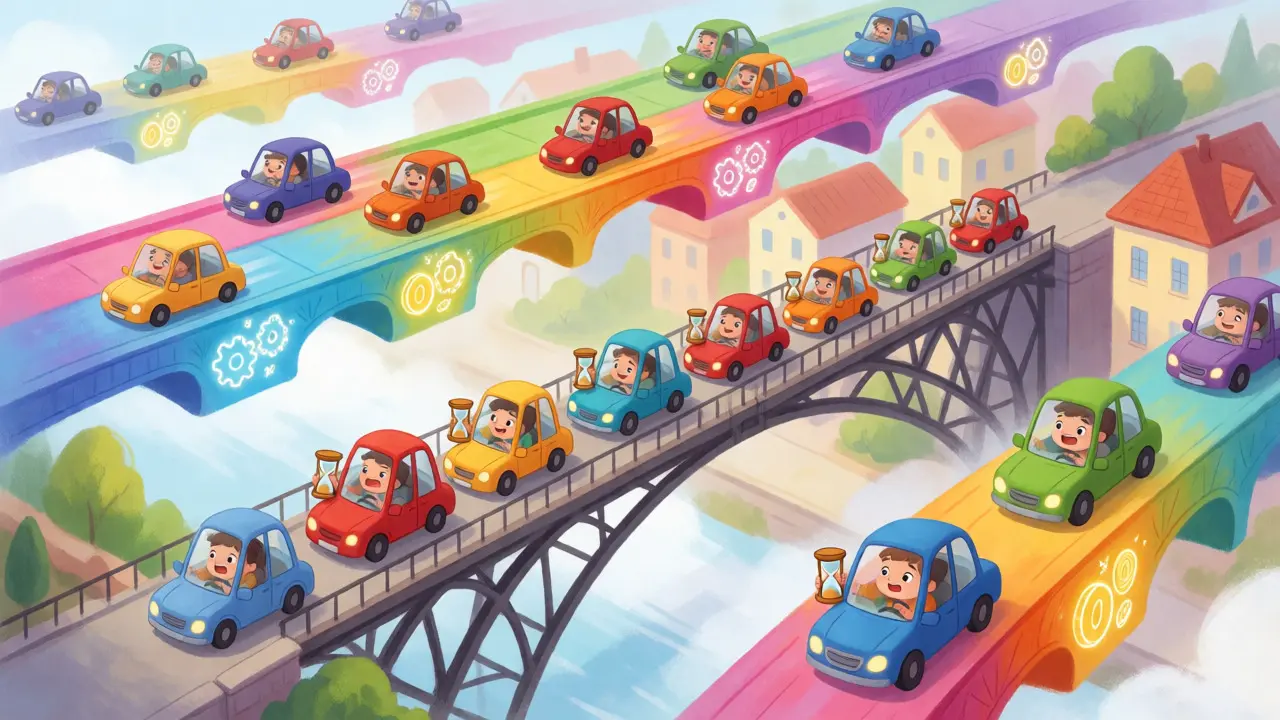
Imagine trying to run a busy city’s entire traffic system through a single narrow bridge. That is essentially what Bitcoin and other early blockchains faced as adoption grew. Every transaction, every smart contract execution, and every data verification had to squeeze through the same bottleneck. The result? High fees, slow confirmations, and frustrated users. Enter sidechains, independent blockchain networks that run parallel to a main chain, offering a clever workaround to this congestion problem.
You might have heard terms like "Layer 2" thrown around in crypto discussions. Sidechains are a specific type of Layer 2 solution, but they operate differently from rollups or state channels. While rollups bundle transactions off-chain and post compressed data back to the mainnet, sidechains are fully autonomous blockchains with their own consensus mechanisms. They maintain a permanent connection to the parent blockchain via a two-way peg, allowing assets to move securely between the two networks. This distinction matters because it changes how you think about security, speed, and developer flexibility.
The Core Mechanism: Locking, Minting, and Burning
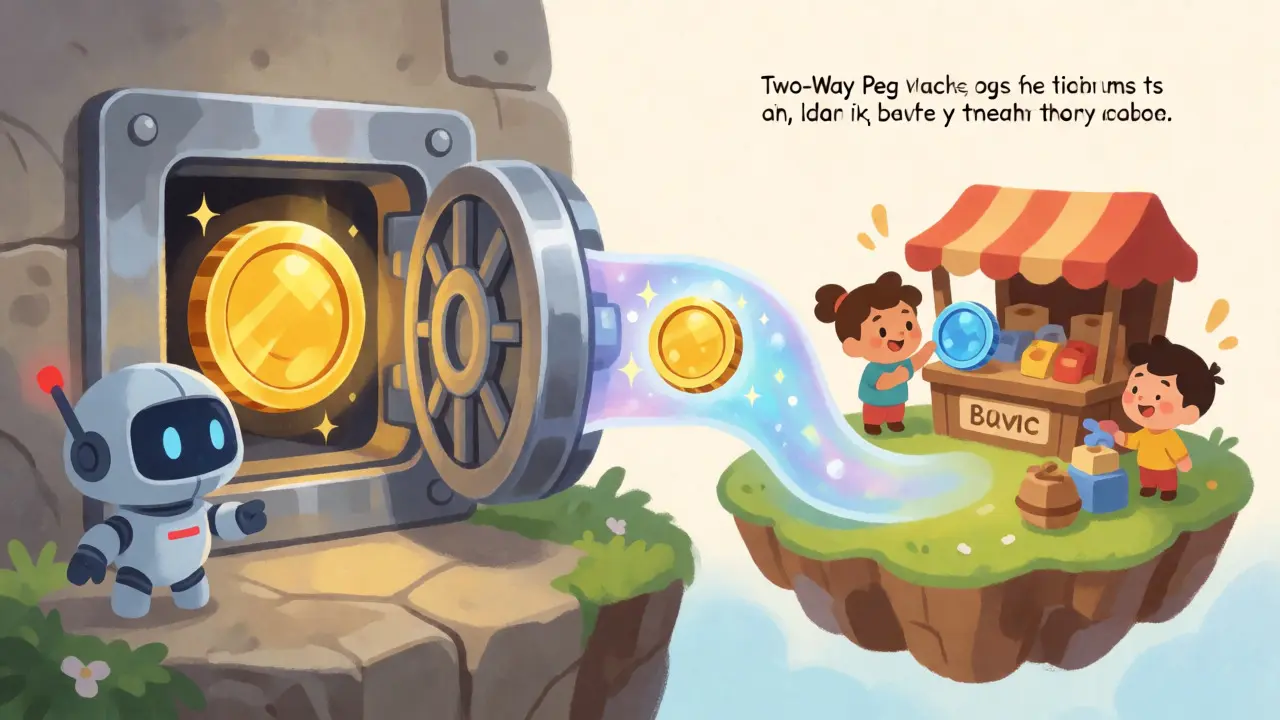
How do you actually move value from Ethereum to a sidechain without trusting a centralized exchange? The answer lies in the two-way peg mechanism. Think of it as a secure vault system. When you want to send assets to a sidechain, you lock them in a smart contract on the main chain. Once locked, an equivalent amount of tokens is minted (created) on the sidechain. You can then use these tokens freely within the sidechain ecosystem.
When you’re ready to return to the main chain, the process reverses. You burn (destroy) the tokens on the sidechain, which triggers the release of your original assets from the vault on the main chain. This ensures that the total supply remains consistent across both networks. No money is created out of thin air; it’s simply represented differently depending on which chain holds it.
| Feature | Main Chain (e.g., Ethereum) | Sidechain (e.g., Polygon PoS) |
|---|---|---|
| Consensus Mechanism | Proof of Work or Proof of Stake (High Security) | Customizable (e.g., Proof of Authority, Tendermint) |
| Transaction Speed | Slower due to global validation | Faster due to smaller validator set |
| Security Model | Inherited from massive network hash power/stake | Own validator set; trust assumptions vary |
| Asset Movement | Native currency (ETH/BTC) | Pegged assets via two-way bridge |
Why Developers Choose Sidechains Over Other Scaling Solutions
If you’re a developer building a decentralized application (dApp), why would you choose a sidechain over a simple Layer 2 rollup? The primary reason is control. On a sidechain, you define the rules. You can choose a consensus algorithm that prioritizes speed over decentralization if your app requires high throughput, such as a gaming platform or a high-frequency trading venue. Rollups, by contrast, inherit the security and execution environment of the main chain, which limits customization.
Consider a scenario where you need privacy features not available on Ethereum. You could build a sidechain using zero-knowledge proofs for private transactions while still interacting with Ethereum’s vast liquidity pool. If you tried to implement this directly on Ethereum, you’d face significant gas costs and technical constraints. By moving the logic to a specialized sidechain, you offload the computational burden while maintaining interoperability.
This independence also allows for rapid experimentation. Remember when developers wanted to test new governance models or tokenomics? Doing so on a mainnet is risky and expensive. A sidechain acts as a sandbox. You can fork the codebase, tweak parameters, and see how users react without jeopardizing the stability of the parent chain. If the experiment fails, you abandon the sidechain. If it succeeds, you’ve proven a concept that might eventually migrate back to the main chain or remain as a specialized service.
The Security Trade-Off: Who Validates Your Transactions?
Here is the catch: sidechains do not inherit the full security guarantees of the main chain. This is the most critical point for any user or investor to understand. When you move funds to a sidechain, you are trusting the sidechain’s validator set, not the entire Bitcoin or Ethereum network. If the sidechain has only 10 validators compared to Ethereum’s hundreds of thousands, the risk of collusion or attack increases.
Some sidechains mitigate this by using checkpoints or periodic proofs submitted to the main chain. Others rely on economic incentives where validators stake collateral that gets slashed if they act dishonestly. However, the fundamental truth remains: sidechains are separate jurisdictions. Just as crossing a border means subjecting yourself to different laws, moving assets to a sidechain means accepting its security model. For large sums, many users prefer to keep assets on the main chain unless the utility of the sidechain outweighs the added risk.
Real-World Applications and Ecosystem Growth
Sidechains aren’t just theoretical concepts; they power some of the largest ecosystems in crypto today. Polygon is perhaps the most famous example, functioning as a sidechain to Ethereum that offers near-instant finality and negligible fees. It enabled the explosion of DeFi protocols, NFT marketplaces, and GameFi projects that couldn’t afford Ethereum’s gas prices during peak congestion.
Another notable example is Liquid Network, a sidechain for Bitcoin focused on faster settlement and confidential transactions. Exchanges use Liquid to facilitate quick withdrawals and deposits for traders, reducing the wait times associated with Bitcoin’s ten-minute block intervals. These examples highlight the versatility of sidechains: one focuses on general-purpose scaling for smart contracts, while the other optimizes for financial efficiency and privacy.
Interoperability is another key driver. In a fragmented landscape where multiple blockchains compete for dominance, sidechains serve as bridges. They allow assets from Chain A to be used in applications on Chain B without complex wrapped-token solutions. This fluidity encourages innovation, as developers can tap into liquidity pools across different networks seamlessly.
Challenges and Future Outlook
Despite their benefits, sidechains face hurdles. User experience can be clunky. Moving assets between chains often involves multiple steps, waiting periods, and potential errors in bridging. If the bridge hack occurs-a frequent issue in crypto history-users can lose funds even if the sidechain itself is secure. This highlights the importance of auditing bridge contracts rigorously.
Looking ahead, the line between sidechains and other Layer 2 solutions is blurring. Newer architectures aim to combine the customizability of sidechains with stronger security guarantees from the main chain. We are seeing hybrid models where sidechains periodically submit validity proofs to the main chain, effectively anchoring their state more tightly. As infrastructure matures, expect fewer trade-offs between speed, cost, and security.
For now, sidechains remain a vital tool in the blockchain toolkit. They offer a pragmatic approach to scaling, allowing ecosystems to grow without breaking the underlying protocol. Whether you are a developer seeking flexibility or a user wanting cheaper transactions, understanding sidechains helps you navigate the increasingly complex world of decentralized finance.
Are sidechains safe to use for storing large amounts of cryptocurrency?
It depends on the specific sidechain's validator set and track record. Unlike the main chain, which has massive security budgets, sidechains rely on smaller groups of validators. For very large holdings, many users prefer keeping assets on the main chain and only bridging what they actively need for dApps, minimizing exposure to bridge risks.
What happens if a sidechain stops working or forks uncontrollably?
If a sidechain halts, assets locked on the main chain usually remain safe, but you may lose access to the pegged assets on the sidechain until the network recovers. In severe cases, community intervention or governance votes may be required to resolve disputes. Always check the sidechain's governance model before committing significant capital.
Do I pay fees twice when transferring assets between a main chain and a sidechain?
Yes, typically you pay a transaction fee on the main chain to initiate the transfer (lock/burn) and a fee on the sidechain to complete the process (mint/release). However, sidechain fees are generally much lower than main chain fees, making the overall cost significantly cheaper than performing all operations on the main chain alone.
Can sidechains interact with each other?
Direct interaction between two sidechains is complex and usually requires routing through the main chain. Asset A goes from Sidechain 1 to Main Chain, then to Sidechain 2. Some newer interoperability protocols aim to enable direct sidechain-to-sidechain communication, but this is still an emerging area of development.
Is Polygon considered a sidechain or a Layer 2?
Technically, Polygon's original PoS chain functions as a sidechain to Ethereum because it has its own consensus mechanism and validator set. However, the term "Layer 2" is often used broadly in marketing to include sidechains, rollups, and validiums. Functionally, it operates as a sidechain, offering speed and low cost at the expense of inheriting Ethereum's full security.