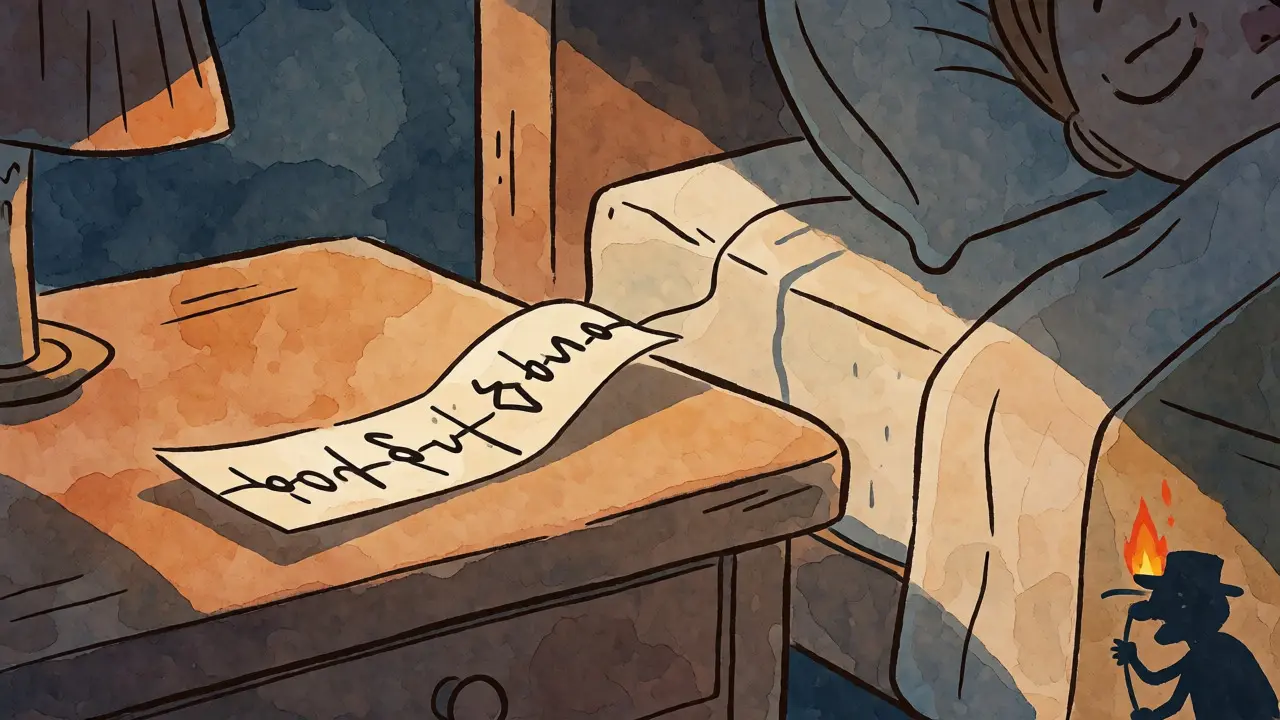
You’ve got your Bitcoin. You’ve written down your 24-word recovery phrase on a piece of paper, maybe even stamped it into steel. But what happens if that single piece of paper burns in a house fire? Or worse, what if someone steals it while you’re sleeping? With a standard BIP-39 seed, one copy is all an attacker needs to drain your wallet. That’s a single point of failure, and in the world of self-custody, single points of failure are where fortunes go to die.
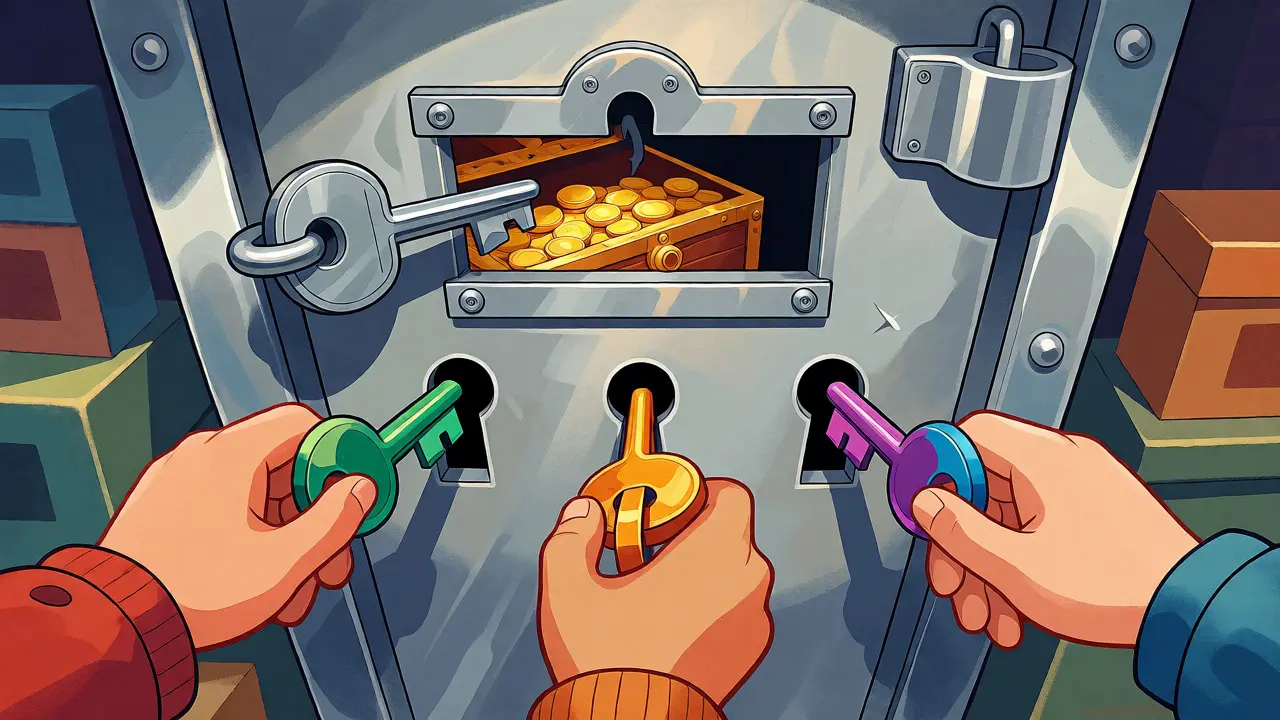
Enter Shamir Secret Sharing (SSS). It’s not just another buzzword; it’s a cryptographic method that lets you split your secret key into multiple parts so that no single part reveals anything about the whole. Think of it like a vault door that requires three specific keys from three different people to open. If one person loses their key, or if a thief steals two out of three, the vault stays shut. In this guide, we’ll break down how SSS works, why it’s safer than splitting your seed phrase manually, and how standards like SLIP-0039 make it practical for everyday crypto users.
The Core Concept: Threshold Cryptography Explained
Shamir Secret Sharing is a threshold cryptography scheme created by Adi Shamir in 1979. The core idea is simple but powerful: you divide a secret into n shares, and any subset of t shares (where t is the threshold) can reconstruct the original secret. Crucially, any set of fewer than t shares reveals absolutely zero information about the secret.
This property is known as "information-theoretic security." Unlike encryption, which relies on computational difficulty (i.e., it takes a long time to crack), SSS means that with insufficient shares, the math literally doesn’t give you a clue. It’s not that it’s hard to guess; it’s that there are infinitely many possible secrets that fit the data you have. Andreas Antonopoulos, a prominent Bitcoin educator, describes this as a "sharp cliff": you know nothing until you hit the threshold, at which point you know everything. There is no gradual leakage of information.
For example, in a 3-of-5 setup, you create 5 shares. Any 3 of them can restore your wallet. If a thief steals 1 share, they learn nothing. If they steal 2 shares, they still learn nothing. They need all 3 to move your funds. This eliminates the risk of a single compromised location leading to total loss.
From Math to Wallets: The Role of SLIP-0039
While Shamir’s algorithm has existed since the late 70s, applying it to cryptocurrency seeds required standardization. Enter SLIP-0039, also known as the "Shamir Backup" standard. Proposed by SatoshiLabs (the makers of Trezor), SLIP-0039 defines exactly how to encode these mathematical shares into human-readable word lists.
Standard BIP-39 seeds use a list of 2048 words. SLIP-0039 uses its own distinct wordlist to avoid confusion. When you generate a Shamir backup on a compatible device, you don’t get random numbers; you get a series of 20-word or 33-word phrases. Each phrase represents one share. These words are designed to be easy to transcribe onto paper or engrave onto metal plates, making physical backups feasible.
Trezor was the first hardware wallet to fully implement this standard on the Trezor Model T. Other vendors and software wallets are increasingly adopting it because it solves two major problems simultaneously: theft and loss. A single BIP-39 seed is vulnerable to both. If you lose it, you’re locked out. If it’s stolen, you’re robbed. With Shamir shares, you can distribute copies among trusted family members or safe deposit boxes. Losing one or two shares isn’t catastrophic, and stealing one or two shares isn’t fatal.
How It Actually Works: The Polynomial Analogy
You don’t need a PhD in cryptography to grasp the mechanics, but understanding the basic analogy helps you trust the process. Imagine plotting points on a graph. To define a straight line (a polynomial of degree 1), you need 2 points. To define a curve (degree 2), you need 3 points. In general, to define a polynomial of degree t-1, you need t points.
In Shamir Secret Sharing:
- The secret (your seed) is hidden within the coefficients of a polynomial.
- The system generates n points (shares) that lie on this invisible curve.
- Each share is just an x,y coordinate pair, encoded as words.
- When you combine t shares, you can draw the unique curve that passes through those points, revealing the original polynomial and thus the secret.
If you only have t-1 shares, you can draw infinite curves that pass through those points. Therefore, you cannot determine which curve-and which secret-is the correct one. This is why partial shares are useless to an attacker.

Practical Setup: Choosing Your Threshold
Setting up a Shamir backup involves deciding two numbers: n (total shares) and t (threshold). This decision depends on your threat model and who you trust.
| Configuration | Description | Best For | Risk Profile |
|---|---|---|---|
| 2-of-3 | Create 3 shares; any 2 recover the seed. | Small personal wallets; families with 3 trusted members. | Low complexity. Can lose 1 share. Needs 2 people to collude to steal. |
| 3-of-5 | Create 5 shares; any 3 recover the seed. | Larger holdings; distribution across home, bank, and lawyer. | Balanced. High resilience against loss and theft. More management overhead. |
| 5-of-8 | Create 8 shares; any 5 recover the seed. | Corporate treasuries; high-net-worth individuals. | Very secure. Requires coordination among many parties. Complex logistics. |
A popular recommendation for individuals is 3-of-5. Here’s how you might distribute those 5 shares:
- Home Safe: One share in a fireproof box.
- Bank Safe Deposit Box: One share stored off-site.
- Trusted Family Member A: One share given to a parent or sibling.
- Trusted Family Member B: One share given to another relative.
- Lawyer or Accountant: One share held under a sealed envelope agreement.
If your house burns down, you lose Share 1. You still have Shares 2, 3, 4, and 5. You pick any 3, enter them into your Trezor, and your wallet is restored. If a burglar breaks in and takes Share 1, they have one share out of five. They need two more to steal your coins. Unless they also rob your bank and your relatives, your funds are safe.
Why Not Just Split the Seed Phrase?
A common mistake beginners make is taking their 24-word BIP-39 seed and writing the first 12 words in one place and the last 12 words in another. This is called "naive splitting," and it’s dangerous.
Why? Because BIP-39 words are not independent. The last word often contains a checksum derived from the previous words. Even without the checksum, knowing half the words significantly reduces the search space for the other half. An attacker with 12 words might brute-force the remaining 12 much faster than starting from scratch. Worse, if you split a 24-word seed into two 12-word halves, each half leaks partial entropy. It’s not "all or nothing" security.
Shamir Secret Sharing is mathematically robust. Each share is generated using finite field arithmetic, ensuring that no share gives away any bit of information about the secret until the threshold is met. As noted by experts, SSS is the only truly cryptographically safe way to distribute a seed phrase.
Implementation and Physical Storage
Generating the shares is done digitally on your hardware wallet. But storing them is a physical problem. Paper degrades. Ink fades. Fire destroys documents. Water ruins books.
Vendors like Cryptotag and Coinplate produce titanium and stainless steel plates specifically designed for SLIP-39 word lists. Since each share is typically 20 or 33 words, you need enough space to engrave them clearly. Using metal ensures that even if your house suffers a catastrophic event, the shares survive.
Remember: Security is only as strong as your weakest link. If you generate perfect Shamir shares but store them all in the same drawer, you haven’t improved your security at all. Geographic separation is key. Keep shares in different buildings, ideally in different cities if your holdings are substantial.
Limitations and Human Factors
Shamir Secret Sharing isn’t magic. It introduces operational complexity. Managing 5 pieces of paper (or metal) is harder than managing one. You must keep track of who holds which share. If you forget where you put Share 3, you might struggle to find it during an emergency.
Also, not all wallets support SLIP-39 yet. While Trezor leads the pack, other major players like Ledger primarily focus on BIP-39 and multisig solutions. If you plan to switch wallets later, ensure your new provider supports SLIP-39 recovery. Otherwise, you might need to migrate your funds to a new seed before moving devices.
Finally, inheritance planning becomes crucial. If you hold 3 of 5 shares and pass away unexpectedly, your heirs need access to the other 2. Clear documentation-kept separately from the shares themselves-is vital. Tell your family where the shares are and how to combine them.
Frequently Asked Questions
Is Shamir Secret Sharing safer than Multisig?
They solve different problems. Multisig distributes spending authority across multiple private keys, requiring multiple signatures to authorize a transaction. Shamir Secret Sharing distributes the backup of a single private key. You can actually use both together: create a multisig wallet, then back up each individual key using Shamir shares. However, for simple storage, Shamir is often easier to manage than running a full multisig node infrastructure.
What happens if I lose one share in a 3-of-5 setup?
Nothing bad happens immediately. You still have 4 shares left, and you only need 3 to recover your wallet. You should replace the lost share by generating a new set of shares (which invalidates the old ones) or simply relying on the remaining redundancy. Always test your recovery procedure with a small amount of funds first.
Can I mix BIP-39 and SLIP-39 shares?
No. BIP-39 and SLIP-39 use different wordlists and encoding schemes. A SLIP-39 share cannot be combined with a BIP-39 seed fragment. All shares used for recovery must come from the same SLIP-39 generation event.
Which wallets support Shamir Backup?
Trezor Model T and newer models natively support SLIP-39. Some software wallets and specialized backup tools also offer compatibility. Always check the specific device documentation to confirm SLIP-39 support before setting up your backup.
Is it better to store shares with family or in a bank?
A mix is ideal. Banks offer security against fire and theft but may have access restrictions or require legal processes to retrieve items after death. Family members offer accessibility but introduce social risk (e.g., relationship breakdowns). Diversifying custodians balances convenience and security.