
Buying dedicated desk phones is the one part of switching to VoIP that still feels like old-school telecom. You’re moving to the cloud to save money and gain flexibility, yet here you are, staring at a price tag for a physical device. It’s confusing because the rules have changed. In the traditional landline era, buying expensive hardware was mandatory. Today, with modern Voice over Internet Protocol systems, hardware is often optional.
But if you do need physical phones-maybe your receptionist needs a multi-line display, or your call center agents need rugged headsets-the costs can vary wildly. One phone might cost $50, while another runs you $300. Why? And more importantly, do you actually need to buy them?
This guide breaks down exactly what you’ll pay for IP phones, headsets, adapters, and network gear in 2026. We’ll look at real numbers from major brands like Poly (formerly Polycom), Cisco, and Yealink, so you can budget accurately without getting blindsided by hidden fees.
The Real Cost of IP Phones in 2026
When people talk about IP phone costs, they usually mean the physical desk unit. The market has segmented clearly into three tiers based on features, build quality, and brand reputation.
Budget Tier ($50 - $80 per unit)
These are entry-level devices perfect for back-office staff who take occasional calls. They typically feature basic LCD screens, standard audio codecs, and essential buttons for hold, mute, and transfer. Brands like Yealink offer solid models in this range, such as the VP26 or W52 series. If your team primarily uses softphones on their computers but needs a dedicated handset for hands-free operation during long meetings, this tier hits the sweet spot for value.
Mid-Range Tier ($100 - $200 per unit)
This is where most small-to-medium businesses land. These phones offer better color displays, multiple line keys, Bluetooth connectivity for wireless headsets, and higher-quality speakers. Models from Poly (like the VVX series) and Yealink (T4x series) dominate here. They provide a professional look and feel, which matters for executive offices or customer-facing roles. The audio clarity is significantly sharper, reducing listener fatigue during all-day calling.
Enterprise/Premium Tier ($250 - $500+ per unit)
High-end models from Cisco (such as the 8800 or 9900 series) or top-tier Poly units fall here. These devices include advanced security features, encrypted communications, extensive programmable keys for complex PBX integrations, and robust management capabilities. Unless you have specific compliance requirements or a massive enterprise environment requiring deep integration with legacy systems, these prices are hard to justify for general use.
| Tier | Price Range | Best For | Key Features |
|---|---|---|---|
| Budget | $50 - $80 | Back-office, infrequent callers | Basic LCD, essential buttons, mono audio |
| Mid-Range | $100 - $200 | Sales teams, executives, front desk | Color screen, Bluetooth, multi-line support |
| Premium | $250 - $500+ | Large enterprises, high-security needs | Advanced encryption, extensive key programming |
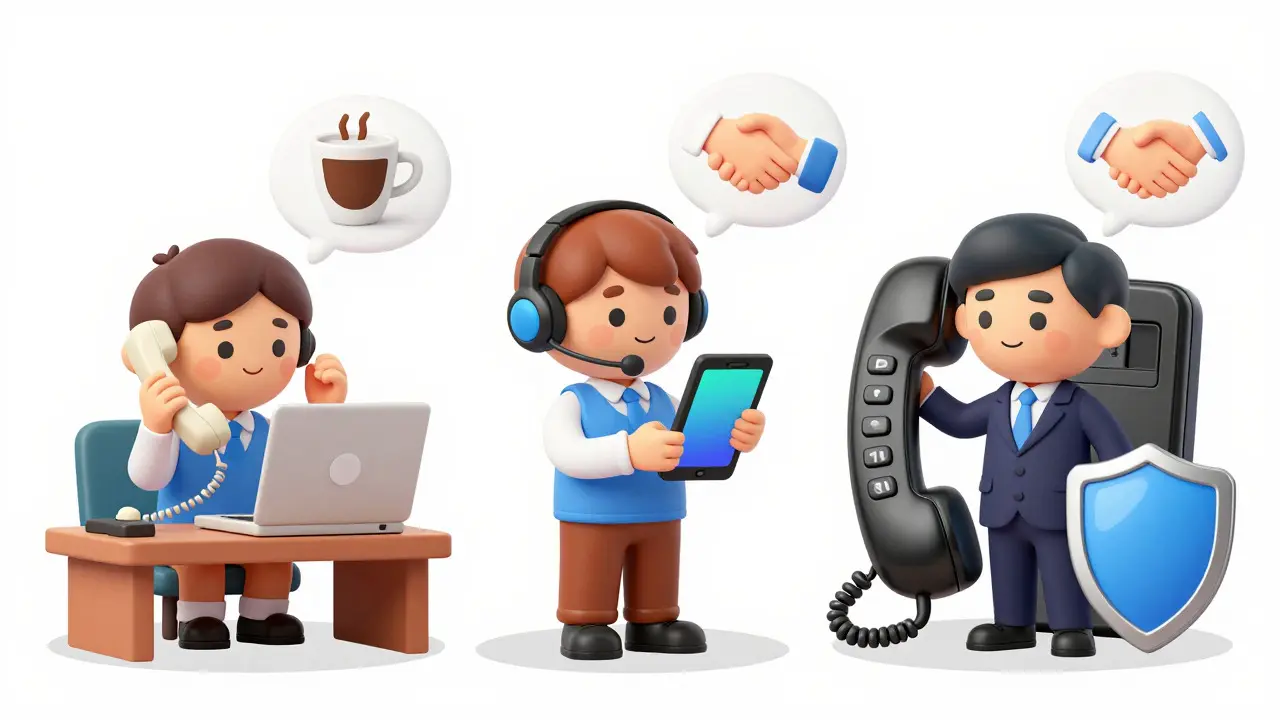
Headsets, Adapters, and Conference Gear
The phone itself isn’t the only hardware expense. How your team interacts with the system determines additional costs.
Headsets ($30 - $200)
If your employees are on calls frequently, a headset is non-negotiable for comfort and professionalism. Budget USB or Bluetooth headsets start around $30. However, for call centers or noisy open-plan offices, you need noise-canceling models with boom mics. Premium brands like Jabra or Plantronics (now part of Poly) charge $100 to $200 for these. The difference isn't just comfort; it's audio clarity. Cheap headsets often suffer from echo and background noise bleed, which frustrates customers.
Analog Telephone Adapters (ATA) ($20 - $50)
Do you have old-fashioned analog phones sitting in drawers? You don’t need to throw them away. An ATA allows you to plug those legacy devices into your VoIP network. This is a great stopgap solution if you’re transitioning slowly or have specialized fax machines that require analog lines. At $20 to $50 per adapter, it’s a cheap way to extend the life of existing hardware.
Conference Phones ($200 - $2,000)
Meeting rooms require different hardware. Small huddle rooms might get by with a compact conference speakerphone costing $200 to $400. Larger boardrooms need ceiling-mounted microphone arrays or premium tabletop units with room calibration software, pushing prices to $1,000 or even $2,000. Don’t skimp here; poor conference audio ruins meetings faster than anything else.
The Network Infrastructure Tax
Here is the hidden cost that trips up many businesses: your current network might not be ready for VoIP. Voice traffic is sensitive to latency and jitter. If your internet connection drops packets, your calls will sound robotic or cut out entirely.
To ensure call quality, you need a managed network switch with Quality of Service (QoS) capabilities. QoS prioritizes voice data packets over less critical traffic like email downloads or video streaming. Upgrading an outdated switch costs between $500 and $2,000 depending on the number of ports and performance specs. If you’re deploying VoIP across a large office, this is a one-time investment that pays off in reliability.
For most small businesses using cloud-based VoIP, this means checking with your IT provider. If you’re on a basic consumer-grade router, you might need to upgrade to a business-class gateway. This isn’t always necessary, but it’s a risk worth assessing before launch.
Cloud VoIP vs. On-Premises: The Hardware Showdown
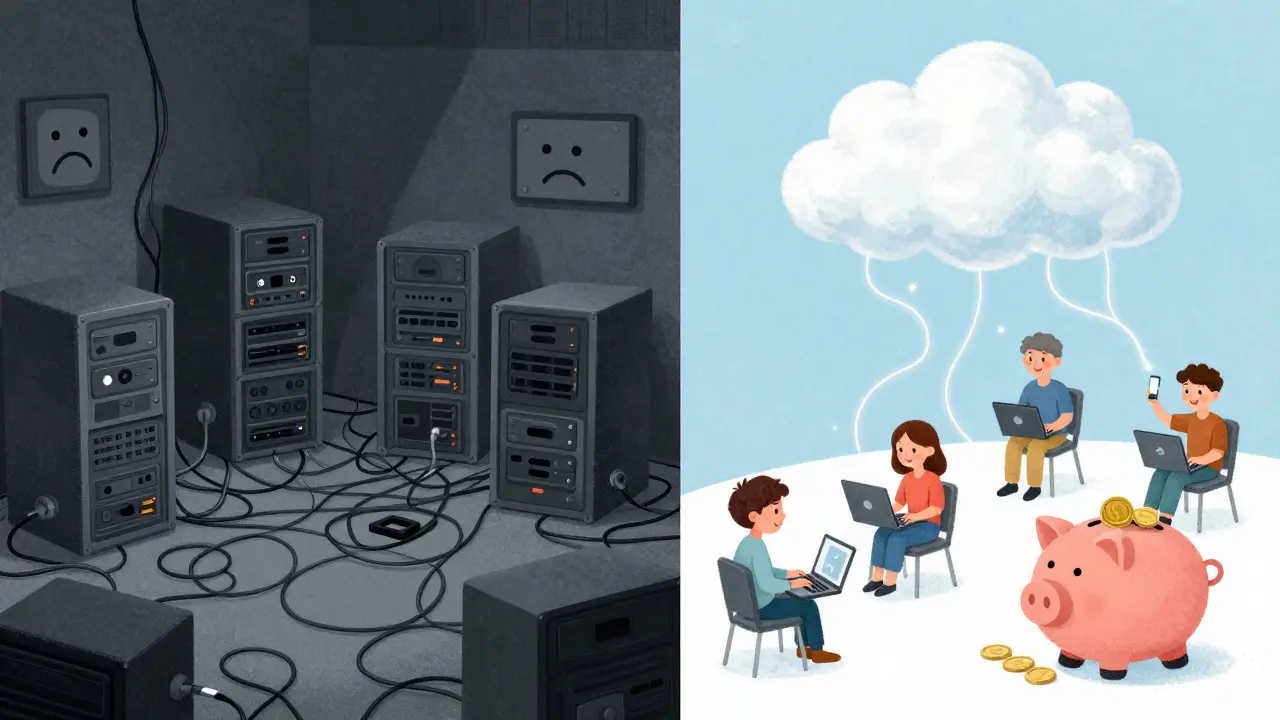
Understanding the total cost of ownership requires comparing VoIP against the traditional alternative: on-premises PBX systems. The hardware burden differs dramatically.
Traditional On-Premises PBX
In the old model, hardware was mandatory and expensive. You needed:
- Physical PBX servers ($1,000+)
- Telephony cards ($1,000+)
- Dedicated desk phones ($150+ each)
- Extensive cabling infrastructure
- Ongoing maintenance contracts
For a 20-user deployment, the upfront hardware and installation costs for an on-premises system can easily exceed $20,000. Over two years, including maintenance and upgrades, total costs often reach approximately $48,000.
Cloud-Based VoIP
With cloud VoIP, the server lives in the provider’s data center. Your hardware requirements drop significantly. For the same 20-user team, total costs over two years-including monthly service fees and optional hardware purchases-hover around $7,200. That’s a massive savings.
More importantly, cloud VoIP makes hardware optional. If your team already has smartphones and laptops, you can deploy the system using softphone apps. This means zero hardware cost for day one. You can add physical phones later as budget allows, scaling gradually rather than facing a huge capital expenditure upfront.
Setup Fees and Hidden Costs
Hardware isn’t the only line item. Be aware of these ancillary costs:
Installation and Setup Fees ($0 - $500)
Many cloud providers waive setup fees to attract new customers. However, if you choose a complex deployment with custom configurations or on-premises hybrid setups, expect to pay $50 to $500 per user or a flat project fee. Professional installation for larger deployments can span $500 to $2,000.
Number Porting ($5 - $30 per number)
Transferring your existing phone numbers to your new VoIP provider is rarely free. Most providers charge a one-time fee of $5 to $30 per number. While minor, this adds up if you have dozens of lines.
Add-ons and Integrations ($5 - $20 per user/month)
Features like call recording, CRM integration, or AI-driven analytics are often sold as add-ons. These aren’t hardware costs, but they impact your total budget. Ensure you distinguish between base service fees and feature premiums when comparing providers.
Strategies to Minimize Hardware Expenses
You don’t have to buy a phone for every employee. Here’s how smart businesses optimize their spend:
- Adopt a BYOD (Bring Your Own Device) Model: Use softphone apps on employees’ existing smartphones and laptops. This eliminates dedicated phone purchases entirely for mobile or remote workers.
- Mixed Deployment: Buy physical IP phones only for roles that demand them-receptionists, executives, and call center agents. Let other staff use desktop apps.
- Bulk Purchasing: If you do need phones, buy in bulk. Ordering 20 mid-range units ($80-$150 each) results in an investment of $1,600 to $3,000. Many vendors offer volume discounts that aren’t advertised online.
- Rental Options: Some providers offer hardware rental bundles. This reduces upfront cash flow impact, though long-term ownership is usually cheaper.
By leveraging the flexibility of cloud VoIP, organizations can achieve rapid deployment with minimal hardware expense. This approach eliminates the traditional barriers to adoption, allowing small businesses to launch services immediately and scale hardware investments as operational needs evolve.
How much does a standard IP phone cost in 2026?
Standard IP phones typically range from $50 to $300 per unit. Budget models start at $50-$80, mid-range options with color screens and Bluetooth cost $100-$200, and enterprise-grade devices can exceed $300.
Do I need to buy physical phones for VoIP?
No, physical phones are optional. With cloud-based VoIP, you can use softphone applications on existing smartphones, tablets, or computers. This "softphone-only" approach eliminates hardware costs entirely for many users.
What are the best brands for IP phones?
The leading manufacturers are Poly (formerly Polycom), Cisco, and Yealink. Poly and Yealink are popular for mid-range business needs, while Cisco dominates the enterprise sector with high-security, feature-rich devices.
How much do VoIP headsets cost?
VoIP headsets range from $30 for basic USB models to $200 for premium noise-canceling wireless headsets designed for call centers or noisy environments.
Are there hidden costs with VoIP hardware?
Yes, potential hidden costs include network switch upgrades ($500-$2,000) for Quality of Service (QoS), installation fees ($50-$500), and number porting charges ($5-$30 per number). Always check if your current network supports VoIP traffic.
Is cloud VoIP cheaper than on-premises PBX hardware?
Significantly. For a 20-user setup over two years, cloud VoIP totals approximately $7,200, whereas on-premises PBX systems can cost around $48,000 due to mandatory servers, telephony cards, and extensive cabling.