Quick Summary
- NFT wash trading involves fake transactions between linked wallets to artificially inflate prices and volume.
- A key on-chain red flag is the "30-day repurchase rule": buying an NFT back from a connected party within 30 days of selling it.
- Look for statistical anomalies like rounded price digits, sudden volume spikes in obscure collections, and funds routed through mixers.
- Advanced detection requires knowledge graphs to map hidden wallet connections that simple rule-based systems miss.
- Wash trading is not just manipulation; it is often a precursor to money laundering and tax evasion schemes.
You bought that digital art piece because the marketplace showed it had sold five times in the last week. The price jumped 200% overnight. It looked like a hot trend. But what if those five sales were actually one person moving money from their left pocket to their right pocket? This is the dirty secret behind much of the Non-Fungible Token (NFT) market: wash trading. It creates a false sense of popularity and value, trapping unsuspecting investors who pay real money for assets with no organic demand.
Detecting this isn't about guessing anymore. With today's tools, you can look at the blockchain ledger-the permanent record of every transaction-and spot the lies. I’m going to walk you through the specific on-chain signals that separate legitimate hype from coordinated fraud.
The Anatomy of a Wash Trade
To catch a criminal, you first need to understand the crime. In traditional finance, wash trading is illegal. In the early days of NFTs, it was rampant. According to analyses by platforms like Binance, roughly 40% of NFT sales show signs of fraudulent activity. That number is staggering. It means nearly half of the "volume" you see on charts might be noise.
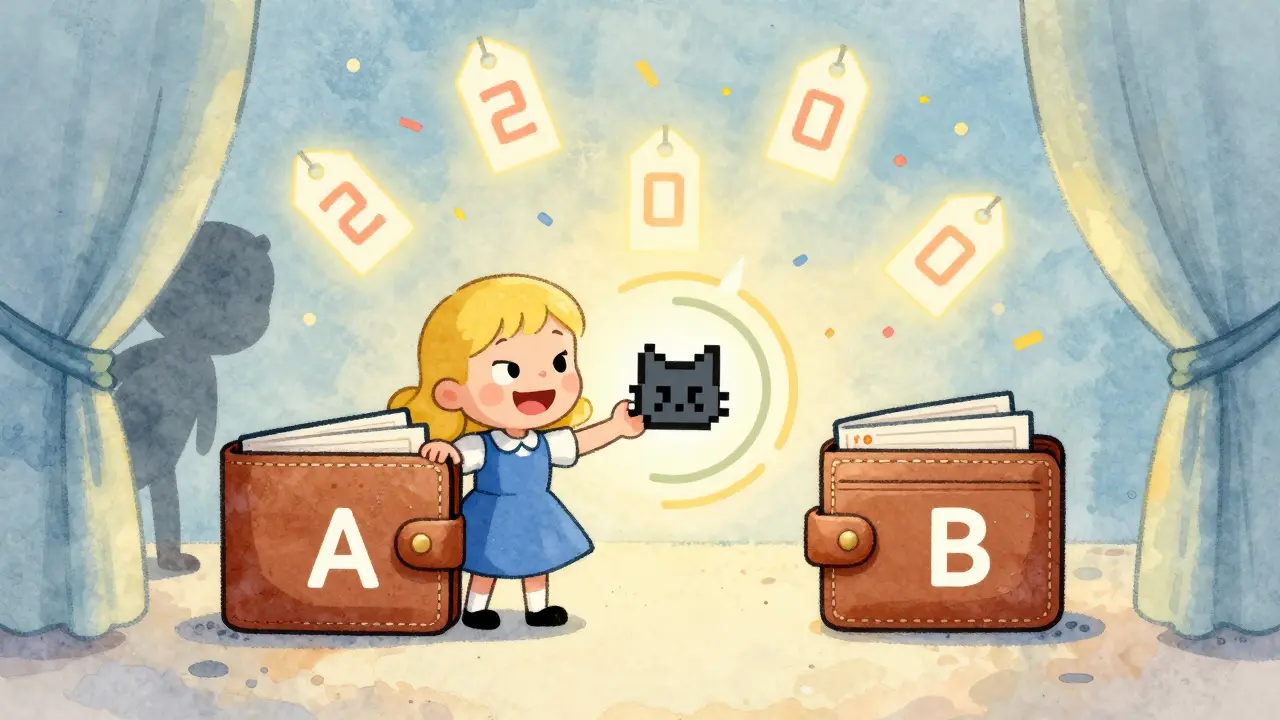
So, what exactly happens during a wash trade? Imagine Alice wants to make her boring collection of pixelated cats look valuable. She owns Wallet A and Wallet B. She lists Cat #1 on Wallet A for $500. Her friend Bob (or her own bot) buys it using Wallet B. Now, the marketplace shows a $500 sale. The "floor price" rises. Alice repeats this ten times, each time increasing the price slightly. To an outsider, this collection is booming. In reality, no new capital entered the ecosystem. No real investor took a risk. It’s theater, performed on the blockchain.
This manipulation serves two main goals. First, it attracts retail investors who FOMO (fear of missing out) into buying overpriced tokens. Second, and more dangerously, it helps launder money. By creating a paper trail of high-value transactions, bad actors can justify moving illicit funds through the NFT ecosystem, eventually cashing out via regulated exchanges.
The 30-Day Rule: Your First Line of Defense
If there is one golden rule for spotting wash trading, it comes from academic research published on arXiv. Researchers analyzed thousands of transactions and found a clear pattern distinguishing organic trading from manipulation. They call it the temporal threshold.
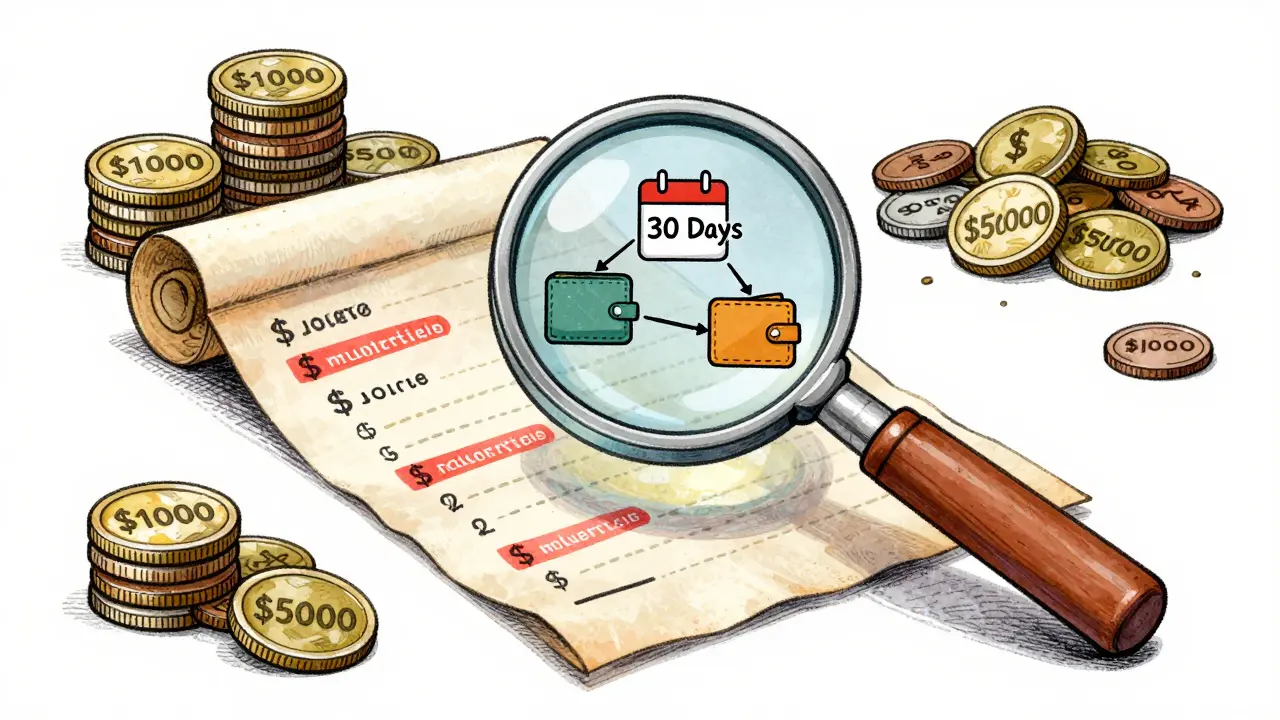
Here is how it works: If Wallet X sells an NFT to Wallet Y, and then Wallet X (or a wallet clearly linked to X) buys that same NFT back within 30 days, it is highly likely a wash trade. Legitimate collectors rarely flip the exact same asset back to the original seller in such a short window unless they made a mistake or are coordinating.
You don’t need a PhD to use this. When looking at a collection’s history:
- Pick a recent sale.
- Check the buyer’s address.
- Check if that address sold the token again within 30 days.
- Check if the original seller bought it back.
If you see this loop repeating across multiple tokens in a collection, you are looking at a manipulated market. The 30-day window is statistically significant because it captures the rapid churn required to keep prices artificially high before the scheme collapses.
Statistical Anomalies: The Math Behind the Lie
Fraudsters are human, and humans have habits. One habit is laziness. Another is predictability. Advanced detection systems, including those discussed in KDD 2023 papers, look for mathematical irregularities that natural markets don’t produce.
Benford’s Law is a statistical principle stating that in many naturally occurring datasets, the leading digit is likely to be small (1 appears about 30% of the time). In organic NFT pricing, you’ll see a messy distribution of prices: $1.23, $0.89, $4.55. In wash trading, prices often follow rigid patterns. Look for "size rounding." Do you see dozens of sales at exactly $1,000, $5,000, or $10,000? Or do prices jump in perfect increments? These round numbers suggest pre-set scripts rather than negotiated deals between independent parties.
Another red flag is the "tail distribution." In a healthy market, most trades happen near the average price, with a few outliers. In a wash-traded collection, you might see a bizarre concentration of trades at extremely high values with zero intermediate steps. It looks like a staircase built overnight, not a gradual climb.
Wallet Clustering and Hidden Connections
The biggest challenge in detecting wash trading is that bad actors don’t use just two wallets. They use hundreds. They create a web of addresses to hide their tracks. This is where simple rule-based checks fail, and advanced blockchain analysis shines.
Firms like Chainalysis and specialized AI platforms use knowledge graphs to map these networks. Think of a knowledge graph as a spiderweb. Each node is a wallet. Each line is a transaction. If Wallet A sends ETH to Wallet B, and Wallet B buys an NFT from Wallet C, and Wallet C sends fees to Wallet D... the system starts to see clusters.
Here are the specific on-chain behaviors that indicate a cluster:
- Common Change Addresses: When multiple wallets receive change from the same transaction source, they are likely controlled by the same entity.
- Synchronized Activity: Do several wallets buy and sell at the exact same second? Bots operate in sync; humans do not.
- Fund Tracing: Does all the money used to buy the NFTs originate from a single deposit or a known mixer?
If you can trace the funds back to a single origin point, even if they passed through five different wallets, it’s a wash trade network. Tools like DataWalk emphasize that you must look at the *network*, not just individual transactions. Isolated trades look normal. Connected trades tell the truth.
High-Risk Red Flags: Beyond the Blockchain
While on-chain data is king, certain off-chain and contextual clues amplify the risk. Regulatory bodies like the AML UAE task force have identified specific scenarios that should trigger immediate caution.
| Red Flag Category | Specific Indicator | Risk Level |
|---|---|---|
| Volume & Price | Sudden spike in volume for an obscure collection | High |
| Transaction Pattern | Reacquisition of tokens from the same party at lower prices | Critical |
| Source of Funds | Funds routed through cryptocurrency mixers/tumblers | Critical |
| Community Presence | Unverified social media with no real followers | Medium |
| Minting Details | Mismatch between minting address and contract address | High |
Pay close attention to the "mixer" signal. Cryptocurrency mixers are services designed to obscure the origin of funds. If you see large volumes of NFT trading funded by wallets that recently received mixed coins, that is a massive warning sign. It suggests the trader is trying to hide where the money came from, which is a hallmark of money laundering.
Also, watch for the "$100,000 Threshold." Regulatory guidelines often flag newly minted or secondary market tokens sold for over $100,000 without an established community or brand reputation. If a random JPEG sells for six figures instantly, ask yourself: Who is the buyer? Are they a known collector, or a fresh wallet with no history? If it’s the latter, run.
The Pump-and-Dump Cycle
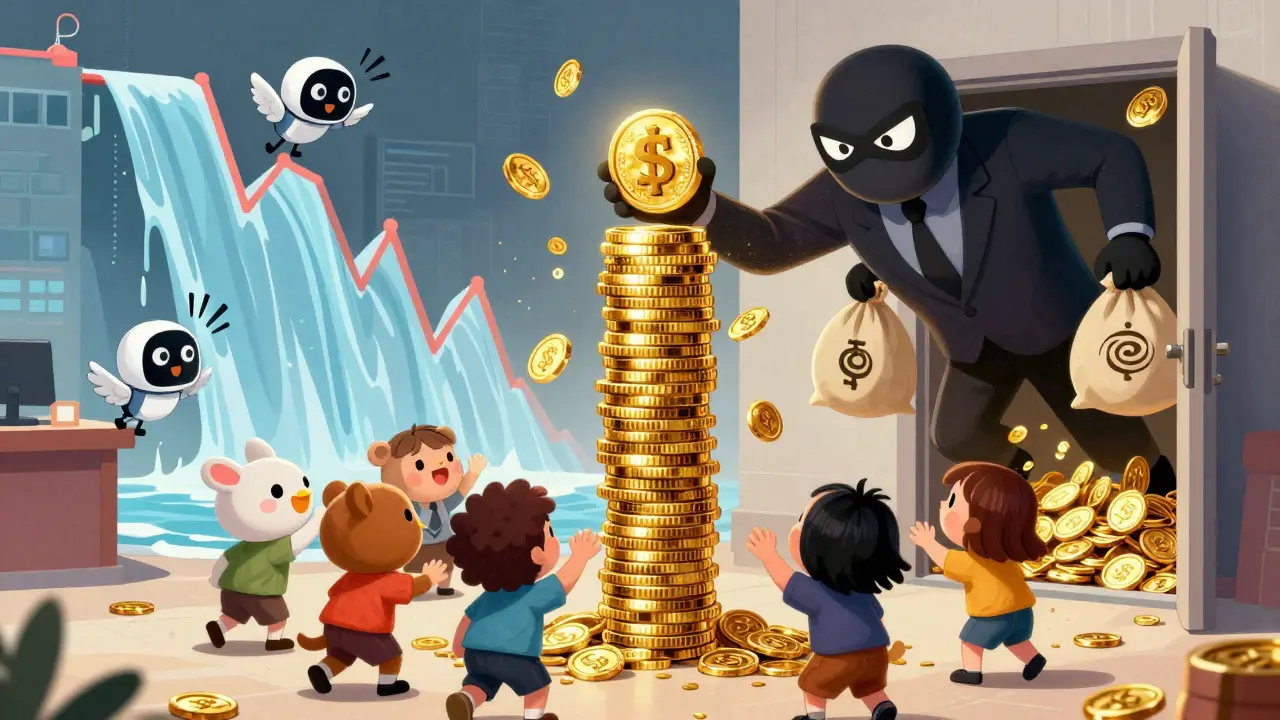
Wash trading doesn’t exist in a vacuum. It is usually the engine for a pump-and-dump scheme. Here is the typical lifecycle:
- Accumulation: The manipulator buys up cheap NFTs from a new collection.
- Wash Phase: They trade these NFTs between their own wallets, driving up the floor price and creating fake volume.
- Hype Generation: They use bots to post about the "hot" collection on social media, citing the inflated stats.
- The Dump: Retail investors buy in at the peak. The manipulator sells their entire inventory to these real buyers.
- Crash: The wash trading stops. Volume dries up. Prices collapse. Retail holders are left with worthless assets.
The danger here is timing. By the time you see the high volume, the dump may already be starting. That’s why looking at the *source* of the volume (connected wallets vs. diverse buyers) is more important than the volume itself.
Tools for Detection
You don’t need to build your own AI to spot these issues. Several tools can help you perform basic due diligence.
- Etherscan/BscScan: Use these block explorers to view the full transaction history of a wallet. Look for repeated interactions between the same addresses.
- NFT Marketplaces’ Filters: Some platforms now label suspicious activity. Check if a collection is flagged for "abnormal trading.""
- Third-Party Analytics: Platforms like Rango Exchange or specialized forensic tools offer insights into liquidity patterns. Look for "unrealistic price velocities"-prices changing too fast for organic demand.
Remember, no tool is perfect. Legitimate traders also flip NFTs quickly. The key is statistical improbability. One quick flip is fine. Ten quick flips between the same three wallets is fraud.
Conclusion: Trust the Ledger, Not the Hype
The NFT market has matured, but the scams haven’t disappeared-they’ve just become more sophisticated. Wash trading remains a pervasive threat, distorting prices and enabling financial crimes. However, the blockchain is transparent. Every lie leaves a trace.
By focusing on the 30-day repurchase rule, checking for statistical anomalies in pricing, and mapping wallet connections, you can protect yourself. Don’t fall for the shiny numbers on the homepage. Dig into the on-chain data. If the math doesn’t make sense, the investment probably won’t either.
What is the 30-day rule in NFT wash trading?
The 30-day rule is a detection heuristic based on academic research. It states that if a wallet sells an NFT and then repurchases the same token from a connected party within 30 days, it is likely a wash trade. This timeframe distinguishes coordinated manipulation from normal secondary market flipping.
How do mixers relate to NFT wash trading?
Mixers are services that obscure the origin of cryptocurrency funds. When NFT purchases are funded by wallets that recently received mixed coins, it indicates an attempt to hide illicit fund sources. This is a critical red flag for money laundering associated with wash trading.
Can I detect wash trading manually?
Yes, to a limited extent. You can use block explorers like Etherscan to check if the same wallets are repeatedly buying and selling tokens within a short period. Look for synchronized timestamps and round-number prices. However, complex networks require AI-driven knowledge graphs for accurate detection.
Why is wash trading considered money laundering?
Wash trading creates artificial high valuations for NFTs. Criminals can then sell these overvalued assets to third parties or cash them out on exchanges, effectively converting illicit funds into seemingly legitimate proceeds backed by fabricated market documentation.
What are statistical anomalies in NFT pricing?
Statistical anomalies include violations of Benford’s Law, such as excessive use of round numbers (e.g., $1,000, $5,000) or uniform price increments. Organic markets have messy, varied pricing. Wash trading often uses scripted, predictable price jumps that stand out in data analysis.