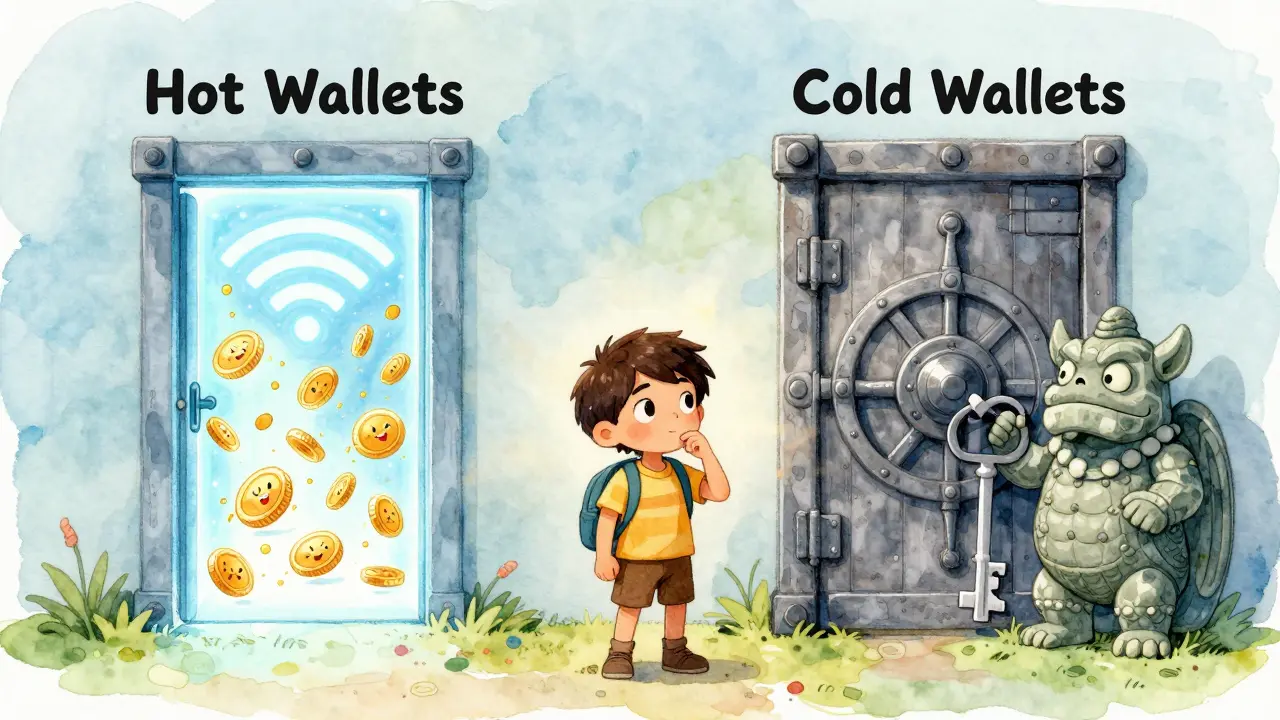
Imagine walking into a bank vault. You hand over your keys, and the bank promises to keep your money safe. Now imagine holding those keys yourself. That is the fundamental shift cryptocurrency wallets are digital tools that store public and private keys, enabling users to interact with blockchain networks for sending, receiving, and managing cryptocurrencies. In 2026, this isn't just about storing Bitcoin anymore. It's about accessing decentralized finance (DeFi), managing non-fungible tokens (NFTs), and navigating a $1.8 trillion market where losing your access means losing everything forever.
You might be overwhelmed by the sheer number of options. There are over 500 wallet solutions on the market today. Some cost nothing but require you to trust a company with your data. Others cost hundreds of dollars but give you total control. The wrong choice can lead to frozen funds or worse-total loss due to phishing or poor security practices. The right choice gives you peace of mind and seamless access to your digital assets.
Understanding the Core Types: Hot vs. Cold Storage
Before you look at specific brands, you need to understand the two main categories: hot wallets and cold wallets. This distinction determines how secure your assets are versus how convenient they are to use.
Hot wallets, also known as software wallets, are connected to the internet. They include mobile apps, desktop applications, and browser extensions. Because they are online, they are faster and easier to use for daily transactions. However, being connected to the internet makes them more vulnerable to hacking attempts. According to Koinly's January 2026 market analysis, non-custodial hot wallets represent 68% of active user wallets because beginners prefer their ease of use.
Cold wallets, or hardware wallets, are physical devices that stay offline. They sign transactions internally without exposing your private keys to the internet. This makes them significantly more secure. If you are holding significant value-say, more than $5,000-a cold wallet is not just a recommendation; it is a necessity. As of early 2026, there have been zero reported breaches of properly used hardware wallets since 2022, according to Bitcoin Magazine's security report.
Top Hardware Wallets for Maximum Security
If security is your top priority, you are looking at hardware wallets. These devices protect your private keys using secure elements and air-gapped transaction signing. Here are the leading contenders in 2026.
| Wallet Model | Price (USD) | Security Rating | Key Features | Best For |
|---|---|---|---|---|
| Ledger Nano Flex is a premium hardware wallet featuring an E Ink display and CC EAL6+ secure element chip | $249 | AAA (CER) | Supports 5,500+ coins, E Ink screen, Bluetooth pairing | High-value holders seeking premium UI |
| Trezor Model One is an entry-level open-source hardware wallet known for its transparency and community support | $79 | A (CertiK Skynet) | Open-source firmware, basic button interface, wide coin support | Budget-conscious users prioritizing open-source code |
| Ledger Vault | $5,000/year | Institutional Grade | Multi-sig governance, enterprise support, high throughput | Businesses and institutional investors |
The Ledger Nano Flex stands out in 2026 for its user experience. With its E Ink display, you can verify transaction details directly on the device, reducing the risk of malware altering amounts on your computer screen. It supports over 5,500 coins and tokens, making it versatile for diverse portfolios. However, some users complain about the complexity of the companion app, Ledger Live, which can take seven or more steps for simple transactions.
On the other hand, Trezor Model One appeals to purists who value open-source transparency. Its code is publicly auditable, meaning the community can spot vulnerabilities quickly. While it lacks the sleek display of the Ledger, its lower price point and robust security make it a solid choice for beginners entering self-custody.
Best Software Wallets for Daily Use and DeFi
For daily spending, interacting with DeFi protocols, or buying NFTs, you need speed and connectivity. Software wallets excel here. They connect directly to decentralized applications (DApps) via browsers or mobile interfaces.
MetaMask is a popular browser extension and mobile wallet that serves as a gateway to Ethereum-based DApps. It connects to 98% of Ethereum-based DApps, making it the default choice for Web3 enthusiasts. However, its convenience comes with risks. MetaMask scored a CCC in CER Security Ratings due to browser extension vulnerabilities. Users often fall victim to "transaction approval fatigue," where they blindly approve malicious contracts. Chainalysis reports that 27% of phishing-related losses in 2026 involved MetaMask users falling for fake transaction prompts.
Exodus is a desktop and mobile wallet known for its intuitive design, integrated exchange, and staking capabilities. It supports over 50 blockchain networks and offers an AAA security rating from CER. Exodus is particularly strong for beginners who want a polished interface. It allows you to stake 150+ assets with APYs ranging from 3.2% to 8.7%. However, experts note that its lack of third-party audits remains a concern for some security-conscious users.
For mobile-first users, Zengo is a seedless mobile wallet using Multi-Party Computation (MPC) technology and biometric authentication. Zengo eliminates the need for a seed phrase, which is a major pain point for beginners. Instead, it uses 3D FaceLock biometrics and splits your key into shards stored across different locations. This made it Money.com's 'Best for Beginners' in January 2026. However, it only supports 15 blockchain networks compared to Trust Wallet's 100+, limiting its versatility for multi-chain portfolios.
Specialized Wallets for Specific Chains
Sometimes, a general-purpose wallet isn't enough. If you are deeply invested in a specific ecosystem, specialized wallets offer better features and security tailored to that chain.
Sparrow Wallet is a desktop-only wallet designed specifically for Bitcoin, offering advanced UTXO management and native Tor integration. It is the go-to tool for Bitcoin specialists who care about privacy and granular control over their unspent transaction outputs (UTXOs). Sparrow does not support other chains, so if you hold Ethereum or Solana, you will need a separate wallet. Its fee estimation visualizer helps avoid miscalculations, a common issue affecting 34% of new users.
Trust Wallet is a mobile wallet originally built for Binance, now supporting over 100 blockchains and offering one-tap DApp access. It is highly rated for its ease of use and broad compatibility. With a 4.7-star average on app stores, users praise its seamless integration with decentralized exchanges. However, cross-chain bridge errors remain a risk, accounting for 22% of lost assets in 2025 when users accidentally send funds to unsupported networks.
Security Metrics and What They Mean for You
Choosing a wallet isn't just about features; it's about trust. In 2026, several metrics help evaluate wallet security:
- CER Security Rating: A standardized score where AAA is the highest. Exodus holds an AAA, while MetaMask has a CCC.
- CertiK Skynet Score: Ranges from 0-100. Scores above 80 indicate strong security postures. Exodus scores 85.64, and Zengo scores 85.24.
- Open Source Status: Wallets like Trezor allow anyone to audit their code, reducing hidden backdoors. Closed-source wallets rely on internal teams, which can be risky if mismanaged.
- Seed Phrase Management: Traditional wallets use a 12-24 word seed phrase. Losing it means losing your funds. Newer MPC wallets like Zengo eliminate this risk but introduce dependency on biometric data servers.
Dr. Maria Chen, a blockchain security researcher at MIT, noted in a 2026 expert roundtable that while MPC wallets reduce seed phrase risks, they create new attack vectors through biometric data storage. Always weigh these trade-offs based on your technical comfort level.

Practical Steps to Set Up Your Wallet Safely
Once you've chosen a wallet, setup is critical. Here’s how to do it right:
- Buy from Official Sources Only: Never buy hardware wallets from Amazon or eBay. Counterfeit devices are common. Order directly from Ledger, Trezor, or authorized retailers.
- Verify Your Device: When you receive your hardware wallet, check the serial number against the official website. Ensure the packaging is sealed and tamper-evident.
- Generate Keys Offline: During setup, ensure your device generates its own seed phrase. Do not enter a pre-existing phrase unless you are restoring an old wallet.
- Back Up Your Seed Phrase Physically: Write down your 12-24 words on paper or metal. Never store it digitally, in cloud notes, or take a photo of it. CipherTrace data shows $127 million was lost in Q4 2025 alone due to poor seed phrase management.
- Test with Small Amounts: Before moving large sums, send a small test transaction. Verify it arrives correctly. This ensures you understand the process and haven't made configuration errors.
- Keep Firmware Updated: Regular updates patch vulnerabilities. For example, Ledger released firmware 2.5.1 in January 2026 to add Bitcoin Lightning Network support and fix minor bugs.
Future Trends: What to Expect in 2027 and Beyond
The wallet landscape is evolving rapidly. Gartner predicts that 45% of wallets will incorporate AI-powered security by 2027. Imagine a wallet that flags suspicious contract interactions before you approve them. MetaMask is already working on "Smart Transaction Review" for Q2 2026, which aims to reduce phishing losses by 60%.
Another trend is the rise of seedless wallets. With MPC technology now in 31% of new mobile wallets, the industry is moving away from complex seed phrases toward biometric recovery. Zengo's recent launch of "Family Accounts" allows shared custody using 3D FaceLock, making inheritance and joint ownership easier.
However, regulatory pressures are increasing. The EU's MiCA framework requires KYC for custodial wallets above €1,000, affecting 37% of European users. Non-custodial wallets remain exempt, reinforcing the importance of choosing self-custody solutions if privacy is a concern.
Is a hardware wallet necessary if I only hold small amounts?
If you hold less than $1,000, a reputable software wallet like Exodus or Trust Wallet may suffice due to its convenience and lower cost. However, if you plan to increase your holdings or hold long-term, investing in a hardware wallet like the Trezor Model One ($79) provides significantly better security against online threats.
What happens if I lose my hardware wallet device?
Your funds are not lost. As long as you have your backup seed phrase (the 12-24 words generated during setup), you can restore your wallet on a new device. The seed phrase is the true key to your assets, not the physical device itself.
Are MPC wallets like Zengo safer than traditional wallets?
MPC wallets eliminate the risk of losing a seed phrase, which is a major advantage for beginners. However, they rely on biometric data and server infrastructure, introducing different risks. Traditional hardware wallets with proper seed phrase management remain the gold standard for maximum security and decentralization.
Can I use one wallet for all cryptocurrencies?
Most modern wallets support multiple chains. Ledger Nano Flex supports over 5,500 coins, and Trust Wallet supports 100+ blockchains. However, for specialized needs like Bitcoin privacy, dedicated wallets like Sparrow offer superior features that general wallets lack.
How do I avoid phishing scams when using a crypto wallet?
Always double-check URLs, never click links in unsolicited messages, and verify transaction details on your hardware device's screen before approving. Enable two-factor authentication where possible and consider using wallets with AI-powered scam detection features emerging in 2026.