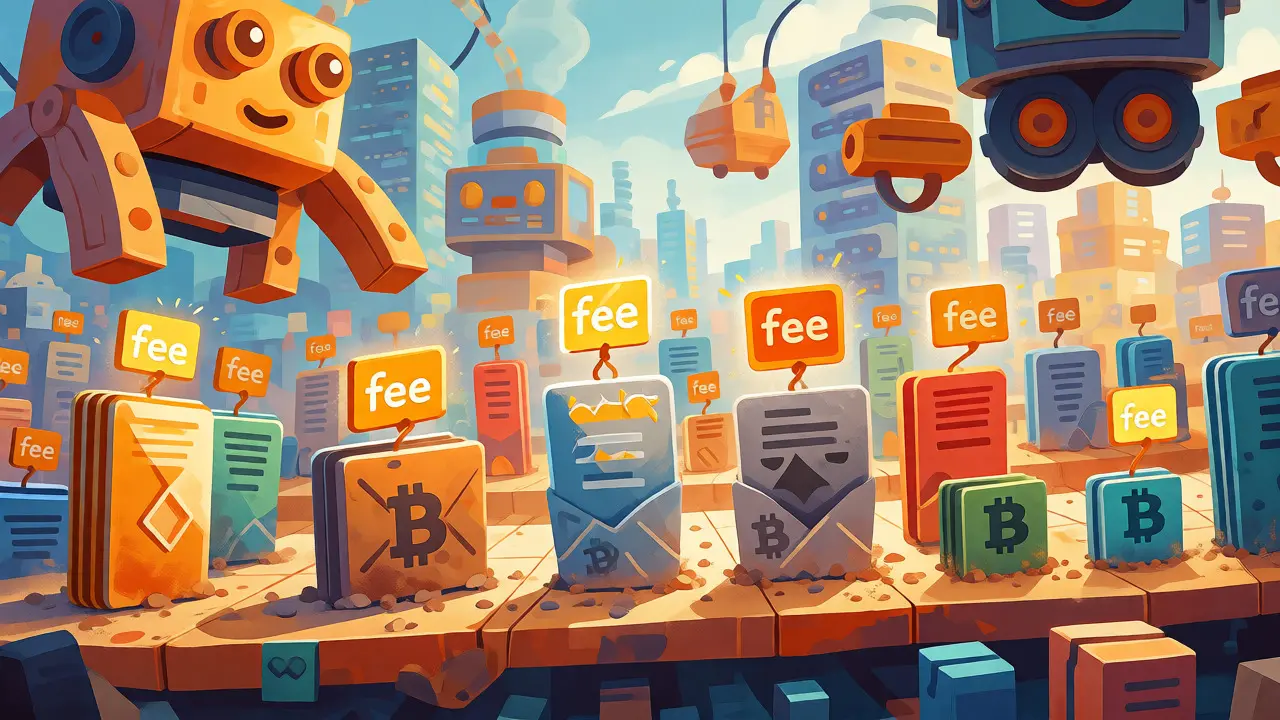
You might think that as a miner, your paycheck comes solely from the new Bitcoin created with every block. That was true in the early days, but the landscape has shifted. Today, Bitcoin is a decentralized digital currency that relies on proof-of-work consensus to secure its network and issue new coins miners earn money from two distinct sources: the fixed block subsidy and the variable transaction fees collected from users competing for space in each block. While the subsidy remains the dominant income source right now, the fee market is becoming increasingly critical as halvings continue to shrink the reward.
The Mechanics of the Mempool and Fee Competition
To understand where the money comes from, you first need to grasp what the mempool actually is. It isn’t a single global database. Instead, it’s a local collection of valid, unconfirmed transactions stored on each full node running software like Bitcoin Core is the reference implementation of the Bitcoin protocol, maintained by a community of developers. When you broadcast a transaction, nodes check it against consensus rules. If it passes, they hold it in their mempool and relay it to peers. Because each node has different policies, memory limits, and connection speeds, there is no single "correct" view of the mempool. This fragmentation means fee estimates can vary slightly depending on which node you ask.
Fees aren't paid in flat rates; they are calculated per unit of data. The standard metric is satoshis per virtual byte (sat/vB). A transaction paying 50,000 satoshis for 500 virtual bytes costs 100 sat/vB. Miners have limited space in each block-specifically, a maximum weight of 4,000,000 weight units introduced by Segregated Witness (SegWit). Because space is scarce, miners don't just pick transactions with the highest total fee. They prioritize those offering the best return per byte. If your transaction pays a low rate, it sits in the backlog. If the mempool gets congested, you either wait longer or pay more to jump the queue.
| Income Source | Determinant | Volatility | Current Impact (2026) |
|---|---|---|---|
| Block Subsidy | Protocol schedule (halving every 210,000 blocks) | Low (Predictable) | ~99% of gross BTC revenue |
| Transaction Fees | User demand for block space | High (Cyclical spikes) | <1% of gross BTC revenue |
How Miners Select Transactions for Maximum Profit
Miners don't randomly grab transactions from the mempool. They use sophisticated algorithms to build a block template that maximizes profit. Bitcoin Core uses a greedy selection process that sorts transactions by their ancestor score. This score considers not just the transaction itself, but also any child transactions dependent on it. This is crucial because of techniques like Child-Pays-for-Parent (CPFP), where a user sends a low-fee parent transaction followed by a high-fee child. The miner sees the combined package value and includes both if the average fee rate is competitive.
Another tool miners leverage is Replace-by-Fee (RBF). This allows senders to broadcast a replacement transaction with a higher fee to speed up confirmation. For miners, this creates dynamic competition. If a slot opens up or a better offer arrives before the block is sealed, the miner can swap out lower-value transactions for higher-paying ones. Recent updates to Bitcoin Core, specifically version 31.0 released in October 2026, introduced cluster-mempool designs. These changes improve how nodes handle complex transaction packages, allowing for more efficient eviction and validation. However, these are software improvements; they don't change the fundamental economic reality that miners must compete for the most valuable data chunks.

The Reality of Mining Revenue in 2026
Let's look at the hard numbers. As of late 2026, the block subsidy stands at 3.125 BTC following the April 2024 halving. In a typical month, transaction fees might add up to roughly 88.6 BTC across all mined blocks, while newly issued coins contribute nearly 13,884 BTC. That means fees account for less than 1% of the total BTC mined. For a solo miner or a pool, this distinction matters. If you mine a block containing 0.02 BTC in fees, your total reward is 3.145 BTC. The fee component is negligible compared to the subsidy.
However, this doesn't mean fees are irrelevant. Their impact is asymmetric. During quiet periods, fees barely move the needle. But during congestion events-like the launch of the Runes protocol or Ordinals hype cycles-fees can spike dramatically. In April 2024, daily fees exceeded 1,200 BTC, temporarily making fees a significant portion of miner income. Yet, these spikes are volatile. By 2025, average fees had collapsed back down, proving that relying on fee revenue as a stable income stream is risky. Miners must budget based on the predictable subsidy, treating fees as a bonus rather than a baseline.

Long-Term Security and the Declining Subsidy
The Bitcoin protocol is designed so that the subsidy halves approximately every four years. The next halving is expected around 2028, dropping the reward to 1.5625 BTC. Eventually, the subsidy will approach zero, leaving transaction fees as the sole incentive for miners to secure the network. This raises a critical question: Will the fee market grow large enough to replace the subsidy?
Economists and developers debate this fiercely. Some argue that without substantial on-chain activity, fees won't generate enough revenue to keep miners online, potentially lowering the network's security hash rate. Others point to emerging use cases, such as token settlements and data storage via protocols like Ordinals, which could drive sustained demand for block space. A 2025 study suggested that optimizing for both subsidy and fees lowers the threshold for profitable selfish mining attacks, indicating that a healthy fee market is vital for long-term stability. If fees remain below 1% of revenue for too long, high-cost miners may shut down, leading to centralization risks.
Practical Implications for Users and Miners
For users, understanding this system helps save money. You don't always need to pay top-tier fees. Checking multiple fee estimators and using SegWit or Taproot addresses can reduce transaction size, lowering costs. If you're in a hurry, RBF gives you the option to bump fees later if your transaction gets stuck. For miners, success depends on infrastructure. Fast propagation times ensure you see new transactions before competitors. Efficient template construction software ensures you capture the highest-fee packages. Pools mitigate variance by distributing rewards based on contributed work, but they charge fees and control block assembly, which can influence individual miner returns.
Ultimately, the mempool acts as an auction house for block space. Miners sell this space to the highest bidders. While the block subsidy currently dominates earnings, the fee market dictates efficiency and marginal profitability. As the subsidy shrinks, the ability to capture fee revenue becomes a key competitive advantage. Miners who optimize their software and hardware to react quickly to mempool changes will thrive, while those who rely solely on raw hashing power may struggle as the economics evolve.
What is the current block subsidy for Bitcoin miners?
As of October 2026, the block subsidy is 3.125 BTC. This amount was reduced from 6.25 BTC during the fourth halving event at block 840,000 in April 2024. The subsidy is scheduled to halve again to 1.5625 BTC around 2028.
Do transaction fees make up a large part of mining revenue?
Currently, transaction fees constitute less than 1% of total miner revenue in BTC terms. The vast majority of income comes from the block subsidy. However, fees can spike significantly during periods of high network congestion, such as protocol launches or meme-coin trends.
How do miners decide which transactions to include in a block?
Miners typically select transactions based on the fee rate measured in satoshis per virtual byte (sat/vB). They aim to maximize the total fees within the block's weight limit. Advanced strategies involve evaluating transaction packages, including parents and children, to capture higher effective fee rates through methods like Child-Pays-for-Parent (CPFP).
Is the Bitcoin mempool the same for everyone?
No, the mempool is not globally identical. Each full node maintains its own copy based on local policies, memory limits, and network connectivity. Consequently, fee estimates and transaction visibility can vary between nodes, though major public estimators try to aggregate data for a broader view.
What happens to miner revenue when the subsidy ends?
When the subsidy eventually reaches zero, transaction fees will become the only source of miner income. This transition requires sufficient on-chain demand to sustain mining operations. If fee revenue is insufficient, miners may exit the network, potentially reducing the overall security hash rate unless transaction volume increases significantly.