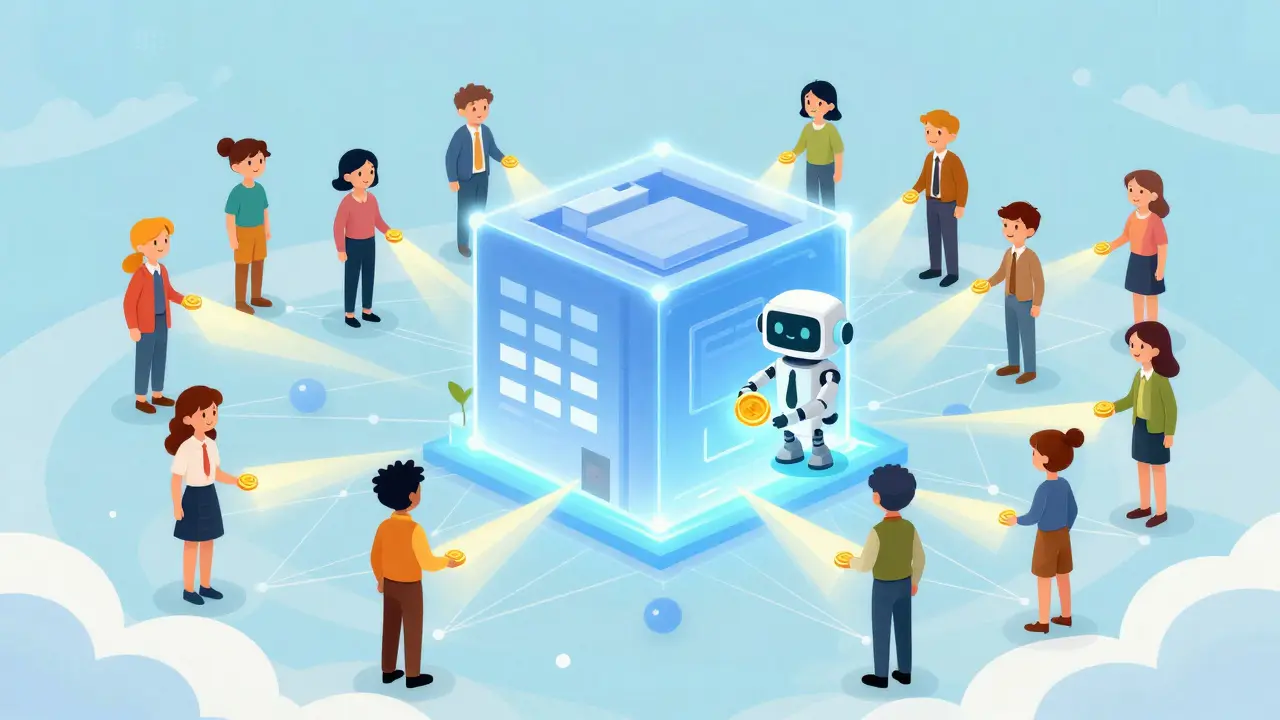
Imagine a job where your boss isn't a person in an office, but code on a blockchain. You don't punch a clock; you complete tasks that trigger automatic payments from a shared treasury. This isn't science fiction anymore. It is the reality for thousands of workers joining Decentralized Autonomous Organizations (DAOs), internet-native collectives that are fundamentally rewriting how we define employment.
For years, "remote work" just meant logging into Zoom from home instead of a cubicle. The hierarchy remained. The paychecks came from a central bank account controlled by executives. But DAOs strip away the middle management layer entirely. They replace corporate ladders with flat, transparent networks where decisions are made through token-based voting and execution happens via self-enforcing smart contracts. As we move deeper into 2026, this model is shifting from a niche experiment for crypto enthusiasts to a viable career path for developers, designers, marketers, and community managers worldwide.
What Actually Is a DAO?
To understand why DAOs matter for your career, you first need to strip away the jargon. A DAO is an organization defined by rules encoded as computer programs (smart contracts) that run on a blockchain, operating without centralized leadership. Think of it as a digital co-op. Everyone who holds a governance token has a say in how the group's funds are spent and what projects get built.
Unlike a traditional company where information flows down from the CEO, a DAO operates with radical transparency. Every transaction, every proposal, and every vote is recorded on the public ledger. If you want to know exactly how much money was paid to a developer or why a marketing budget was approved, you can look it up yourself. There are no hidden boardroom deals. This transparency builds trust in a way that email chains and closed-door meetings never could.
The technology behind this relies on Ethereum and other blockchains that support smart contracts-self-executing agreements with the terms directly written into code. When a condition is met (like a project milestone being verified), the contract automatically releases payment. No accounts payable department needed. No waiting three weeks for a check to clear. This automation reduces administrative overhead and allows teams to focus purely on output.
The Shift From "Work for Hire" to "Contribute and Earn"
In a traditional job, you trade time for money. In many DAOs, the model is closer to "contribute and earn." This shift changes the psychology of work. You aren't just executing orders; you are building equity in a community you believe in. Contributors often engage in activities beyond their core role-networking, mentoring newcomers, or improving documentation-and still receive compensation if the community votes to reward those efforts.
This structure appeals to a generation of workers demanding more autonomy. According to industry analysis from The Adecco Group, people are increasingly seeking power over their own professional lives. DAOs offer a mechanism for this by distributing decision-making authority. Instead of asking a manager for permission to try a new approach, you draft a proposal, present it to the community, and let the tokens decide. If it passes, you execute it. If it fails, you learn and iterate. It’s meritocratic in theory, though as we’ll see, practice can be messier.
The borderless nature of these organizations also unlocks global talent pools. A team might consist of a designer in Berlin, a smart contract auditor in Singapore, and a content writer in Brazil. Because the work is asynchronous and managed through digital tools like Discord and GitHub, time zones become less of a barrier. Kinsky of The Adecco Group noted that this creates a 24-hour work cycle where progress never stops, simply because someone somewhere is always online.

How Governance Actually Works (And Where It Breaks)
Governance is the heartbeat of a DAO. But how do you make decisions when you have hundreds of members scattered across the globe? Most DAOs use a token-weighted voting system. If you hold 1% of the total tokens, you have 1% of the voting power. This ensures that those with significant skin in the game have a proportional voice.
However, this model has a major flaw: plutocracy. Those with the most tokens can dominate decisions, potentially sidelining smaller contributors who do the day-to-day work. To combat this, newer DAO platforms in 2026 are introducing hybrid models. These systems blend token voting with real-world identity checks or reputation scores based on past contributions. Platforms now feature AI-enhanced analytics that detect voter fatigue and measure proposal health, helping communities avoid deadlocks.
Consider the case of MakerDAO, one of the largest and most influential DAOs. In Q2 2023, a critical proposal stalled for 47 days because token holders couldn’t reach consensus. Development halted. Funds were locked. This highlights the friction inherent in decentralized decision-making. While democracy sounds great, it can be slow. For urgent operational issues, many DAOs now delegate authority to specialized sub-groups or multi-signature wallets, balancing decentralization with efficiency.
| Feature | Traditional Corporation | Decentralized Autonomous Organization (DAO) |
|---|---|---|
| Decision Making | Top-down (CEO/Board) | Distributed (Token Voting/Consensus) |
| Transparency | Private financials, gated info | Public ledger, open transactions |
| Employment Status | Employee/W-2 or Contractor | Contributor/Bounty Hunter |
| Payout Mechanism | Bank transfer, monthly payroll | Smart contract, instant/crypto |
| Legal Entity | Limited Liability Company (LLC)/Corp | Varies (Wyoming LLC, Foundation, None) |
The Regulatory Reality Check
If DAOs are so perfect, why isn't everyone doing it? The answer lies in regulation. The regulatory world still functions on a nation-by-nation basis, while DAOs operate borderlessly. This mismatch creates significant legal uncertainty. Who is liable if a smart contract bug drains the treasury? Can a DAO sue or be sued? In many jurisdictions, the answer is unclear.
Some regions are adapting faster than others. Wyoming, USA, granted DAOs legal person status in 2021, allowing them to form LLCs and protect members from personal liability. The European Union’s MiCA regulations provide some clarity for crypto assets but add compliance complexity for DAOs handling user funds. Meanwhile, other countries remain silent or hostile, treating token distributions as unregistered securities offerings.
This legal gray area means that serious participants must navigate compliance carefully. Many established DAOs now incorporate as traditional legal entities (like Swiss foundations or Cayman Islands trusts) to hold assets and interface with the real world, while using the DAO structure for internal governance. This "hybrid" approach is becoming the standard for longevity, blending the innovation of decentralization with the stability of existing law.

Skills You Need to Thrive in a Decentralized Team
Joining a DAO isn't just about having technical skills. It requires a specific mindset and set of competencies. The learning curve is steep. Experienced contributors estimate it takes 3-6 months to become proficient in DAO operations. Here’s what you actually need:
- Blockchain Literacy: You don’t need to be a coder, but you must understand wallets, gas fees, and how to interact with dApps (decentralized applications).
- Asynchronous Communication: Since there are no daily stand-ups, you must write clearly and document everything. Your words in a Discord thread or forum post are your primary tool for influence.
- Self-Motivation: Without a manager breathing down your neck, you must drive your own workflow. Procrastination is punished quickly in bounty-based systems.
- Proposal Writing: The ability to craft a compelling, data-backed proposal is crucial. You’re not just asking for money; you’re persuading a community to allocate shared resources.
- Token Economics Understanding: Knowing how incentives align helps you predict community behavior and avoid governance traps.
Documentation quality varies wildly. Established projects like Uniswap maintain comprehensive GitHub repositories and wikis. Newer DAOs often have sparse resources, requiring you to dig through chat logs to find answers. Being comfortable with ambiguity is a survival skill.
Is a DAO Career Right for You?
DAOs are not for everyone. If you crave structure, clear hierarchies, and predictable benefits like health insurance and paid leave, a traditional job may still serve you better. DAOs excel in creative, community-driven projects like decentralized finance protocols, NFT marketplaces, and open-source software development. They struggle in industries requiring strict physical asset management or heavy regulatory compliance.
However, if you value autonomy, transparency, and global collaboration, DAOs offer a unique opportunity. Gartner predicts that 25% of digital businesses will operate through DAO-like models by 2027. Blockchain Staffing Ninja projects that 68% of new blockchain roles in 2026 will exist within DAO frameworks. The trend is undeniable.
To get started, join platforms like DAOhaus or Colony. Look for bounties that match your skills. Participate in governance discussions even if you don’t have tokens yet. Build your reputation. The future of work isn't just remote; it's decentralized. And the teams building it are looking for contributors who are ready to step up, speak out, and take ownership.
Do I need to know coding to work in a DAO?
No, you do not need to be a programmer. While many early DAOs were dominated by developers, modern DAOs require diverse skills including graphic design, copywriting, community management, legal research, and financial auditing. Non-technical roles are often filled through bounty systems where you complete specific tasks for payment.
Are DAO jobs stable?
Stability varies significantly. Unlike traditional employment with guaranteed salaries, DAO income often depends on completing bounties or receiving grants approved by the community. Some DAOs offer recurring stipends for core contributors, but most payments are project-based. Market volatility in crypto assets can also affect the value of your earnings.
How do I get paid in a DAO?
Payments are typically made in cryptocurrency (like ETH, USDC, or the DAO’s native token) via smart contracts. Once a task is verified and approved, the funds are released instantly to your digital wallet. You are responsible for managing your own taxes and converting crypto to fiat currency if needed.
What are the biggest risks of working in a DAO?
Key risks include regulatory uncertainty (lack of legal protection), potential smart contract bugs leading to lost funds, and governance failures where decisions stall. Additionally, the lack of traditional employee benefits like health insurance or unemployment protection places the burden of risk management entirely on the individual contributor.
Can traditional companies use DAO structures?
Yes, many enterprises are experimenting with "hybrid" models. Companies like Spotify have launched experimental DAOs for specific projects, such as artist collaborations. Traditional firms may establish subsidiary DAOs to tap into global talent, increase transparency with stakeholders, or incentivize customer loyalty through token rewards, while maintaining a central legal entity for compliance.