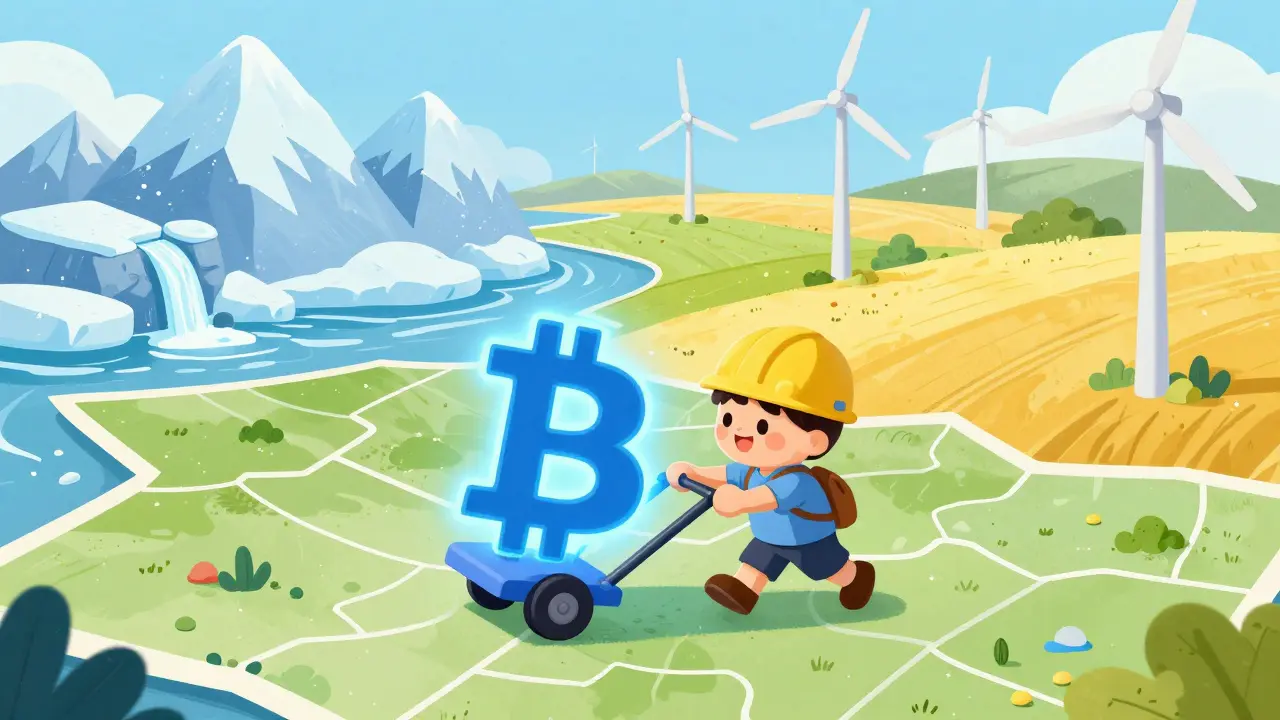
Electricity costs can make or break a Bitcoin mining operation. A miner paying $0.10 per kilowatt-hour might struggle to stay profitable, while another paying $0.03 can double its margins on the same hardware. This is why geographic arbitrage-moving mining operations to regions with cheaper power and supportive laws-has become the single most important strategy in the industry today.
You don't need better ASICs to win; you just need to be where the energy is cheap. In this guide, we'll look at exactly where top miners are moving, how they turn grid instability into profit, and why your location choice matters more than your hash rate.
The Economics of Energy Arbitrage
At its core, geographic arbitrage is simple math. You find a place where electricity costs significantly less than your current location, move your rigs there, and keep the difference as profit. But it isn't just about finding the cheapest plug in the wall. It's about understanding different types of energy savings.
- Geographic arbitrage: Relocating to jurisdictions with structurally lower industrial power rates.
- Temporal arbitrage: Mining during off-peak hours when prices drop by 20-60%.
- Curtailment arbitrage: Buying surplus renewable energy that would otherwise be wasted at near-zero cost.
- Source arbitrage: Using stranded natural gas or behind-the-meter solar to generate power independently.
According to data from D-Central Technologies, industrial power in places like Quebec can cost as little as CAD $0.03-$0.05 per kWh. Compare that to residential rates in parts of Europe or Ontario, which often exceed CAD $0.20 per kWh. That’s a price gap of 400-600%. No amount of hardware optimization can bridge a gap that wide. Location is the primary determinant of profitability.
Quebec: The Hydroelectric Haven
If you want stable, cheap, and green power, Canada’s Quebec Province is arguably the top destination globally. Over 60% of Canada’s electricity comes from hydroelectric sources, and Quebec has massive surpluses, especially during spring runoff.
Here’s why Quebec works so well:
- Rock-bottom rates: Industrial customers lock in long-term contracts at extremely low fixed rates.
- Natural cooling: For 4-6 months a year, outside temperatures drop below 0°C. You can use free air cooling instead of running expensive AC units or immersion tanks.
- Regulatory stability: The provincial government has historically supported industrial energy consumers, providing predictable policy environments.
In tropical climates, ASIC miners generate so much heat that active cooling eats up a huge chunk of your budget. In Quebec, the climate does the work for you. Companies like D-Central operate dedicated hosting facilities here specifically to leverage these advantages. You ship your hardware, they handle the infrastructure, and you benefit from industrial hydro rates without needing to build a facility from scratch.

Texas: Turning Grid Stress into Profit
While Quebec offers cold weather and hydro power, Texas offers something different: sophisticated market mechanisms. The state’s independent grid operator, ERCOT, allows miners to participate in demand-response programs.
Here’s how it works. When the grid is stressed-say, during a summer heatwave-ERCOT needs load reduced immediately. Bitcoin miners can shut down their rigs in seconds. In return, they get paid compensation for reducing consumption. This revenue stream effectively subsidizes their operations.
Major public miners have flocked to Texas for this reason:
| Company | Current Capacity (MW) | Key Locations |
|---|---|---|
| Bitdeer Technologies | 895 | Texas, Norway, Bhutan |
| Core Scientific | 832 | Texas, North Carolina, Georgia |
| Hut 8 Mining | 1,162 | Texas, New Brunswick, Canada |
| Cleanspark | 400 | Georgia, Mississippi, Wyoming |
Many of these companies have locked in 5-10 year Power Purchase Agreements (PPAs) at $0.02-$0.04 per kWh. Combined with ERCOT demand-response payments, their net power costs rival those of cloud data centers. The trade-off? Texas lacks natural cooling advantages, and severe weather events can cause grid instability. But for operators who can manage risk, the financial upside is enormous.
Other Emerging Destinations
Beyond North America, several other regions offer compelling arbitrage opportunities:
- Iceland: Abundant geothermal energy provides some of the world’s cheapest power. Year-round cold temperatures enable passive cooling. However, internet bandwidth costs are high, and expansion space is limited.
- Paraguay & Argentina: Very low electricity costs and developing regulatory frameworks. Challenges include currency volatility and less mature banking infrastructure for crypto businesses.
- Bhutan: Massive hydroelectric generation capacity with significant surplus energy. Bitdeer has expanded here to tap into clean, cheap hydropower.
- Sweden & Norway: Hydroelectric surpluses combined with established institutional frameworks. Ideal for miners seeking regulatory clarity alongside low costs.
The key takeaway? Don’t just chase the lowest headline rate. Look for jurisdictions with stable regulations, reliable banking, and scalable infrastructure. A cheap rate means nothing if you can’t legally receive your Bitcoin payouts or if the government suddenly bans mining.
The AI/HPC Arbitrage Opportunity
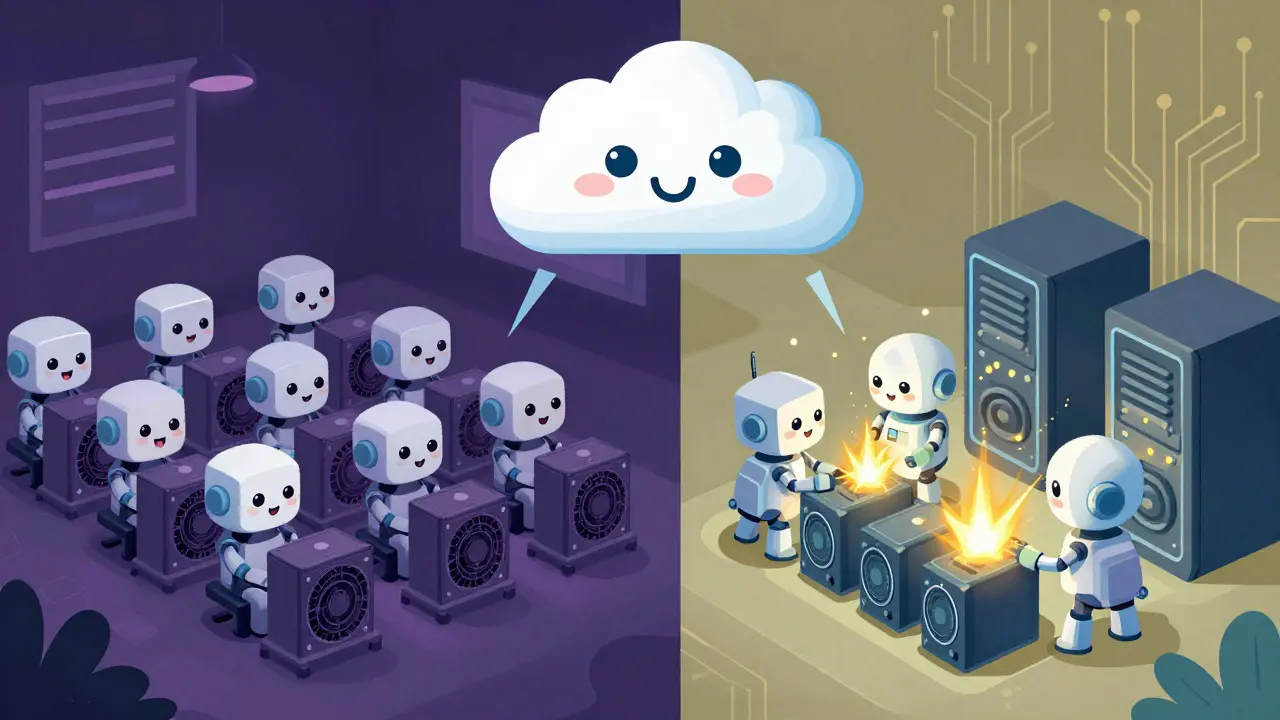
A new trend is reshaping geographic arbitrage: the convergence of Bitcoin mining and artificial intelligence. According to VanEck analysis, Bitcoin miners trade at roughly $4.5 million per megawatt of installed capacity. Meanwhile, AI data center stocks often command valuations above $30 million per megawatt.
Why the gap? AI workloads require massive amounts of electricity, cooling, and bandwidth-the exact infrastructure Bitcoin miners already own. By upgrading their facilities to support high-performance computing (HPC), miners can pivot capacity toward higher-margin AI contracts during peak hours.
This creates a dual-revenue model:
- Mine Bitcoin during off-peak hours or when AI jobs aren’t running.
- Power down ASICs rapidly to serve AI clients during high-demand periods.
- Earn premium valuations from investors who see “power-ready” infrastructure.
Grid interconnection queues in North America now exceed four years due to soaring demand from both miners and AI firms. Existing facilities with long-term PPAs hold a strategic advantage. They’re not just mining Bitcoin anymore-they’re sitting on valuable energy assets.
Risks and Regulatory Considerations
Geographic arbitrage isn’t risk-free. You must evaluate each jurisdiction carefully:
- Regulatory uncertainty: Some countries may ban mining or restrict energy allocation. Always choose regions with clear legal frameworks.
- Infrastructure gaps: Remote locations with cheap power may lack telecommunications needed for reliable pool participation.
- Weather extremes: Winter freezes in Texas or floods in Paraguay can disrupt operations. Diversify across multiple sites.
- Rate hikes: Even stable regions like Quebec have seen incremental increases over time. Lock in long-term contracts whenever possible.
Established markets like Canada, the U.S., and Scandinavia offer stronger protections than frontier nations. Yes, their base rates might be slightly higher, but the operational stability often outweighs short-term savings elsewhere.
What is geographic arbitrage in Bitcoin mining?
Geographic arbitrage is the strategy of relocating mining operations to jurisdictions with significantly lower electricity costs and favorable regulations to maximize profitability. It leverages regional differences in energy pricing, cooling advantages, and market structures.
Where are the best places to mine Bitcoin in 2026?
Top destinations include Quebec (hydroelectric power, natural cooling), Texas (ERCOT demand-response revenues), Iceland (geothermal energy), and emerging markets like Bhutan and Paraguay. Choice depends on balance between cost, regulation, and infrastructure.
How do miners earn money from grid demand response?
In grids like ERCOT, miners can shut down operations during peak stress events. They receive monetary compensation for reducing load, which subsidizes their power costs and improves overall margins.
Can Bitcoin mining facilities also host AI workloads?
Yes. With upgrades to bandwidth and cooling systems, mining facilities can pivot capacity to high-performance computing tasks. This allows operators to capture higher valuations associated with AI infrastructure while maintaining Bitcoin mining flexibility.
What are the risks of moving mining operations abroad?
Risks include regulatory changes, banking limitations, currency instability, inadequate telecom infrastructure, and exposure to extreme weather. Thorough due diligence on legal frameworks and physical resilience is essential before relocation.