Recording every customer call for quality assurance used to be a simple matter of hitting 'record' and storing the files on a server. Today, that same practice can land your business with a fine of up to €20 million or 4% of your global annual turnover if you haven't handled VoIP reporting correctly under the General Data Protection Regulation (GDPR). The regulation doesn't just apply to what you say on the phone; it governs how you collect, store, analyze, and eventually delete the digital footprint left by every Voice over IP (VoIP) interaction.
For businesses relying on VoIP analytics to improve sales, support, or operations, the challenge is balancing two competing needs: extracting valuable insights from call data while strictly protecting the privacy rights of EU citizens. This isn't about slapping a disclaimer on a website. It requires architecting your entire communication stack-from the initial dial tone to the final data deletion-with privacy by design. Here is how to build a compliant system that respects consent and masters anonymization.
The Foundation: Lawful Basis for Call Recording
Before you configure a single analytics dashboard, you must determine why you are processing personal data. Under GDPR, every instance of data processing-whether it’s logging a call duration, saving a recording, or transcribing speech into text-requires a lawful basis. For VoIP systems, the two most common bases are explicit consent and legitimate interest.
Legitimate interest is a trickier path. You might argue that recording calls is necessary for fraud prevention or regulatory compliance in financial services. However, you must document a balancing test proving that your business need outweighs the caller’s privacy rights. If you choose this route, you cannot force consent. You must still inform the caller, but the legal justification rests on your documented interest, not their permission. Mixing these two bases incorrectly is a common pitfall that leads to compliance failures.
Capturing Consent in Real-Time VoIP Workflows
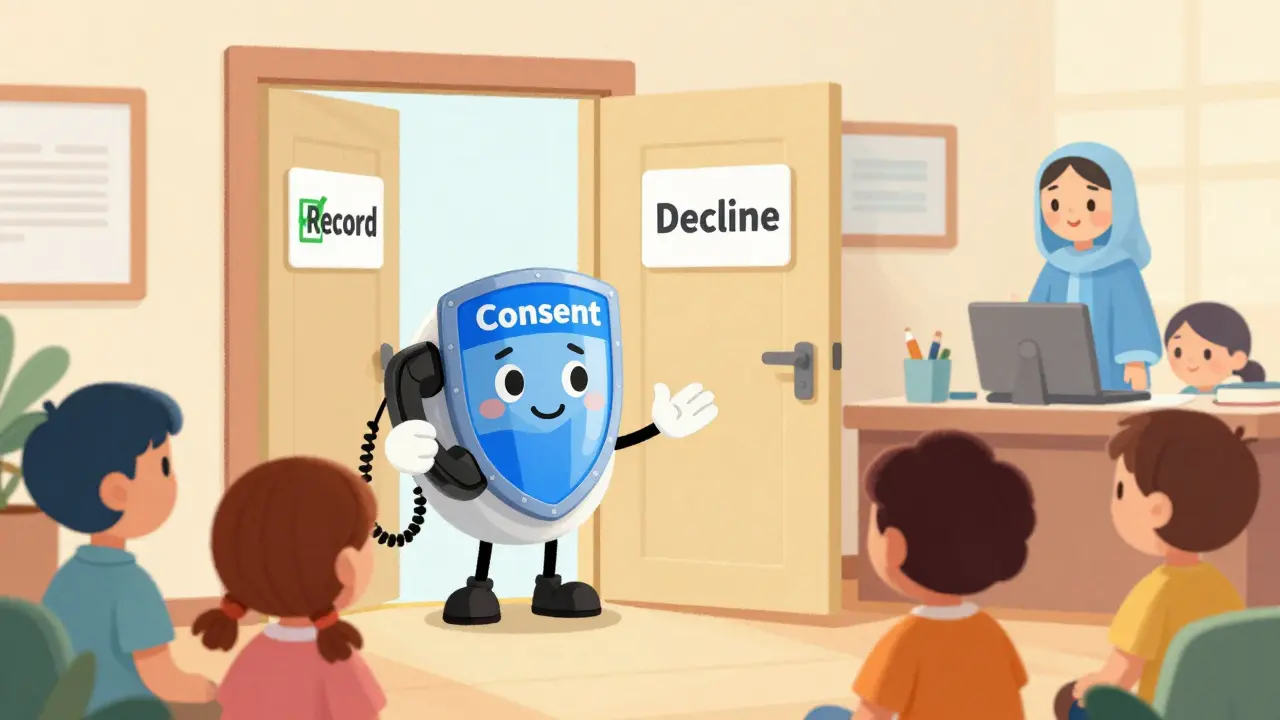
Having a policy isn't enough; your technology must enforce it. A one-way announcement stating "This call may be recorded" without offering an opt-out mechanism does not meet UK GDPR standards for freely given consent. To comply, your VoIP infrastructure needs dynamic consent capture features.
- In-Call Prompts: Use interactive voice response (IVR) systems that play a clear notification before the agent joins. Offer a distinct option, like "Press 1 to accept recording, Press 2 to decline."
- Verbal Confirmation: For outbound telemarketing, agents should be trained to explicitly ask for consent at the start of the conversation. Modern AI transcription tools can detect this verbal agreement and tag the call metadata accordingly.
- Status Tracking: Your reporting system must log the consent status for every single interaction. If a caller opts out, the system must immediately stop recording or exclude that segment from analytic datasets. You need a way to prove, at any moment, who consented and when.
Consent is also revocable. If a customer contacts you later to withdraw consent, your system must respect that choice for all future interactions. This means your VoIP platform needs a centralized database linking customer identifiers to their current consent preferences, ensuring that no new data is processed against their will.
Anonymization vs. Pseudonymization in Analytics
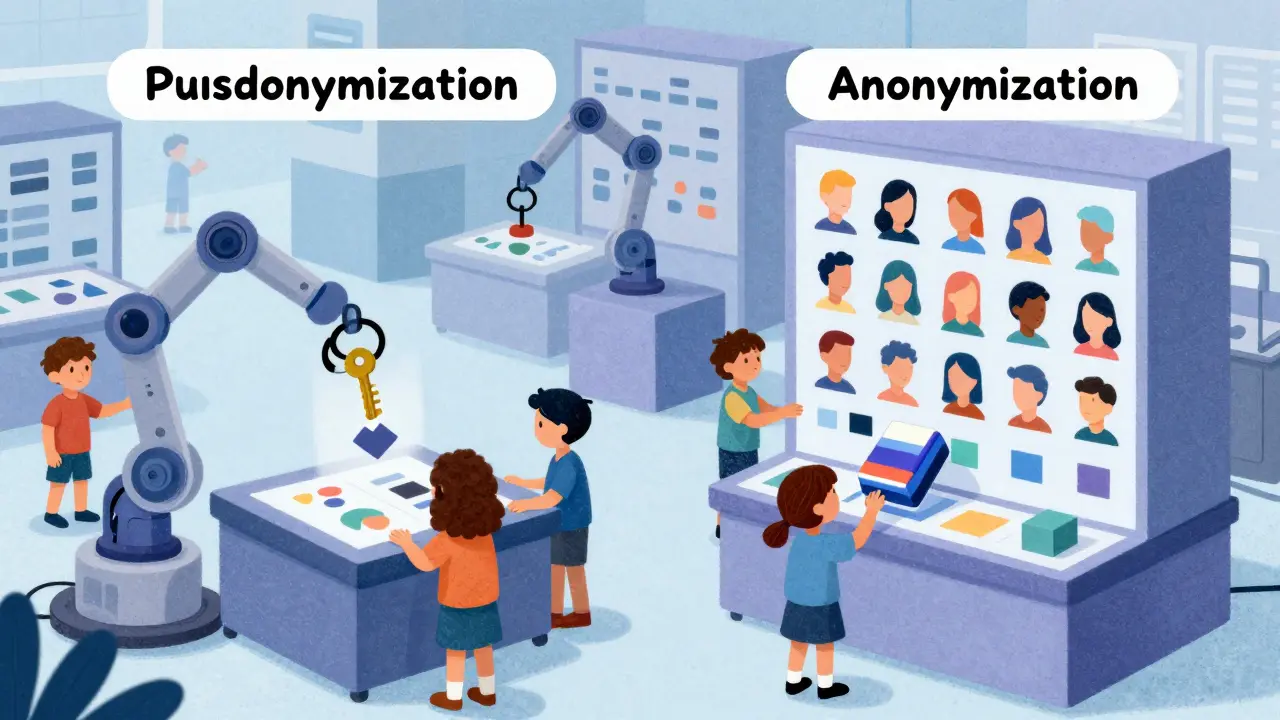
This is where many organizations stumble. They confuse hiding a name with removing personal data. Under GDPR, there is a critical difference between pseudonymization and true anonymization, and it dictates whether your data is still regulated.
| Technique | Definition | GDPR Scope | Use Case in VoIP |
|---|---|---|---|
| Pseudonymization | Replacing identifiers with tokens (e.g., hashed IDs) while keeping a separate key to re-identify the user. | Still applies. The data is considered personal because re-identification is possible. | Internal QA reviews where supervisors need to link feedback to specific agents or customers. |
| Anonymization | Irreversibly transforming data so individuals can no longer be identified, even when combined with other information. | Does NOT apply. The data is no longer personal data. | Long-term trend analysis, aggregate reporting on call volumes, or training AI models without privacy risks. |
For long-term VoIP reporting, aim for anonymization. This involves stripping direct identifiers like phone numbers, SIP URIs, and IP addresses. But it goes deeper. You must also remove indirect identifiers. For example, if a transcript mentions a unique job title and location, combining that with other datasets might reveal the person's identity. True anonymization ensures that even with additional context, the individual remains unidentifiable. Once data is truly anonymized, it falls outside GDPR’s strictest obligations, allowing you to retain it indefinitely for business intelligence without fear of violating storage limitation principles.
Data Minimization and Retention Policies
GDPR’s principle of data minimization means you should only keep what you absolutely need. Keeping call recordings forever "just in case" is a violation. You need a defined lifecycle for your VoIP data.
- Operational Phase: Keep identifiable data only as long as necessary for the immediate purpose, such as resolving a customer dispute or completing a quality audit. A common best practice in telecom is retaining Call Detail Records (CDRs) and logs for approximately 90 days.
- Automated Deletion: Configure your VoIP system to automatically delete raw recordings and transcripts once the retention period expires. Manual deletion is prone to human error and lacks an audit trail.
- Right to Erasure: Customers have the right to request deletion of their data at any time. Your system must be able to locate and permanently erase all records associated with a specific individual within 30 days of the request. This includes backups, which is technically challenging but legally required.
If you need the data for longer than the operational phase allows, you must anonymize it first. Convert the rich, identifiable call data into aggregate metrics-such as average handle time or sentiment scores-before archiving it for long-term trend analysis. This approach satisfies both your need for historical insight and the regulator’s demand for privacy.
Security Architecture for VoIP Data
Even if you have consent and plan to delete data, you are responsible for its security while it exists. The integrity and confidentiality principle demands robust technical controls. VoIP traffic is often less secure than traditional phone lines, making it a target for interception.
Implement end-to-end encryption using TLS (Transport Layer Security) for signaling and SRTP (Secure Real-time Transport Protocol) for media streams. This protects the content of the call and the metadata, such as who called whom, from being intercepted in transit. At rest, ensure that stored recordings and PCAP files are encrypted on your servers. Access to this encrypted data should be restricted via Multi-Factor Authentication (MFA) and Role-Based Access Control (RBAC). Only supervisors or compliance officers should have access to play back full recordings, and every access event must be logged with details on who listened, when, and why.
Network segmentation is another critical layer. Place your VoIP traffic on a dedicated VLAN separate from general internet traffic. This limits the blast radius if another part of your network is compromised. Regularly patch your PBX firmware and VoIP software, as outdated systems are among the most exploited entry points for attackers.

Documentation and Accountability
Compliance isn't just about technology; it's about proof. GDPR’s accountability principle requires you to demonstrate that you are following the rules. Start by creating a Data Processing Register for your VoIP system. Document every type of personal data handled, the lawful basis for processing, who has access, where it is stored, and when it will be deleted.
If your VoIP provider acts as a data processor, you must sign a Data Processing Agreement (DPA) with them. This contract should specify their security measures, data handling procedures, and breach notification commitments. If a vendor cannot provide a DPA, consider it a major red flag. Additionally, conduct Data Protection Impact Assessments (DPIAs) whenever you deploy new VoIP features, switch providers, or integrate the phone system with other tools like CRM platforms. These assessments help identify and mitigate privacy risks before they become violations.
Handling Breaches and Rights Requests
Despite best efforts, breaches can happen. If a data breach involving VoIP data occurs, you must notify your supervisory authority within 72 hours unless the breach is unlikely to result in risk to individuals’ rights. If the risk is high, you must also notify the affected data subjects. Speed and transparency are key here.
Equally important is responding to data subject requests. Customers can request access to their data, correction of inaccuracies, or erasure. Your VoIP reporting architecture must support retrieving identifiable records efficiently. This requires good indexing of call data by user identifiers. When a deletion request comes in, you must either delete the data or anonymize it completely, breaking the link to the individual. Ensure your staff are trained to handle these requests within the 30-day statutory limit.
Do I need consent for every VoIP call?
Not necessarily. While explicit consent is the safest route for non-mandatory recordings, you may rely on "legitimate interest" for purposes like fraud prevention or regulatory compliance, provided you conduct a balancing test and document it. However, you must always inform the caller that the call is being recorded.
How long can I keep VoIP call recordings?
You should only keep recordings as long as necessary for the specified purpose. A common industry best practice is to retain Call Detail Records (CDRs) and logs for around 90 days. After this period, you should either delete the data or anonymize it for long-term analytics. There is no fixed maximum time, but indefinite storage of identifiable data is a violation of the storage limitation principle.
What is the difference between anonymization and pseudonymization in GDPR?
Pseudonymization replaces identifiers with tokens but keeps a key to re-identify the user, meaning the data is still subject to GDPR. Anonymization irreversibly removes all identifiers so that the individual can no longer be identified, even with additional data. Anonymized data falls outside the scope of GDPR, allowing for freer use in analytics.
Can I use AI transcription for VoIP calls under GDPR?
Yes, but you must ensure the transcription service complies with GDPR. This typically requires a Data Processing Agreement (DPA) with the vendor. You should also minimize data sent to the AI, such as by anonymizing sensitive information before transcription, and ensure the resulting text data is stored securely and deleted according to your retention policy.
What happens if a customer asks to delete their call data?
Under the "right to erasure," you must delete all personal data related to that customer within 30 days. This includes call recordings, transcripts, and logs. If you need to keep the data for legal reasons, you must anonymize it instead, ensuring it can no longer be linked to the individual. Your system must be able to locate and process these requests efficiently.