
Imagine buying a share in a company, but instead of just hoping the CEO makes good choices, you actually hold the remote control. You can vote on how much money gets spent, which features get built next, or even who runs the show. That is the promise of DAO governance tokens, which are blockchain-based assets that grant holders explicit voting rights over protocol rules, upgrades, and treasury allocations within a decentralized autonomous organization (DAO). But does it work like democracy? Or is it closer to a corporate boardroom where the richest shareholder calls all the shots?
The reality is messy, fascinating, and constantly evolving. As of mid-2026, we have moved past the hype cycle of "code is law" into a phase where we are grappling with the actual mechanics of collective decision-making. If you hold governance tokens, you aren't just holding a speculative asset; you are holding a lever. Pull it wrong, and you might crash the protocol. Pull it right, and you steer millions of dollars in value toward better outcomes.
What Exactly Is a Governance Token?
Let's clear up a common confusion. Not every crypto token is a governance token. Many tokens are just utility keys-they let you access a service or pay for gas. A governance token has one specific job: it gives you a say in how the project evolves.
If a token doesn't give you the ability to vote on proposals, submit changes, or influence the direction of the DAO, it generally shouldn't be called a governance token. In most systems, these tokens operate on a simple rule: one token equals one vote. If you hold 1,000 tokens, you have 1,000 votes. This seems straightforward, but as we will see, this simplicity creates significant challenges regarding power distribution.
These tokens are central to the identity of major DeFi protocols. Think about UNI for the Uniswap decentralized exchange, AAVE for the Aave lending protocol, or MKR used by MakerDAO to govern the DAI stablecoin system. In each case, the token was designed to shift control from centralized developers to the community of users and investors.
The Anatomy of a Vote: From Proposal to Execution
How does an idea become reality in a DAO? It’s not as simple as shouting your opinion into a Discord chat. The process usually follows a strict, three-step workflow enforced by smart contracts.
- Proposal Submission: Anyone who meets certain criteria-often holding a minimum threshold of governance tokens-can draft a proposal. This could be anything from requesting funding for a new developer team to changing the interest rates on loans. The proposal is submitted on-chain, creating a transparent record that anyone can audit.
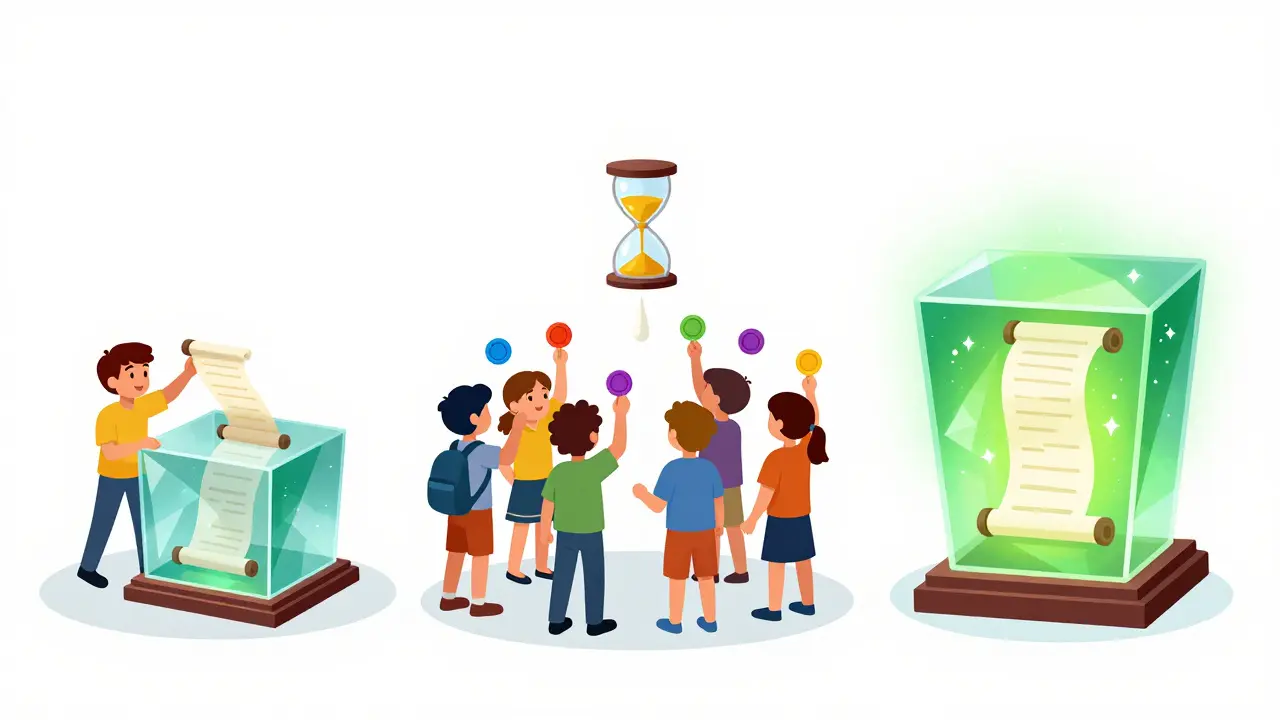
- Voting Period: Once submitted, the clock starts ticking. Token holders review the proposal and cast their votes. This period typically lasts several days to allow for debate and analysis. During this time, you can vote directly or delegate your voting power to someone else (more on that later).
- Execution: If the proposal meets the required quorum (minimum participation) and passes the approval threshold, the smart contract automatically executes the decision. No human manager needs to sign off. The code does exactly what the voters agreed to.
This automation is both the greatest strength and the biggest risk. There is no "undo" button if the community votes for a bad idea. If the smart contract logic is flawed or the proposal is malicious, the damage is done instantly.
Beyond "One Token, One Vote": Mechanisms That Shape Power
The basic model of token-weighted voting is easy to build but hard to manage fairly. It naturally leads to plutocracy-rule by the wealthy. To fix this, DAOs have experimented with various mechanisms to redistribute influence.
| Mechanism | How It Works | Primary Goal |
|---|---|---|
| Token-Weighted | Voting power equals number of tokens held. | Simplicity and direct alignment with financial stake. |
| Vote Escrow (ve) | Tokens must be locked for a set time; longer locks = more votes. | Aligns incentives with long-term commitment rather than short-term speculation. |
| Reputation-Based | Voting power comes from non-transferable scores earned through contribution. | Rewards active participation and reduces the power of pure capital. |
| Delegated Voting | Holders assign their votes to representatives who vote on their behalf. | Increases participation rates and allows expertise to guide decisions. |
Vote Escrow has become particularly popular recently. By locking tokens, you signal that you are in it for the long haul. This discourages "flash loan" attacks, where a bad actor borrows millions of tokens for an hour to hijack a vote, then returns them. If you need to lock tokens for months to gain voting power, flash loans become useless.
Delegated voting attempts to solve voter apathy. Most people don't have time to read every technical proposal. So, they delegate their votes to trusted experts or active community members. This creates a liquid democracy. However, it introduces a new risk: the concentration of power in a few "super-delegates." If everyone delegates to the same charismatic leader, you haven't really decentralized anything.
What Can You Actually Decide?
When you hold governance tokens, what levers do you actually control? The scope varies by protocol, but generally falls into four categories:
- Protocol Parameters: Adjusting interest rates, collateral ratios, or fee structures. For example, in a lending protocol, voters might decide to increase the collateral requirement for a volatile asset to reduce risk.
- Treasury Allocation: DAOs often hold massive treasuries. Voters decide how to spend this money-whether to fund grants for developers, buy back tokens, or invest in marketing.
- Smart Contract Upgrades: Approving code changes to fix bugs or add new features. This is high-stakes because errors here can lead to exploits.
- Governance Rules Themselves: Yes, you can vote to change how voting works. You might lower the quorum requirement to make decisions faster, or introduce a new delegation mechanism.
This reflexive capability-the ability to rewrite your own rules-is unique to DAOs. Traditional corporations require shareholder meetings and legal filings to change bylaws. DAOs can update their constitution in minutes.
The Dark Side: Risks and Limitations
It would be naive to ignore the problems. Despite the idealistic vision of decentralized democracy, many DAOs struggle with real-world issues.
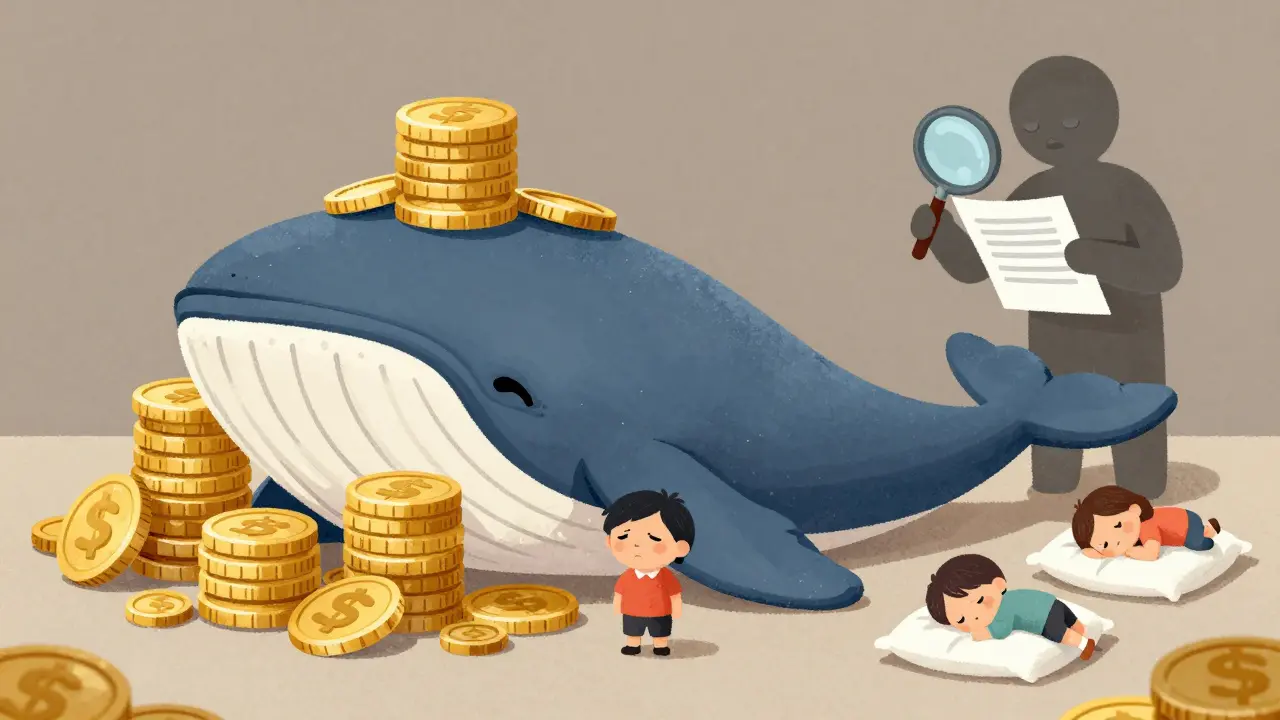
Power Concentration remains the elephant in the room. Even with mechanisms like delegation, large holders (whales) often dominate outcomes. A small group of addresses controlling 50%+ of the supply can effectively veto any proposal they dislike. Research published on arXiv highlights that without careful design, delegation networks tend to cluster around a few nodes, recreating centralization under a different guise.
Voter Apathy is another killer. In many major DAOs, less than 5% of token holders participate in votes. This means decisions are made by a tiny, potentially unrepresentative minority. Why bother voting if you only hold a few hundred tokens? Your impact feels negligible.
Short-Termism also plagues the space. Because governance tokens trade on open markets, many holders are speculators looking for quick profits. They may vote for proposals that boost the token price in the short term, even if those decisions harm the protocol's long-term health.
Legal Gray Areas and Regulatory Scrutiny
As of 2026, regulators are paying close attention to governance tokens. The key question is: Are these tokens securities?
Under frameworks like the Howey Test in the US, an investment contract exists if there is an investment of money in a common enterprise with an expectation of profit derived from the efforts of others. Proponents argue that governance tokens are utilities-they provide a service (voting)-not equity. However, if the primary reason people buy the token is to speculate on its price appreciation driven by the team's work, regulators may disagree.
Legal scholars at Cardozo Law Review and other institutions emphasize that simply calling something a "governance token" doesn't shield it from securities laws. Projects must structure their token distribution and voting rights carefully to demonstrate genuine decentralization and utility. If a founder holds 40% of the tokens and dictates all votes, the DAO is likely still a centralized entity in the eyes of the law.
Best Practices for Participants
If you are holding governance tokens, don't just sit on them. Here is how to engage effectively:
- Educate Yourself: Read the proposals. Don't just look at the title. Understand the economic implications. If a proposal suggests lowering fees, ask: "How does this affect security and revenue?"
- Delegate Wisely: If you don't have time to vote, delegate to someone whose values align with yours. Check their track record. Have they voted consistently? Do they explain their reasoning?
- Diversify Your Influence: Consider participating in multiple DAOs. Cross-pollination of ideas helps prevent echo chambers.
- Watch for Centralization Signals: Use analytics tools to see who holds the most voting power. If a single address controls too much, speak up in forums before voting.
Governance isn't just a feature; it's a responsibility. The health of the DAO depends on informed, active participation.
Can I sell my governance tokens after voting?
Yes, in most cases. Governance tokens are typically tradable assets. However, some mechanisms like Vote Escrow require you to lock tokens for a period to gain voting power, meaning you cannot sell them until the lock expires.
What happens if a malicious proposal passes?
If a malicious proposal passes the voting thresholds, the smart contract will execute it automatically. This is why security audits and multi-sig wallets are often used as safeguards. Some DAOs have emergency pause functions, but relying on them undermines the decentralized ethos.
Is holding governance tokens taxable?
Tax treatment varies by jurisdiction. In many places, receiving tokens via airdrop or staking rewards is considered taxable income. Selling or trading them may trigger capital gains tax. Always consult a local tax professional.
How do I start participating in DAO governance?
First, acquire the relevant governance tokens and store them in a compatible wallet. Then, connect your wallet to the DAO's governance portal (like Snapshot or Tally). Start by reading past proposals to understand the community's priorities, then cast your first vote or delegate your power.
Are DAOs legally recognized entities?
Recognition varies globally. Some jurisdictions, like Wyoming in the US, have passed laws recognizing DAO LLCs. Others treat them as unincorporated associations, leaving participants personally liable. Legal status is evolving rapidly.