
You buy a coin because your friend said it was going to the moon. The price drops 15% an hour later. You panic and sell at the bottom. Sound familiar? You are not alone. Across exchange academies and community forums in 2025 and 2026, traders consistently report losing money not because they were unlucky, but because they made avoidable errors.
The crypto market is volatile. Daily swings of 10% or more on major assets like Bitcoin or Ethereum are routine. This volatility creates massive opportunities, but it also acts as a trap for unprepared traders. Most losses come from emotional decisions, poor research, and weak security habits rather than bad luck.
The Danger of Skipping Research (DYOR)
The single biggest mistake new traders make is buying without understanding what they own. In the crypto world, we call this failing to "Do Your Own Research" or DYOR. It sounds simple, but most people skip it entirely. They see a trending hashtag on social media or hear an influencer shout about a token, and they click buy immediately.
When you skip research, you are blind to red flags. You might buy a token with no real utility, a team that has disappeared, or a supply model designed to dump on early buyers. For example, many small-cap tokens have daily trading volumes under USD 1 million. If you try to sell a large position in these coins, you cannot find enough buyers, and the price crashes further. Always check the project’s whitepaper, verify the development team’s background, and look at on-chain metrics before spending a dime.
Fighting the Emotional Rollercoaster
Emotions are the enemy of profit. Two specific feelings destroy portfolios faster than any market crash: Fear of Missing Out (FOMO) and panic.
FOMO Buying: You see a green candle shooting up 20% in an hour. Your heart races. You feel like you are missing out on life-changing gains. So you buy at the top. Usually, the rally exhausts itself shortly after you enter, and the price corrects. You are now holding a bag that costs more than its value.
Panic Selling: The opposite happens when the market dips. A healthy correction of 10-15% triggers fear. You imagine losing everything, so you sell immediately to "cut losses." Often, the market bounces back within days, leaving you with cash instead of recovering profits. Successful traders use pre-defined exit rules so their emotions do not dictate their actions.

The Trap of Excessive Leverage
Leverage allows you to borrow money to increase your position size. It sounds like free money, but it is actually a double-edged sword that cuts deep. Many beginners start with high leverage-sometimes 20x, 50x, or even 100x-on perpetual futures contracts.
Here is the math: if you use 50x leverage, a mere 2% move against your position wipes out 100% of your capital. This is called liquidation. In a volatile market, prices often wick up or down by several percent in minutes. Without strict stop-loss orders, high leverage ensures you will eventually get wiped out. Experts recommend starting with spot trading only. If you must trade derivatives, keep leverage below 3x and always set automatic stop-losses.
Neglecting Risk Management Rules
Risk management is not optional; it is survival. Most losing traders bet too much on a single trade. If one bad trade ruins your account, you cannot recover.
Follow the "1% Rule": never risk more than 1% to 2% of your total portfolio on a single trade. If you have USD 10,000, your maximum loss on any given trade should be USD 100 to USD 200. This way, you can survive a string of ten losses and still have capital left to trade. Additionally, diversify your holdings. Do not put 100% of your money into one altcoin. Spread your risk across different sectors like Layer 1 blockchains, decentralized finance (DeFi), and stablecoins.
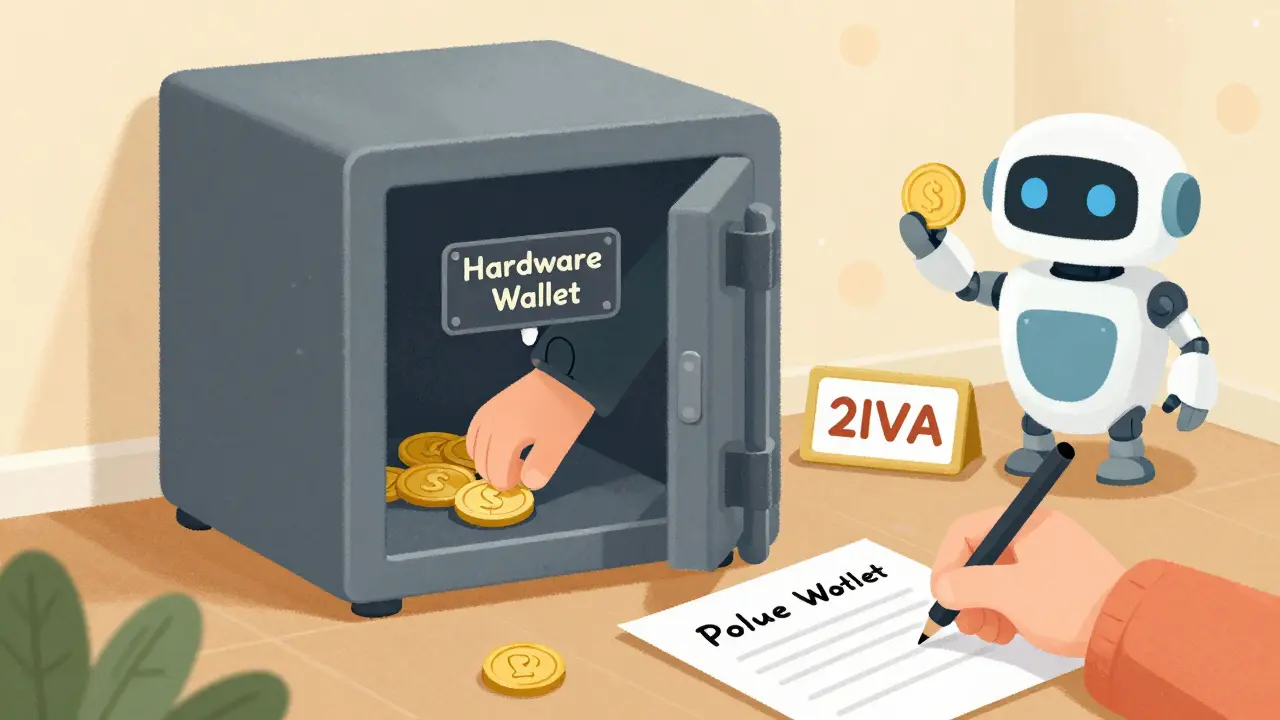
Security and Custody Errors
Making money is useless if you lose it to hackers or user error. Security mistakes are permanent. Unlike a stock broker who can reset your password, there is no customer support for lost crypto keys.
- Losing Seed Phrases: When you use a self-custody wallet, you receive a 12 or 24-word recovery phrase. Write this down on paper and store it safely. Never take a photo of it or save it in a cloud note. If you lose this phrase, your funds are gone forever.
- Leaving Assets on Exchanges: Centralized exchanges like Coinbase or Binance are convenient, but they are targets for hackers. For long-term holdings, move your crypto to a hardware wallet. Remember the rule: "Not your keys, not your coins.""
- Phishing Scams: Always double-check URLs. Hackers create fake websites that look identical to legitimate exchanges to steal your login details. Enable two-factor authentication (2FA) using an authenticator app, not SMS, which can be intercepted.
Overtrading and Lack of Strategy
Some traders think that trading more equals earning more. This is false. Overtrading leads to excessive fees and slippage, which eat into your profits. Every time you open and close a position, you pay a fee. If you trade fifty times a month with small margins, the fees alone can wipe out your gains.
Before you trade, write a plan. Define your entry point, your exit point for profit, and your exit point for loss. Stick to it. If the market does not hit your criteria, stay on the sidelines. Cash is also a position. Patience is a skill that separates profitable traders from those who burn out quickly.
| Mistake Category | Typical Consequence | Best Practice Solution |
|---|---|---|
| No Research (DYOR) | Buying scams or overvalued tokens | Read whitepapers, check team credentials |
| Emotional Trading | Buying highs, selling lows | Use pre-set stop-loss and take-profit orders |
| High Leverage | Rapid liquidation of entire account | Stick to spot trading or low leverage (<3x) |
| Poor Risk Management | One loss destroys portfolio | Risk only 1-2% per trade |
| Insecure Storage | Permanent loss of funds via hacks/theft | Use hardware wallets and offline seed phrases |
What is the most common mistake beginner crypto traders make?
The most common mistake is failing to do proper research (DYOR). Beginners often buy tokens based on hype, social media trends, or influencer recommendations without checking the project's fundamentals, team, or tokenomics. This leads to purchasing overvalued or fraudulent assets.
Is leverage dangerous for crypto trading?
Yes, high leverage is extremely dangerous. Using leverage multipliers above 10x significantly increases the risk of liquidation, where a small price movement against your position results in the total loss of your invested capital. Experts advise beginners to avoid leverage entirely or use very low multiples.
How can I manage my emotions while trading crypto?
You can manage emotions by creating a written trading plan before entering the market. Define your entry, exit, and stop-loss levels in advance. Stick to these rules regardless of market noise. Additionally, taking breaks after significant wins or losses helps prevent impulsive decisions driven by greed or fear.
Should I leave my crypto on an exchange?
For active trading, keeping funds on an exchange is necessary. However, for long-term storage, it is safer to move your assets to a personal hardware wallet. Exchanges are vulnerable to hacking and operational failures. Using a hardware wallet gives you full control over your private keys.
What is the 1% rule in crypto risk management?
The 1% rule suggests that you should never risk more than 1% of your total trading capital on a single trade. This ensures that a series of losing trades does not devastate your portfolio, allowing you to stay in the game and recover from losses over time.