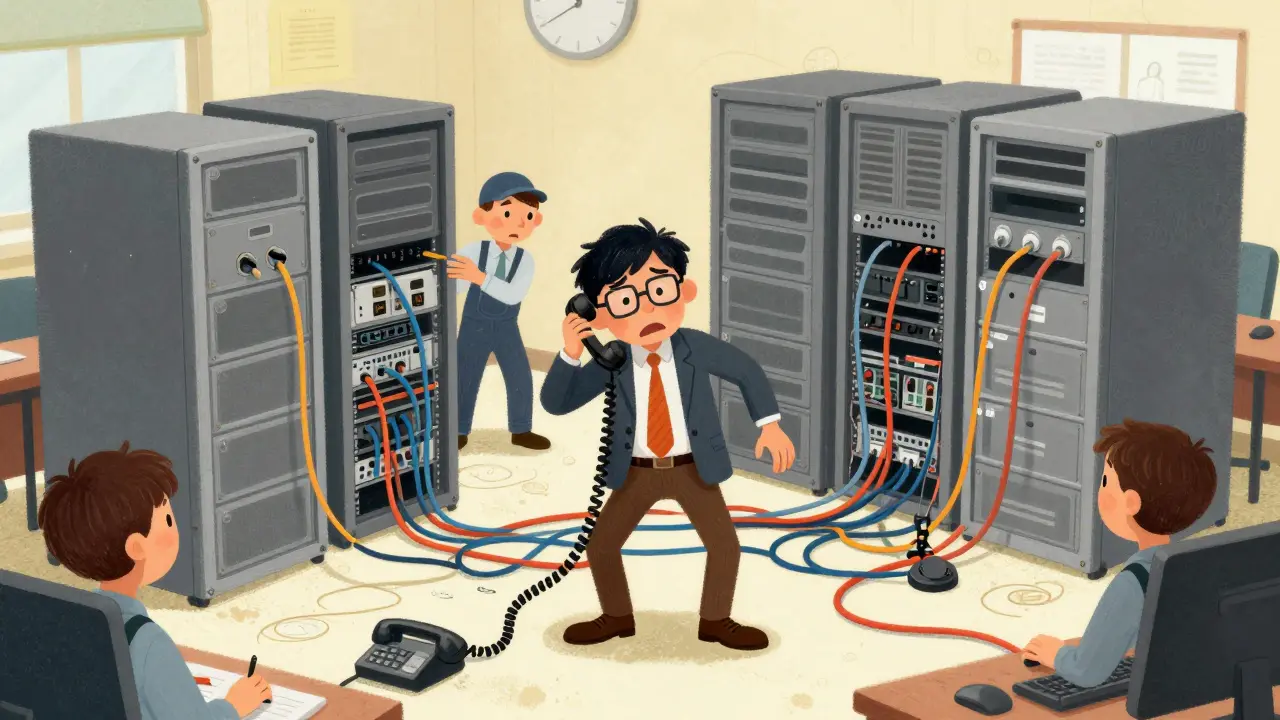
Imagine your business is booming. You're hiring fast, opening a second office in another state, and your customer support lines are ringing off the hook. In the old days, this growth would trigger a nightmare: calling in technicians to rip out cables, buying expensive new hardware servers, and waiting weeks for a telecom company to install new physical lines. By the time your phones were ready, the momentum might have already slowed.
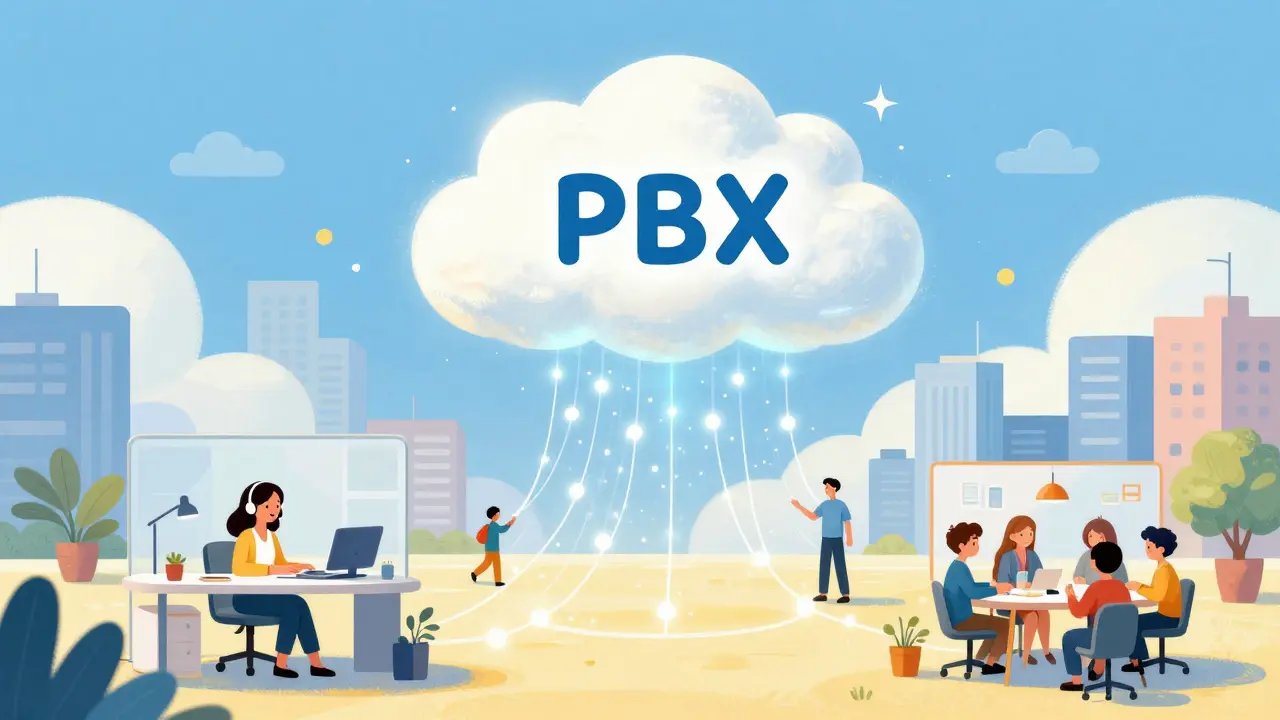
Modern growth doesn't have to be a technical bottleneck. Cloud PBX is a virtual telecommunications infrastructure hosted in the cloud, replacing the need for physical on-premises hardware. Unlike legacy systems, it treats your phone system as a flexible service rather than a piece of heavy machinery. This means your Cloud PBX scalability depends on a few clicks in a dashboard, not a construction crew in your server room.
| Feature | Traditional PBX | Cloud PBX |
|---|---|---|
| Adding New Users | Requires physical handsets and wiring | Instant digital provisioning |
| New Office Setup | Weeks of installation and hardware shipping | Hours (requires only internet) |
| Cost Model | Heavy upfront Capital Expenditure (CapEx) | Predictable monthly OpEx (Pay-as-you-go) |
| Geographic Reach | Tied to physical location/copper lines | Global reach via virtual numbers |
The Four Dimensions of a Scalable Phone System
When people talk about "scaling," they usually just mean adding more people. But for a business to actually function during growth, scalability needs to happen across four different areas. If you only scale users but ignore call volume, your new employees will just be staring at a busy signal.
- User Capacity: This is the basic ability to add extensions. Whether you're growing from 5 to 50 or 500 to 5,000, the system should handle the load without the software lagging or crashing.
- Feature Expansion: Your needs today aren't your needs tomorrow. A scalable system lets you plug in IVR (Interactive Voice Response) for automated routing or CRM integrations so your sales team can see customer data the moment the phone rings.
- Call Volume Capacity: This is about "concurrent calls." If you run a seasonal retail shop, you might have 10 people on the phones in July but 100 in December. True scalability means the cloud provider can handle those spikes without dropping calls.
- Geographic Reach: Scaling isn't just about size; it's about space. You should be able to add a local number in London or Tokyo without actually renting an office there, allowing you to look like a local business in any market.
Choosing the Right Architecture for Your Growth Path
Not all cloud setups are created equal. Depending on how much control you want, there are three main ways to deploy your system. Choosing the wrong one can lead to "scaling walls" where you suddenly hit a limit and have to migrate your entire system.
First, there is the Cloud-hosted PBX. This is the most common path for SMEs. The provider handles everything. You just log in and add users. It's the fastest way to scale, though you're limited to the features the provider offers. It's essentially "telephony as a service."
Then there is the Software-based On-Premise PBX. This sounds contradictory, but it means you use modern cloud-ready software installed on your own hardware or private cloud. This is for companies that need total control over their data and want to scale their own CPU, RAM, and storage specifically to their needs.
Finally, for those managing multiple brands or departments, Multi-tenant PBX architecture is the gold standard. It allows you to run multiple isolated PBX systems on one server. Imagine you own three different companies; each one has its own admin, its own call routing, and its own set of users, but you manage all of them from one single master dashboard. This is a massive time-saver for Managed Service Providers (MSPs).
Solving the "Growth Pain" with Flexible Costing
One of the biggest killers of small business growth is the "success tax"-the moment when growing your revenue requires a massive, unplanned investment in infrastructure. Traditional phone systems force this. You have to buy a bigger server *before* you hire the people to use it.
Cloud PBX flips this. By using a "Pay as You Go" model, your costs scale linearly with your revenue. If you hire one new salesperson, you pay for one new license. There's no need to over-provision or pay for "empty seats" just in case you grow next year. This keeps your cash flow healthy and allows you to pivot quickly.
For example, look at a tourism company. During the summer peak, they might employ 40 temporary agents to handle bookings. With a scalable cloud system, they spin up 40 extensions in June and delete them in September. They only pay for that extra capacity for three months, rather than paying for 40 lines all year long.
Overcoming Geographic Barriers
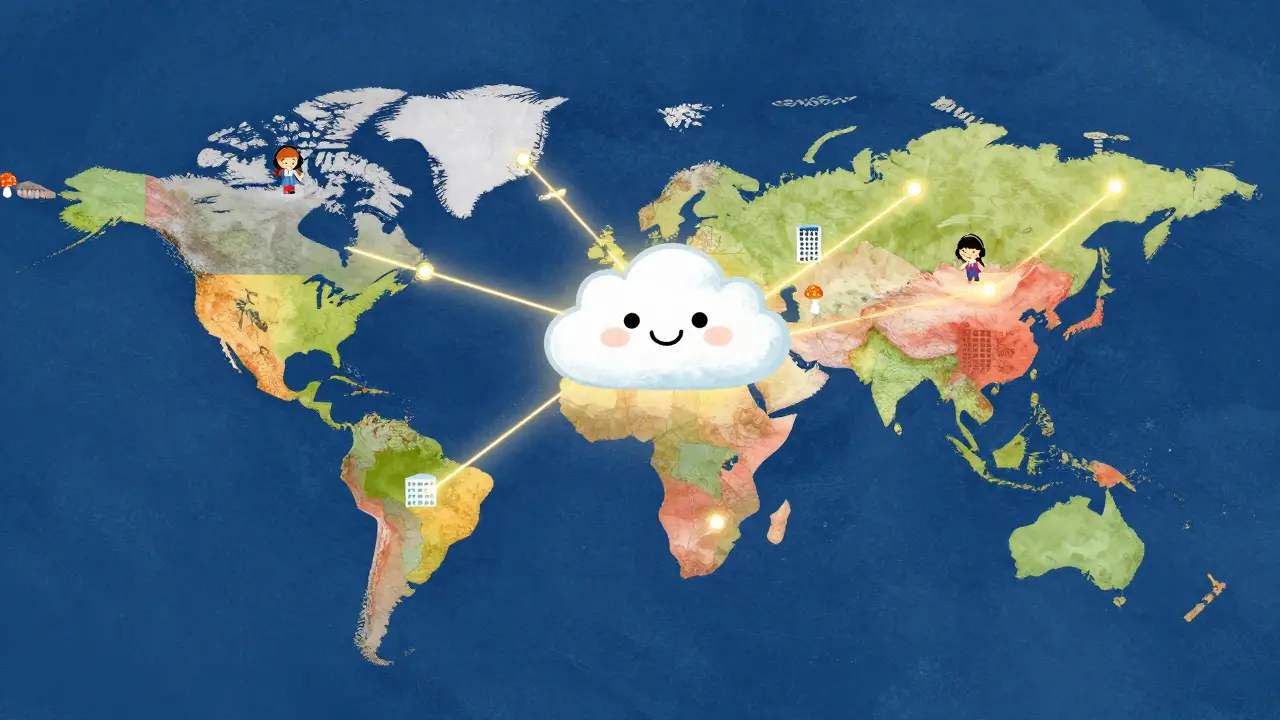
Scaling globally used to be a logistical nightmare. If you wanted a presence in New York and Singapore, you needed two different providers, two sets of hardware, and a way to link them. Today, a scalable PBX creates a unified communication fabric.
You can assign virtual numbers to remote employees, meaning a staff member in Raleigh can answer a call that looks like it's coming from a local Los Angeles number. This removes the friction of entering new markets. You don't need to wait for a physical office to be built to start taking local orders; you just provision the number in your portal and start calling.
Avoiding the "Scalability Trap"
Here is a word of caution: just because a system is "in the cloud" doesn't mean it's actually scalable. Some providers use