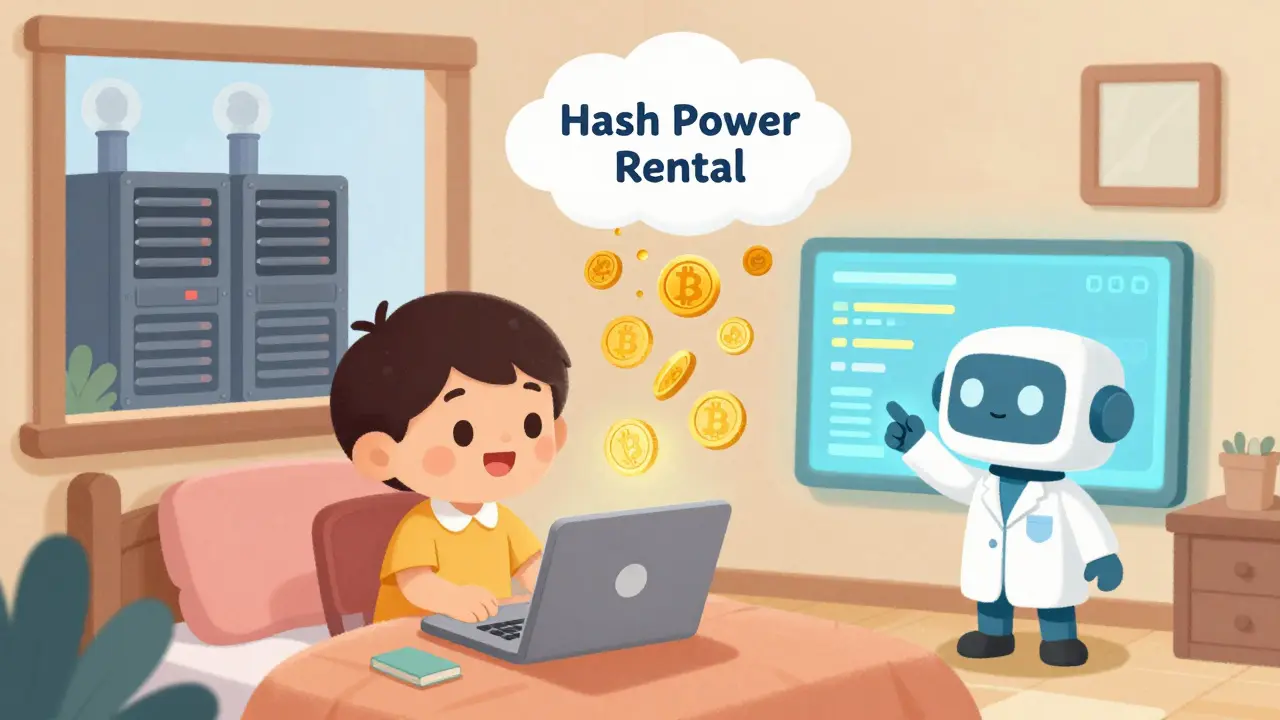
What if you could mine Bitcoin without buying a single ASIC miner? No loud fans, no electricity bills, no overheating rigs in your garage. Just sign up, pay a fee, and start earning - all from your laptop. That’s the promise of cloud mining.
It sounds too good to be true. And sometimes, it is. But not always.
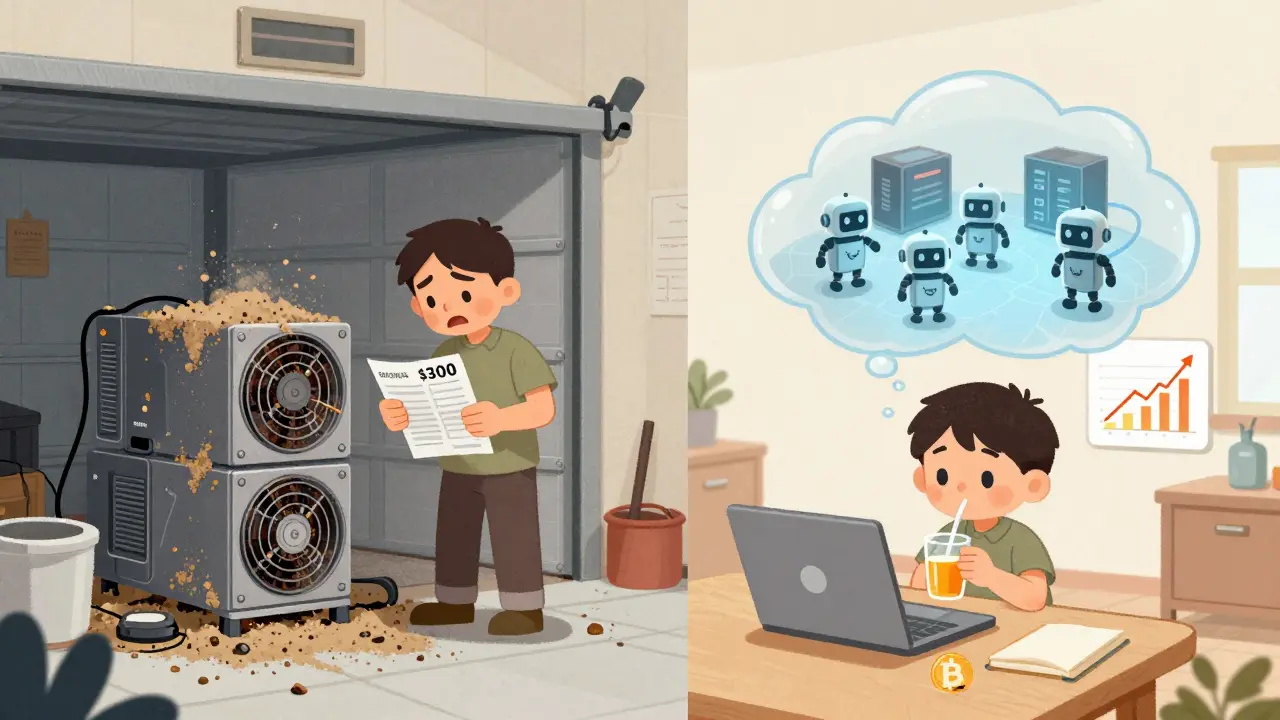
Cloud mining lets you rent computing power - called hashrate - from giant data centers that run cryptocurrency mining rigs 24/7. Instead of spending $5,000 on an Antminer S19 and paying $300 a month in electricity, you pay a monthly fee to a provider like BitFuFu or NiceHash. They handle the hardware, the cooling, the maintenance. You just watch your balance grow - or not.
How Cloud Mining Actually Works
At its core, cloud mining is a service contract. You’re not buying hardware. You’re buying time. Think of it like renting a server in the cloud, except instead of running websites, it’s solving complex math problems to earn Bitcoin or other coins.
The service provider owns thousands of ASIC miners. These machines are built for one thing: hashing. Every second, they’re trying billions of combinations to find the solution to a cryptographic puzzle. When they solve it, they get rewarded with new Bitcoin. The provider takes a cut - usually 10% to 25% - and sends the rest to you.
Your share depends on how much hashrate you rent. Hashrate is measured in hashes per second. A 10 TH/s contract means you’re renting 10 trillion hashes per second. For comparison, the entire Bitcoin network runs at around 600 EH/s - that’s 600 million TH/s. You’re a tiny drop in the ocean, but you’re still part of the system.
Most providers let you pick your contract length: 12 months, 24 months, or even lifetime. The longer the contract, the lower the daily cost - but also the more risk you take if Bitcoin’s price crashes.
Why People Choose Cloud Mining
There are only three real reasons people use cloud mining:
- No upfront cost - You don’t need $2,000 to $15,000 for ASICs.
- No technical hassle - No wiring, no BIOS tweaks, no fan cleaning.
- No electricity bill - Especially useful if you live in the UK, where electricity costs over £0.25/kWh.
For someone in Exeter with a small apartment and no spare room for mining gear, cloud mining makes sense. Same for someone who doesn’t know how to set up a wallet, let alone a mining rig.
It’s also popular in countries with strict electricity regulations or high power costs - places like Germany, Japan, or Australia. In these markets, mining at home is often unprofitable. Cloud mining becomes the only way to participate.
The Hidden Costs - And Why Most People Lose Money
Here’s the truth: 72% of cloud mining users don’t break even within a year. Why?
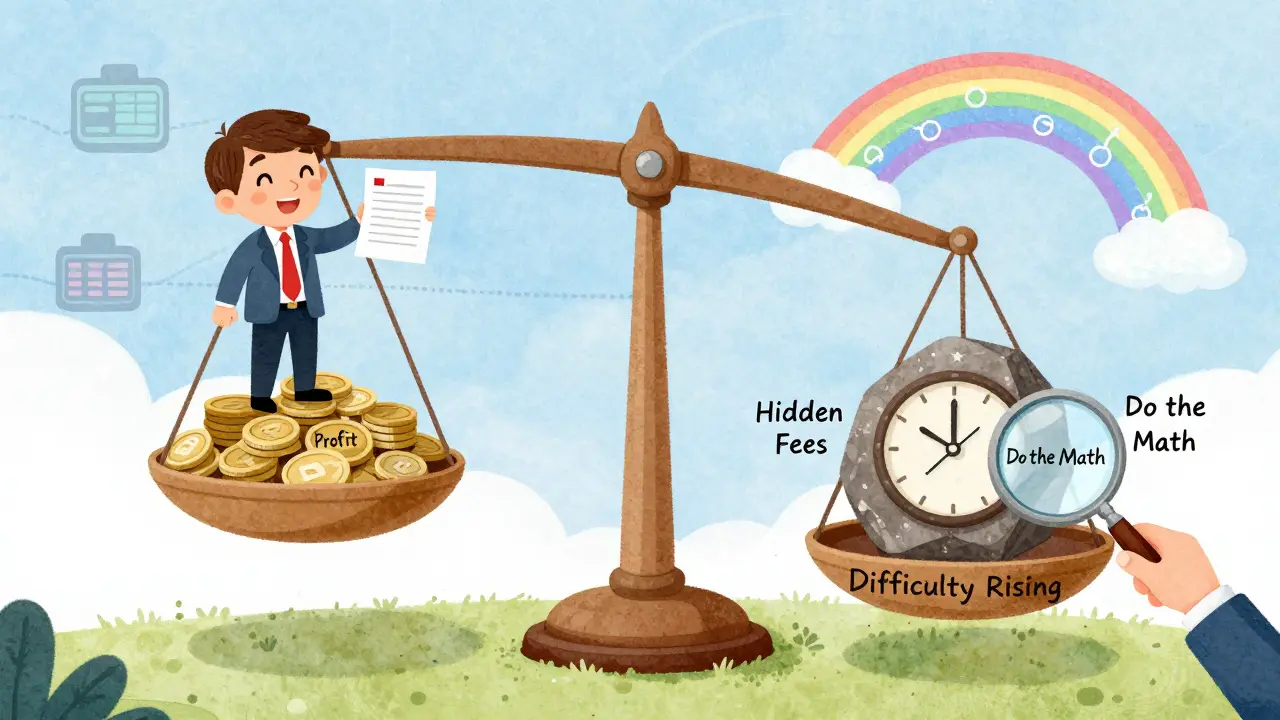
First, the fees. Providers charge maintenance fees - often hidden in the fine print. These cover electricity and cooling. But they’re not fixed. They can go up. In 2023, BitFuFu quietly increased maintenance fees by 18% for older contracts. Users didn’t find out until their daily payouts dropped.
Second, mining difficulty. Every two weeks, Bitcoin adjusts how hard it is to mine. When more miners join the network, the difficulty goes up. Your 10 TH/s doesn’t earn the same as it did last month. If Bitcoin’s price stays flat while difficulty rises, your earnings shrink.
Third, price volatility. If Bitcoin drops from $50,000 to $30,000, your daily income drops too. But your monthly fee? Still the same. That’s when contracts turn negative. In late 2022, over 60% of cloud mining contracts became unprofitable. Many users just walked away - and lost their money.
Reddit user u/BTCNewbie99 shared his experience: he spent $320 on a 12-month contract. Over seven months, Bitcoin stayed at $16,000. He earned $42. Net loss: $278. That’s not an outlier. It’s the norm.
Who Actually Makes Money?
Not everyone loses. Some people profit - but they’re not the ones buying random contracts on the homepage.
The winners:
- Those who bought during market bottoms - like in late 2022, when Bitcoin hit $16,000 and mining difficulty was low.
- Those who picked providers with transparent pricing - like BitFuFu, which shows real-time hashrate and daily earnings.
- Those who used hedging - buying Bitcoin futures to lock in prices and protect against drops.
One UK-based investor told CoinDesk he made a 22% return in 2023 by buying a 50 TH/s contract in November 2022, when Bitcoin was below $17,000. By April 2023, Bitcoin hit $30,000. His contract paid out $1,800. He’d paid $1,400. Profit: $400.
He didn’t get lucky. He timed it. And he watched the numbers.
How to Avoid Scams
The cloud mining space is full of fraud. In 2016, MiningRigRentals vanished with $1.2 million. In 2022, the SEC shut down HashOcean for $2.4 million in penalties, calling its contracts unregistered securities.
Here’s how to tell if a service is legit:
- Check for real-time hashrate tracking - If you can’t see your mining activity live, walk away.
- Look for public mining addresses - Reputable providers show where their mined coins go.
- Read the contract terms - Does it say “guaranteed profits”? That’s a red flag. Nothing in mining is guaranteed.
- Search for user reviews on Trustpilot and Reddit - Look for patterns. Are people complaining about withdrawals? That’s a warning.
- Don’t pay with credit cards - Use cryptocurrency or bank transfer. Chargebacks won’t work if the company is a scam.
BitFuFu, NiceHash, and Genesis Mining are the only three services that passed transparency audits by the Blockchain Council in 2023. Even then, they’re not risk-free. Just less likely to disappear overnight.
Is Cloud Mining Worth It in 2026?
Here’s the reality check:
Cloud mining is not an investment. It’s a gamble - with fees.
If you want to own Bitcoin, buy it directly. If you want to earn Bitcoin passively, use a staking platform or a yield service. Cloud mining is the most complicated way to do both.
But if you’re curious, have $100 to lose, and want to understand how mining works without touching hardware? Then yes - try it. Start small. A 10 TH/s contract for $50. Watch it for 30 days. See how the payouts change with Bitcoin’s price and network difficulty.
Use the built-in calculators on BitFuFu or NiceHash. Plug in current prices. See what your break-even point is. Most people skip this step. That’s why they lose.
And if your contract becomes unprofitable? Don’t wait. Cancel it. Most providers let you terminate early - you just lose the remaining balance. Better to cut losses than keep throwing money into a black hole.
What Comes Next?
The industry is changing. In 2024, BitFuFu launched “Dynamic Contract Adjustment” - if mining becomes unprofitable, it pauses your contract automatically. You don’t pay fees until it’s profitable again. That’s a big step forward.
Genesis Mining is now offering “Hash Power Tokens” - digital shares of real mining rigs. It’s like buying stock in a mine. You get a percentage of earnings, but you own a piece of the hardware. This could be the future.
Meanwhile, regulators are watching. The SEC now requires cloud mining platforms to register as money services businesses. That means more paperwork - and fewer shady operators.
Cloud mining isn’t dead. But it’s no longer for the lazy. It’s for the informed.
If you’re reading this because you want to get rich quick - walk away. If you’re reading this because you want to understand how the system works, and you’re okay with risk - then go ahead. Just don’t expect miracles. And always, always do the math before you click “Buy.”
Is cloud mining profitable in 2026?
Cloud mining is rarely profitable for beginners. Most contracts only break even if Bitcoin’s price rises steadily and mining difficulty doesn’t spike. In 2023, only 28% of users saw a net profit over 12 months. Profitability depends on timing, contract terms, and how well you manage fees. It’s not a passive income tool - it’s a high-risk bet.
Can I mine Bitcoin without any hardware?
Yes. Cloud mining lets you rent hashrate from data centers that own the hardware. You don’t need to buy ASICs, install software, or manage cooling. All you need is an internet connection and a cryptocurrency wallet to receive your earnings.
What’s the difference between cloud mining and joining a mining pool?
Mining pools let you combine your own hardware with others to increase chances of earning rewards. Cloud mining means you rent someone else’s hardware. With a pool, you control the equipment. With cloud mining, you don’t. Pools are cheaper and more transparent. Cloud mining is easier but less profitable.
Are cloud mining contracts regulated?
In the US, the SEC treats some cloud mining contracts as unregistered securities. Platforms must now register as money services businesses. In the UK and EU, regulation is still developing. Always check if a provider complies with local financial laws before signing up.
How do I know if a cloud mining provider is legit?
Look for real-time hashrate tracking, public mining addresses, transparent fee structures, and verified user reviews on Trustpilot or Reddit. Avoid providers that promise guaranteed returns. Legit ones show you the math - and let you cancel if things go south.
What’s the minimum amount to start cloud mining?
You can start with as little as $50 for a 10 TH/s Bitcoin contract. But small contracts often have higher fees per TH/s. For better returns, aim for at least $100-$200. Even then, don’t expect big profits. Think of it as learning, not investing.
Can I withdraw my earnings anytime?
Most providers have minimum withdrawal thresholds - usually 0.001 BTC or $50. Once you hit that, you can withdraw to your wallet. But some platforms delay withdrawals for security checks, especially during market volatility. Always check the withdrawal policy before signing up.
What happens if Bitcoin’s price crashes?
Your daily earnings drop. If your contract’s maintenance fees exceed your earnings, you’ll start losing money. Some providers like BitFuFu now pause contracts automatically during unprofitable periods. Others don’t. You’ll keep paying until the contract ends - unless you cancel early (which usually means losing your remaining balance).