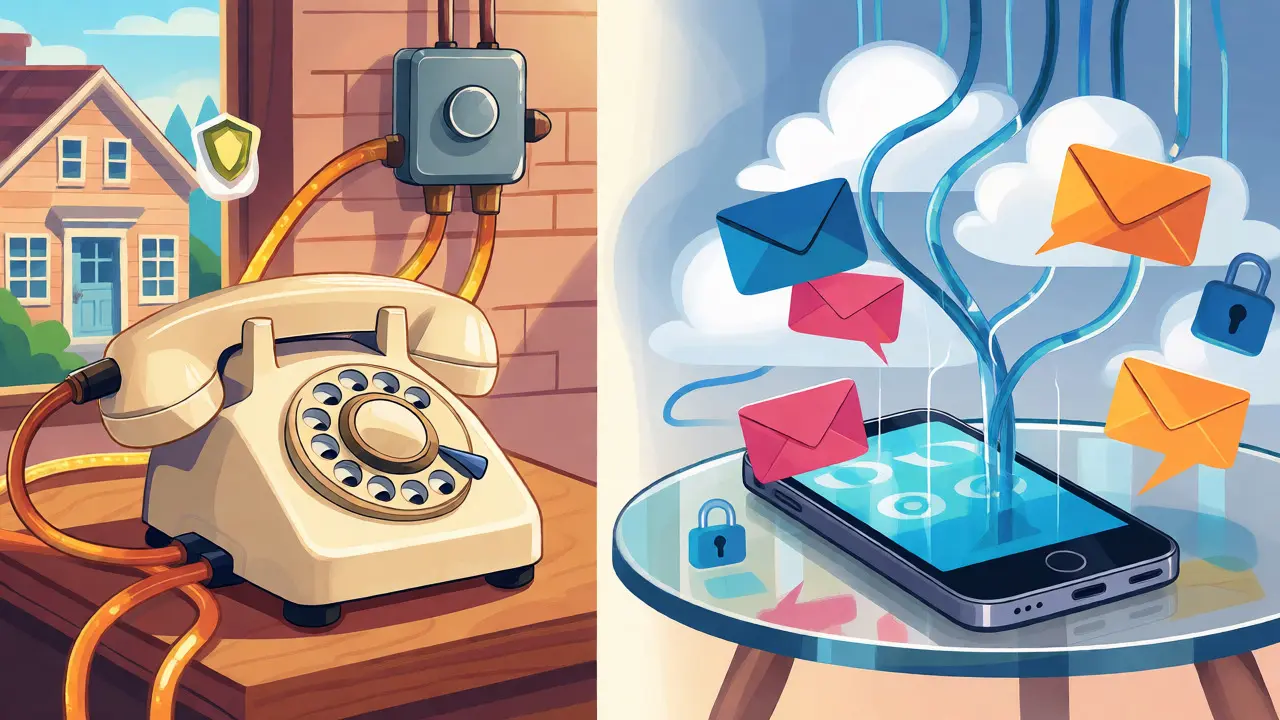
Ever had a spammer call you using a number that looks suspiciously like your own? Or maybe you've wondered if the person on the other end of the line can actually see who you are when you block your number. It’s not just paranoia; it’s a real technical battle happening every second across millions of phone lines. Caller ID privacy is the control you have over what information displays during voice communications, and how protected that data is from prying eyes or malicious spoofers. Whether you're running a small business in Exeter or managing a home office, understanding the difference between old-school copper wires and modern digital packets isn't just tech trivia-it's about keeping your personal and professional identity secure.
Key Takeaways
- VoIP offers more features but higher risk: You get advanced tools like CRM integration and AI screening, but SIP headers are easier to manipulate than physical signals.
- Landlines are simpler but less flexible: They offer robust physical security against remote hacking but lack encryption for Caller ID data and offer few customization options.
- STIR/SHAKEN is changing the game: This industry-wide authentication framework has significantly reduced spoofed calls on VoIP networks, making them safer than they were five years ago.
- Cost vs. Control: Basic privacy is included in most plans, but advanced blocking and analytics often cost extra monthly fees on both platforms.
The Tech Behind the Ring: How Each System Handles Your Identity
To understand the privacy differences, you have to look at how the signal travels. Traditional landlines rely on physical copper infrastructure. When you make a call, your phone sends a specific electrical pulse-known as Frequency-Shift Keying (FSK)-between the first and second ring. This pulse carries your number and name directly through a closed circuit. Because this path is physical, intercepting it usually requires someone to physically tap into the wire at a junction box or exchange. It’s hard to hack remotely without touching the hardware.
VoIP (Voice over Internet Protocol), on the other hand, turns your voice into digital packets sent over the internet. Caller ID here isn't an electrical pulse; it's text data inside a SIP (Session Initiation Protocol) header. Think of it like an email envelope. Anyone with access to the network path could theoretically read or alter that "envelope" if it isn't properly sealed. This makes VoIP inherently more vulnerable to spoofing, where bad actors fake their identity by editing these digital headers. However, because it’s digital, VoIP allows for much richer data transmission. You can send department names, direct extensions, or even CRM tags alongside your number, something a copper wire simply can’t do.
Security Showdown: Encryption vs. Physicality
Here is where things get counterintuitive. You might think a digital system is less secure because it’s on the open internet. In some ways, yes. But reputable VoIP providers use heavy-duty encryption protocols like TLS (Transport Layer Security) and SRTP (Secure Real-Time Transport Protocol). These lock down the call data so that even if someone intercepts the packet, they can’t read the Caller ID info without the key.
Landlines don’t use this kind of encryption. The data travels in plain text over the copper line. While it’s harder to access remotely, it’s completely exposed to anyone with physical access to the line infrastructure. A study by the Electronic Frontier Foundation highlighted that while physical wiretapping is rare for residential users, it remains a viable threat for targeted surveillance. Conversely, VoIP faces constant automated attacks. Scammers use bots to scan IP ranges looking for weak configurations. If your VoIP provider doesn’t enforce strong authentication, your Caller ID can be manipulated easily.
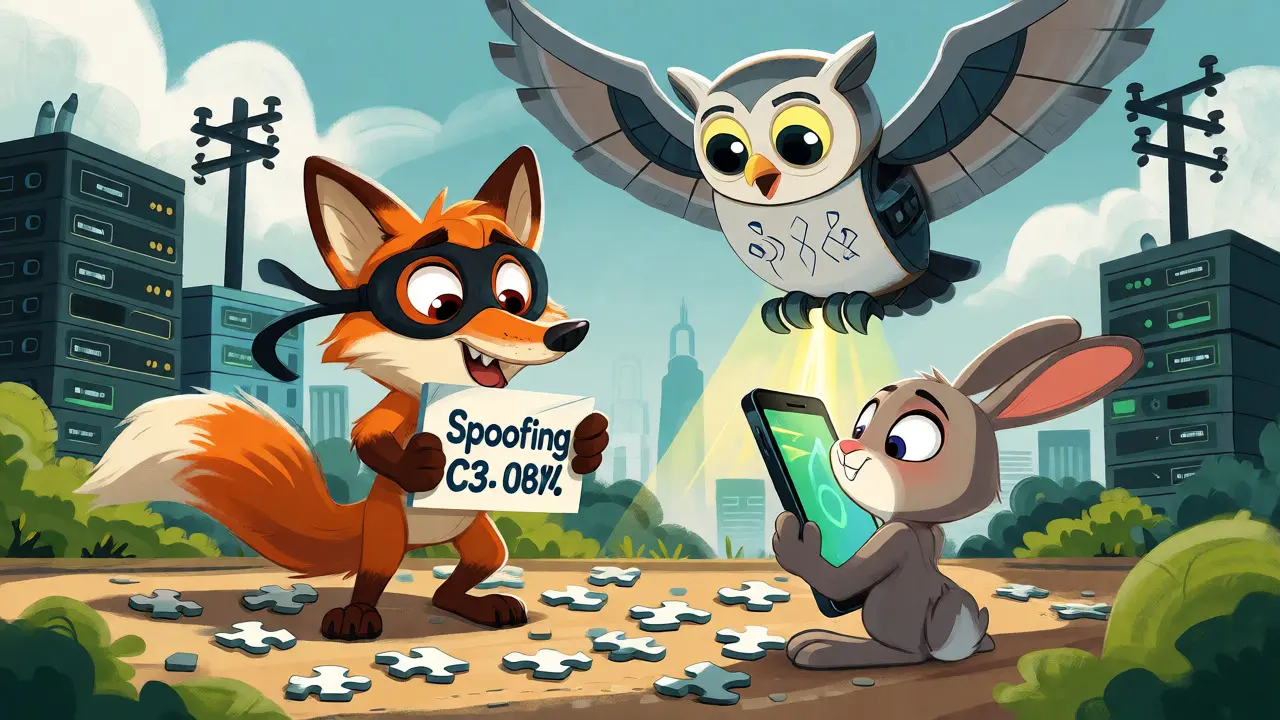
A major shift in recent years has been the implementation of the STIR/SHAKEN framework. Mandated by regulators in many countries, including the UK and US, this system verifies that the caller actually owns the number they’re displaying. As of 2024, adoption rates among major carriers exceed 98%, leading to a reported 41% drop in verified spoofed calls. For VoIP users, this means the wild west days of easy spoofing are ending. Landlines benefit indirectly, as the network backbone becomes cleaner, though they don't actively participate in the cryptographic signing process in the same way.
Feature Comparison: What Can You Actually Do?
If you care about active privacy management-not just passive security-you’ll find a stark difference in capability. Landlines are basic. You can typically block anonymous callers or reject calls from unknown numbers. That’s about it. Some providers offer a paid service like AT&T’s Call Protect, which uses community databases to flag spam, but user reports suggest it only blocks about 60% of unwanted calls.
VoIP systems are powerhouses. You can create custom block lists, schedule quiet hours, route calls based on time of day, and integrate with third-party apps like Hiya or Truecaller for real-time spam identification. Many business VoIP solutions even allow you to mask your outbound Caller ID dynamically. For example, if you’re calling a client from a shared team number, you can set the display to show your individual extension instead of the main office line. This level of granularity is impossible on a standard residential landline.
| Feature | Traditional Landline | Modern VoIP |
|---|---|---|
| Data Transmission | FSK Signal (Copper Wire) | SIP Headers (Internet Packets) |
| Encryption | None (Plain Text) | TLS/SRTP Available |
| Spoofing Risk | Low (Physical Access Required) | Moderate-High (Header Manipulation) |
| Authentication | N/A | STIR/SHAKEN Support |
| Customization | Basic Block/Reject | Advanced Rules, AI Screening, CRM Integration |
| Setup Time | Instant (Plug and Play) | 2-5 Hours (Configuration Required) |
The Spoofing Threat: Who is More Vulnerable?
Let’s talk about the elephant in the room: robocalls. In 2022 alone, there were nearly 90 billion robocalls in the US. The vast majority of these originate from VoIP services. Why? Because it’s cheap and fast to spin up a virtual number. According to FCC data, 42% of spoofed calls in 2023 came from VoIP sources. This statistic scares people away from VoIP, but context matters. Most legitimate businesses use VoIP, and the sheer volume of VoIP traffic means that even a low percentage of abuse results in high absolute numbers.
Landlines aren’t immune, though. "Neighbor spoofing"-where scammers pick a number similar to yours to trick you into answering-affects 58% of landline users. Since landline numbers are static and well-documented in public directories, they are easy targets for harvesting. VoIP numbers can be rotated or changed instantly, offering a layer of obscurity that landlines lack. Plus, with VoIP, you can often report and block a spoofed number globally across your account, whereas landline blocking is usually local to your device or switchboard.
Real-World Implications for Businesses and Homes
For a home user, the choice often comes down to simplicity versus control. If you live in an area with unreliable broadband, a landline ensures your Caller ID works consistently during power outages (if you have a corded handset) and avoids the complexity of network configuration. You get basic privacy with zero maintenance.
For businesses, VoIP is almost always the better privacy tool, provided it’s configured correctly. Imagine a sales team making hundreds of calls daily. With VoIP, they can use dynamic Caller ID to ensure compliance with telemarketing laws, rotating numbers to avoid getting flagged as spam. They can also track exactly who answered which call for quality assurance. A study by Emitrr found that 78% of businesses using VoIP with CRM integration saw improved customer service metrics, partly due to better caller identification accuracy.
However, there is a catch. VoIP requires a stable internet connection. If your network congestion spikes, call quality drops, and sometimes Caller ID fails to transmit entirely. During peak hours, VoIP reliability issues increase by roughly 12.7% compared to landlines. If your business relies on inbound calls for emergency support, this latency or failure rate must be factored into your risk assessment.
How to Secure Your Caller ID Today
Regardless of your technology, you need to take action. Here is a quick checklist to tighten your privacy settings:
- For VoIP Users:
- Enable STIR/SHAKEN verification if your provider supports it.
- Use strong passwords for your VoIP portal to prevent unauthorized changes to your Caller ID settings.
- Turn on "Anonymous Call Rejection" to stop people who hide their number from bothering you.
- Consider adding a third-party spam filter app like Hiya or Truecaller to your mobile or desktop softphone.
- For Landline Users:
- Check if your provider offers a free or low-cost spam blocking service (like BT’s Call Filter or AT&T’s Call Protect).
- Ensure your number is listed accurately in public directories if you want transparency, or request unlisting if you prefer anonymity.
- Install a dedicated answering machine or smart speaker that filters known spam numbers before ringing.
Remember, no system is perfect. Even with encryption, social engineering remains a top threat. Just because the Caller ID says "Bank of England" doesn’t mean it’s safe. Always verify via a callback number you know independently.
Frequently Asked Questions
Is VoIP less secure than a landline for Caller ID?
Not necessarily. While VoIP is more susceptible to digital spoofing due to its software-based nature, it offers superior encryption options (TLS/SRTP) that landlines lack. Landlines are secure from remote hacking but expose data in plain text to anyone with physical access to the line. Modern VoIP with STIR/SHAKEN authentication is generally considered more secure against mass-scale fraud.
Can I change my Caller ID name on a VoIP service?
Yes, most VoIP providers allow you to customize the outbound Caller ID name. You can set it to your personal name, your business name, or even a generic label like "Unknown." This flexibility is one of the key advantages of VoIP over traditional landlines, which often have fixed names tied to the billing account.
What is STIR/SHAKEN and why does it matter?
STIR/SHAKEN is a global framework that verifies the authenticity of Caller ID information. It adds a digital signature to the call data, proving that the carrier sending the call actually owns the number being displayed. This helps reduce spoofing and robocalls, particularly on VoIP networks. Major carriers now implement this automatically.
Do landlines encrypt Caller ID data?
No, traditional analog landlines do not encrypt Caller ID data. The information is transmitted as plain-text audio-frequency signaling (FSK) between rings. This means the data is visible to any equipment connected to the physical line, though accessing it requires physical proximity to the infrastructure.
Which is cheaper for advanced Caller ID privacy features?
VoIP tends to offer more advanced features for a lower incremental cost. While basic service prices are comparable ($20-$35/month), VoIP packages often include call recording, detailed logs, and AI screening in higher tiers. Landline add-ons for similar functionality, like premium spam blocking, can cost $3-$5 extra per month and still offer fewer controls than VoIP equivalents.
Next Steps for Better Privacy
If you’re currently using a landline and feeling overwhelmed by spam, consider testing a VoIP adapter for a month. Many providers offer trial periods. Pay attention to how often the Caller ID matches the actual caller and whether the built-in blockers catch the junk mail. If you’re already on VoIP, audit your settings. Are you using STIR/SHAKEN? Is your outbound name accurate? Tweaking these two things can drastically improve your perceived privacy and professional image.