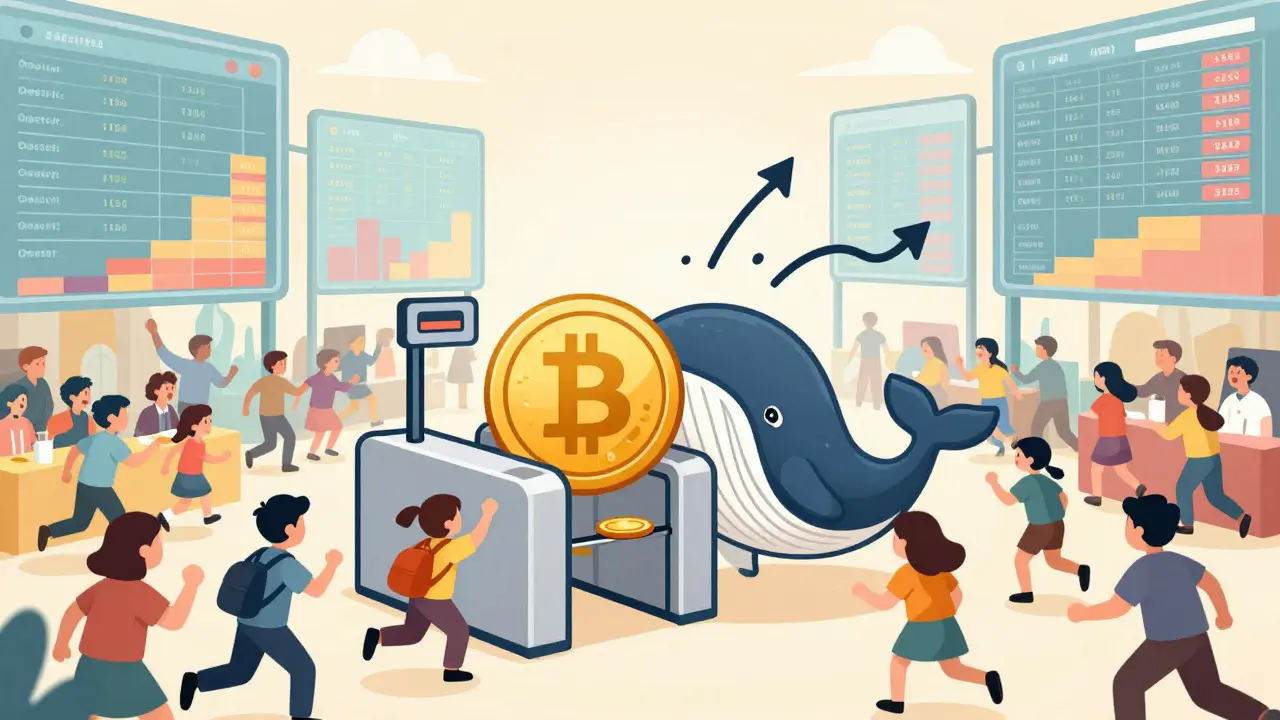
Imagine trying to buy a million dollars worth of Bitcoin on a public exchange. You place the order, and suddenly the price jumps against you. That’s slippage, and it happens because public order books can’t absorb huge hits without moving the market. This is exactly why the landscape of Bitcoin liquidity has changed so drastically over the last few years. The center of gravity for large-scale trading has moved away from open exchanges and into private, off-the-books channels known as Over-The-Counter (OTC) markets.
If you are managing significant capital or just curious about how the big players move money, understanding this shift is crucial. It’s not just about where trades happen; it’s about who gets access to the deepest pools of cash and how they protect their positions from volatility. Let’s break down how exchange depth works, why OTC desks have become the backbone of institutional trading, and what this means for the future of Bitcoin adoption.
The Core Difference: Public Order Books vs Private Negotiations
To understand why institutions prefer one over the other, you first need to see how each venue operates. On a standard crypto exchange like Coinbase or Binance, liquidity is visible. Every buy and sell order sits in a public book. Anyone can see the price levels, the volume available at those levels, and the spread between buyers and sellers. For a retail trader buying $500 of Bitcoin, this transparency is great. You get an immediate execution at a fair market price.
However, when the size of the trade grows, that same visibility becomes a liability. If a whale posts a massive sell order on a public book, smaller traders might panic-sell, driving the price down before the whale even finishes executing. This is market impact. In contrast, OTC Trading is a method of trading assets directly between two parties without using a public exchange order book. There is no public record. No one sees the trade until it is settled. The buyer and seller talk to a broker, negotiate a fixed price, and settle privately. It’s like buying a house versus buying a stock. You don’t put your home up for auction with a ticking clock; you find a buyer, agree on a number, and sign the papers.
| Feature | Exchange Trading | OTC Markets |
|---|---|---|
| Visibility | Public order book | Private, off-the-books |
| Price Discovery | Market-driven (automated) | Negotiated (bilateral) |
| Slippage Risk | High for large orders | Minimal/Fixed price |
| Best For | Retail, small trades | Institutions, whales ($100k+) |
| Settlement | Instant via exchange wallet | Wire, escrow, or direct transfer |
Why Institutions Flee the Public Exchanges
You might wonder why anyone would give up the speed of instant execution for the slower process of negotiation. The answer lies in risk management. Institutional investors now drive over 60% of crypto trading volume. These aren't people guessing prices on Twitter; they are pension funds, hedge funds, and corporate treasuries. They need certainty.
When an institution wants to deploy $100 million into Bitcoin, doing it on an exchange is dangerous. Even if the top of the order book looks deep, the further you go down the book, the thinner the liquidity gets. By the time you fill half your order, the price might have moved 2-3% against you. That’s a multi-million dollar loss right there. OTC desks solve this by offering a fixed quote. The desk absorbs the risk, finding multiple counterparties in their network to fill the order, and gives the client a locked-in price. It’s a premium service for a reason.
This shift isn't new, but it accelerated rapidly after 2024. In that year, OTC trading volumes more than doubled, seeing a 106% year-on-year increase. A key driver was the surge in stablecoin-based transactions, which jumped 147%. Interestingly, Bitcoin itself made up only 22% of these OTC volumes, showing that while Bitcoin is the headline asset, the plumbing of the market is increasingly built around stablecoins for settlement efficiency.

How OTC Desks Actually Work
So, what does the process look like? It starts with a request. An investor contacts an OTC provider-major names include Kraken, Coinbase, and Binance, all of which run dedicated desks. The broker acts as the middleman. They don't just match one buyer to one seller; they tap into a global network of liquidity providers. If a client wants to buy 80,000 BTC (a real-world example from mid-2025), no single entity usually holds that much ready cash. The desk aggregates bids from various sources, possibly using Electronic Communication Networks (ECNs) to share liquidity across different firms, and constructs a package that meets the client's needs.
Once the price is agreed upon, settlement occurs. This can happen via wire transfer, direct Bitcoin wallet transfer, or through an escrow service for added security. The beauty of this system is anonymity. The counterparty doesn't know who you are, and the market doesn't know you're trading. This prevents the "herding" behavior often seen on public exchanges where large moves trigger algorithmic reactions.
The Decline of Exchange Holdings
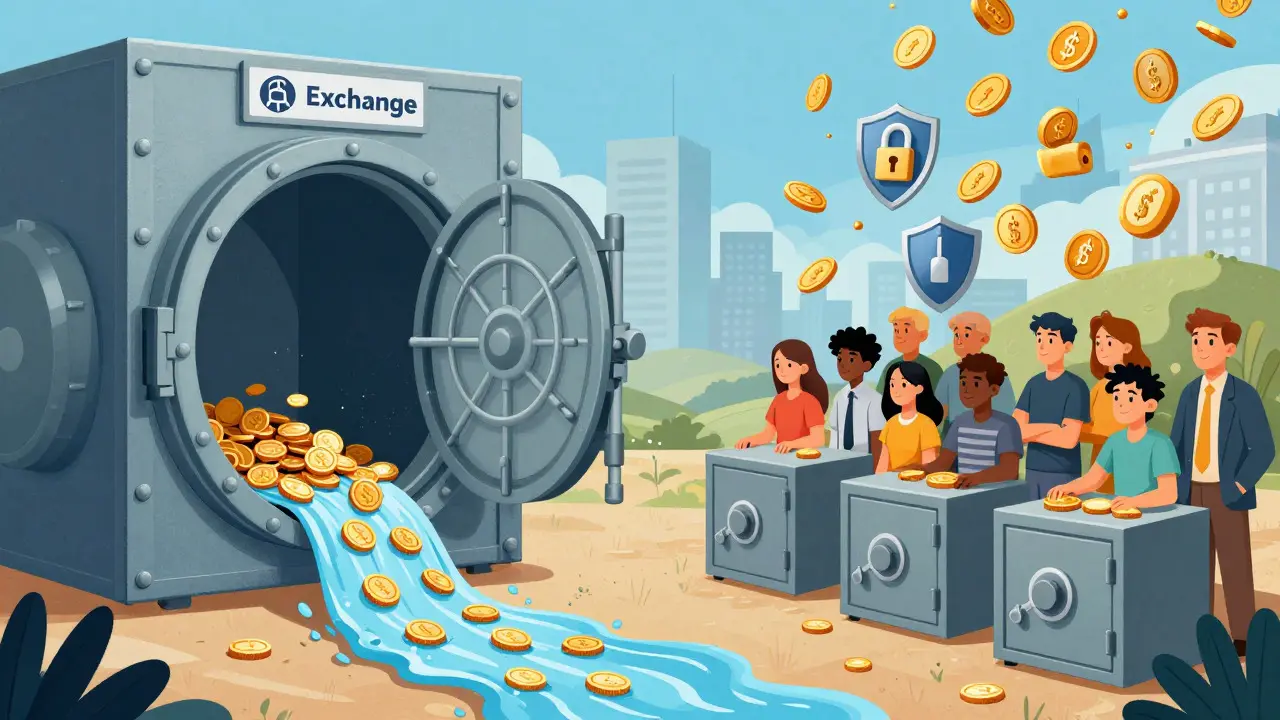
There is hard data supporting the idea that liquidity is leaving exchanges. In June 2022, the peak of Bitcoin held on exchanges was 18% of the total supply, roughly 3.45 million BTC. By late 2024, that figure had dropped to just 14%. That’s a reduction of nearly 65 billion dollars in value removed from exchange wallets. Where did it go? Into cold storage, self-custody, and OTC desk wallets.
This trend signals a maturation of the market. When coins are sitting on exchanges, they are vulnerable to hacks, regulatory freezes, or sudden bank runs. Moving them to private custody reduces systemic risk. For the average user, this means that while exchanges remain the gateway for entry and exit, the "real