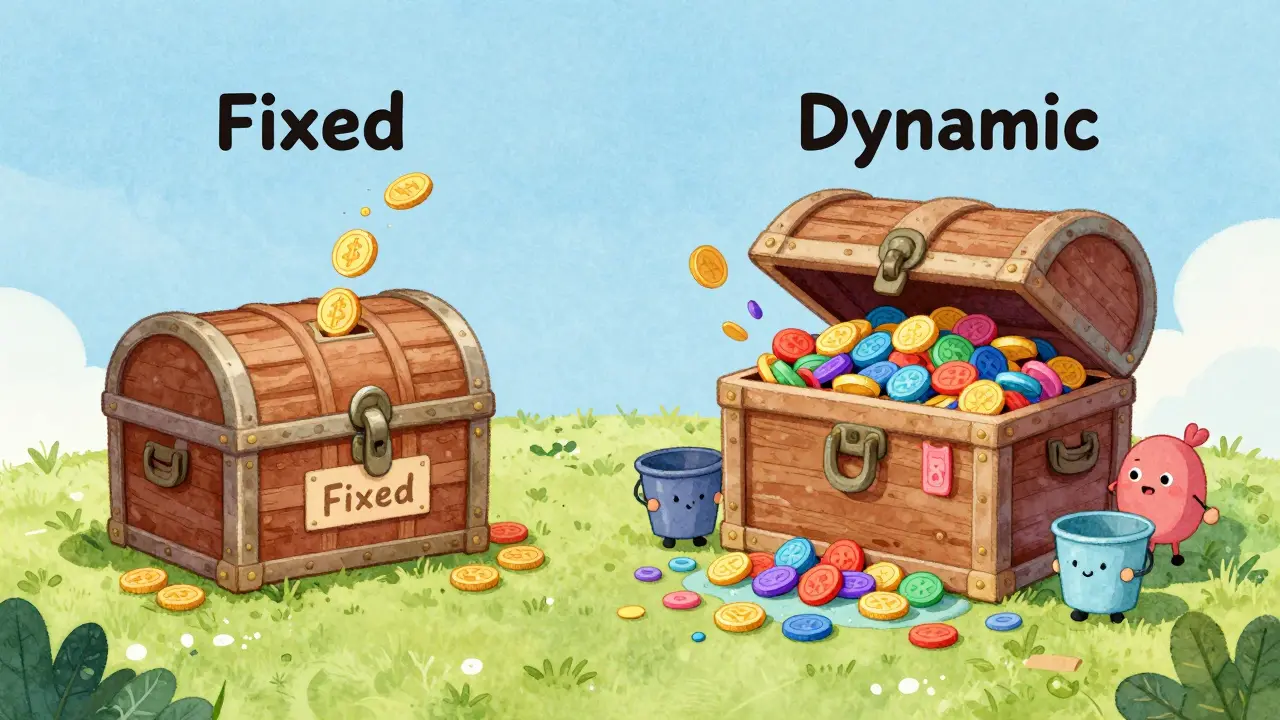
You’ve probably seen an altcoin price crash right after a "major update" or a new listing. It feels like bad luck, but it’s usually math. The culprit is often the emission schedule, which defines the predetermined algorithmic rate at which new units of digital assets are introduced into circulation over time. While Bitcoin has a rigid, predictable cap, altcoins experiment with complex monetary policies that can either reward holders or dilute their value overnight.
Understanding these mechanics isn't just for economists; it's essential for anyone holding crypto. If you don't know how many tokens are coming to market next month, you're trading blind. This guide breaks down how emission schedules work, why inflation matters more in altcoins than in Bitcoin, and how to spot supply shocks before they hit your portfolio.
Fixed vs. Dynamic Emission Models
Not all cryptocurrencies create new coins the same way. The design of the emission schedule dictates the long-term monetary policy of the network. Generally, projects fall into two camps: fixed supply models and dynamic (or variable) supply models.
Fixed emission schedules have a hard ceiling on the total number of tokens that will ever exist. This approach mirrors Bitcoin’s model, offering predictability and transparency. Investors know exactly when the last coin will be mined, which helps build trust. For example, Convex Finance maintains a fixed maximum supply of 100 million tokens released over time at a decreasing rate. This scarcity can support price appreciation if demand remains steady, as there is no risk of infinite inflation.
Dynamic emission schedules, on the other hand, adjust issuance rates based on market conditions, staking participation, or protocol revenue. These models offer flexibility, allowing protocols to incentivize behavior during growth phases. However, they introduce uncertainty. If a protocol needs to attract more liquidity, it might increase emissions, suddenly flooding the market with new tokens. This lack of a hard cap means investors must constantly monitor the current inflation rate rather than relying on a static total supply figure.
| Feature | Fixed Supply Model | Dynamic Supply Model |
|---|---|---|
| Total Cap | Hard limit (e.g., 100M tokens) | No limit or adjustable cap |
| Inflation Predictability | High (decreases over time) | Low (varies by protocol needs) |
| Price Impact | Scarcity drives value if demand holds | Risk of sudden sell pressure from high issuance |
| Best For | Store of value, stable ecosystems | Growth phases, active DeFi protocols |
The Hidden Danger: Vesting and Unlock Schedules
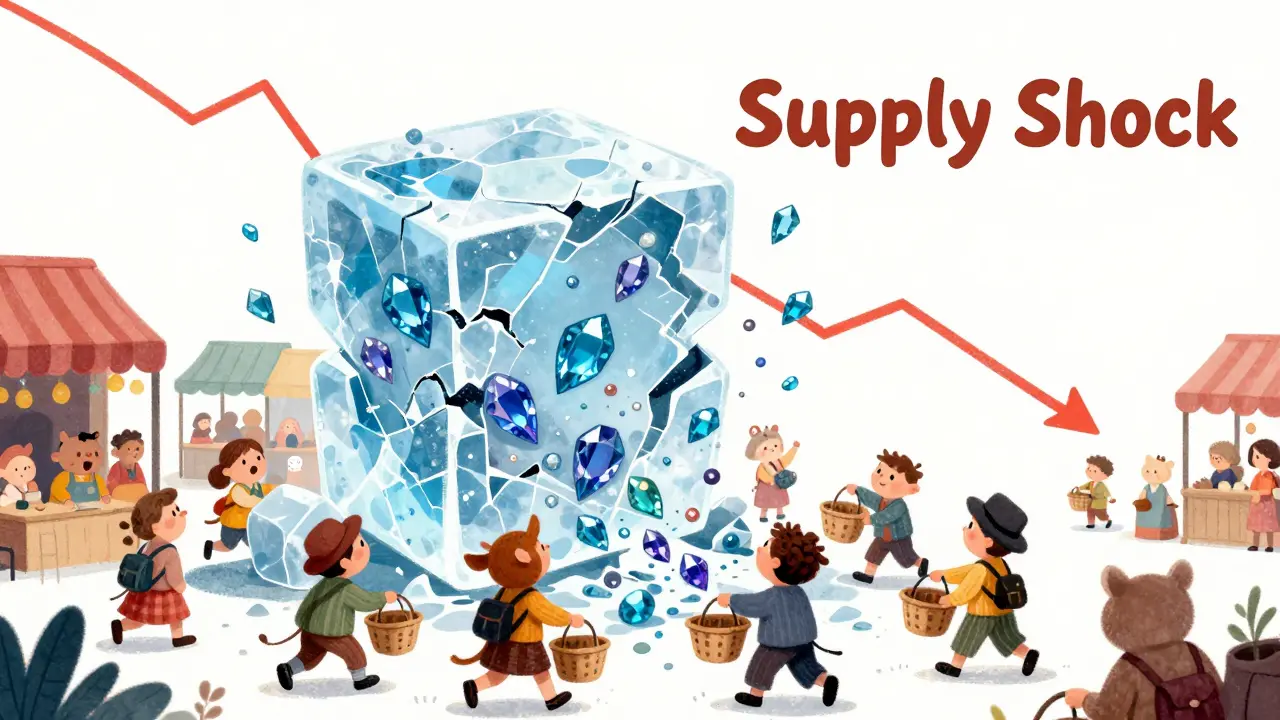
Emissions aren't the only source of new supply. A major driver of altcoin volatility is the release of previously locked tokens through vesting schedules, which gradually release locked tokens over time to prevent sudden supply shocks. When venture capital firms, team members, or early investors receive their tokens, they don't get them all at once. Instead, smart contracts unlock portions periodically-often monthly or quarterly.
This creates a phenomenon known as "supply shock." Imagine a project with a low circulating supply but a massive Fully Diluted Valuation (FDV). The FDV represents the market cap if all future tokens were in circulation today. If only 10% of the tokens are unlocked, the price might look strong relative to the small float. But when a large tranche unlocks, those early holders-who bought at fractions of a cent-may decide to sell. Because altcoins typically have thinner order books than Bitcoin, even moderate selling can cause sharp price drops.
To evaluate this risk, always check the ratio of circulating supply to total supply. A low ratio indicates that significant selling pressure lies ahead. Tools that track upcoming unlocks can help you anticipate these events, allowing you to adjust your position before the market reacts.
Inflation, Staking, and Hyperinflation Risks
In Proof-of-Stake networks, validators earn rewards in newly minted tokens. This is a form of continuous emission designed to secure the network. While necessary, it creates ongoing inflationary pressure. If the demand for the token doesn't grow faster than the emission rate, the price will stagnate or decline.
The most extreme risk is hyperinflation, particularly in yield farming protocols. Some projects promise astronomical Annual Percentage Yields (APY) by printing vast amounts of new tokens. Initially, prices soar as traders chase returns. But without real utility or demand, the rapid supply expansion collapses the token's value. The high APY becomes worthless because each individual token is nearly free. This scenario highlights why sustainable tokenomics require a balance between rewards and actual usage.
Deflationary Mechanisms: Burns and Fees
Some altcoins counteract inflation by removing tokens from circulation. This is called a token burn, which permanently removes tokens from circulation to reduce supply. Binance’s BNB uses an Auto-Burn mechanism that adjusts the number of tokens burned based on price and block generation. Ethereum also employs a burn mechanism via its EIP-1559 upgrade, where base transaction fees are destroyed. During periods of high network activity, Ethereum can become deflationary, meaning the total supply decreases over time.
Deflationary mechanisms can support price stability, but they are not a silver bullet. If the burn rate is lower than the emission rate from staking rewards, the net effect is still inflationary. Investors should calculate the net emission rate: (New Tokens Minted) minus (Tokens Burned). Only if this number is negative or near zero does the token exhibit true deflationary characteristics.
Market Structure and Liquidity Constraints
Why do altcoins react so violently to supply changes compared to Bitcoin? The answer lies in liquidity. Bitcoin trades billions of dollars daily, absorbing large buy or sell orders with minimal price impact. Most altcoins trade with much thinner order books. This means a relatively small wave of selling-from a vesting unlock or an emission spike-can move the price aggressively.
When demand hits a token with limited sell-side liquidity, prices pump sharply. Conversely, when holders rush to exit simultaneously, prices dump harder. Market makers often step back during high volatility, leading to bigger gaps and wick moves. This structural reality amplifies the effects of emission schedules. A token with unfavorable emissions might not crash immediately, but the first sign of weakness can trigger a cascade of sells due to low liquidity.

Narratives vs. Fundamentals
Crypto markets often trade on narratives-AI tokens, Layer 2s, memecoins-rather than fundamentals. Capital rotates into these themes quickly, driving prices up regardless of the underlying tokenomics. However, narratives fade. When the hype dies, the emission schedule takes over.
Two tokens in the same narrative sector can perform very differently if one has constrained supply and the other faces heavy unlocks. Investors who ignore emission data risk buying the top of a narrative cycle while ignoring impending supply floods. Sustainable value accrual requires both strong product adoption and favorable supply dynamics.
How to Analyze Altcoin Tokenomics
Before investing in any altcoin, ask three critical questions:
- How many tokens exist right now? Check the circulating supply.
- How many will ever exist? Look for the maximum total supply or evidence of unlimited issuance.
- How quickly are new ones being released? Review the emission rate and upcoming vesting unlocks.
Review the project’s whitepaper and official documentation for transparency. Successful projects clearly communicate their long-term supply roadmap. Avoid projects with opaque emission rules or centralized control over token issuance, as these pose higher risks of manipulation.
What is the difference between circulating supply and total supply?
Circulating supply refers to the number of tokens currently available and tradable on the market. Total supply includes all tokens that have been created, including those held by teams, investors, or reserved for future use. The gap between these two numbers indicates potential future inflation from unlocks.
Does a high FDV mean a token is overvalued?
Not necessarily, but it signals risk. Fully Diluted Valuation (FDV) calculates the market cap if all tokens were in circulation. A high FDV relative to current market cap suggests that significant supply will enter the market later, potentially diluting current holders unless demand grows proportionally.
Can a token with unlimited supply be a good investment?
Yes, if the utility and demand outpace inflation. Some successful projects use dynamic emissions to reward users and secure the network. The key is whether the token has real-world use cases that drive consistent buying pressure, offsetting the new supply entering the market.
How do token burns affect price?
Token burns reduce the total supply, which can increase scarcity and support price if demand remains constant. However, burns alone cannot drive value if the underlying project lacks utility. They are most effective when combined with strong network activity and limited new emissions.
What is a vesting schedule in crypto?
A vesting schedule is a timeline that controls when locked tokens are released to team members, investors, or advisors. It prevents immediate dumping by aligning incentives with long-term project success. Smart contracts enforce these schedules automatically, ensuring transparency.